China Pivots to 'Hard Tech Plus': Six Key Future Industries Identified in New Five-Year Plan Focus


2026 marks the start of China's 15th Five-Year Plan. The five-year plan cycle has long determined China's economic and industrial direction. On the evening of January 30th, the first collective study session of the Political Bureau of the Communist Party of China, the country's top policymaking body, commenced at the Huirong Hall in Zhongnanhai.
The top Chinese leadership at the study session was not significantly focused on broad economic aid or geopolitical issues. Instead, they focused directly on the central concept of the plan, which states: 'Developing and implementing future-oriented industries in the coming days.'

The first policy meeting of the year clearly signaled the direction for the future. Certainly, this is not unusual for China. The underlying message in the document read by Chinese officials was clear—the fundamental way China conducts its economic activities is about to change.
The era of 'Model Innovation,' or 'Internet Plus,' is gradually becoming history. The next decade will belong to 'Hard Tech Plus.' Chinese leaders emphasized and repeated one word in their speeches: 'Grasp' (Pakra). For example, 'Firmly grasp the decisive height in the technological and industrial sector,' and 'Firmly grasp the development initiatives,' etc.
Future industries are no longer optional or a matter of choice. In the great power competition, they are becoming mandatory. They ensure control over technology. They will define the rules of the global economy in the next phase.
The meeting effectively announced that for the next five years, all of China's resources—including capital, manpower, and policy support—will be directed broadly towards six key areas.
The six areas included in the announcement are: Quantum Technology, Biomanufacturing, Hydrogen Energy and Nuclear Fusion, Brain-Computer Interface, Embodied Intelligence, and 6G.
These areas will be the source of China's wealth and strategic advantage in the coming decade. Let's look at all these transformative plans.
1. 'Embodied Intelligence,' or AI with a Body
2025 is being regarded as the 'first year of human-style manufactured robots.' We have already seen robots like Tesla's 'Optimus' and China's 'UBTECH' and 'Qiyuan' handling boxes in industries. Those are just simple robots.
A real 'breakthrough' will occur when such robots are equipped with a 'brain' and a 'cerebellum' as the organ of the brain.
Imagine what it would be like to have human-like robots!
The 'Large AI Models' functioning as the 'brain' decide what to do. They understand commands like, 'Go, bring me a glass of water.' They figure out where the glass and water are located themselves.
The 'cerebellum,' responsible for motion control, decides how to execute the task assigned. It grasps the glass without breaking it. It navigates around obstacles and performs its task while walking.
Traditional robots used to repeat specific tasks. Such robots performing the same repetitive tasks on an 'assembly line' would fail if the situation changed.
However, the 'Embodied Intelligence' to be developed under the new plan will combine a brain and a cerebellum. Such robots can learn and perform complex tasks. They can adapt to unstructured environments. They understand human speech or language. They can perform fine manipulation. Furthermore, they can adapt and work even in unexpected situations.
This will be a decisive moment of transition for robots, moving from automated machinery to intelligent partners. Policy documents clearly mention the use and development of China's 'new nationwide system' in real-life scenarios.
To achieve this, they will be utilized to bring greater technological maturity to industries involving hazardous work, elderly care, and precision manufacturing. This endeavor will present an opportunity on the scale of the 'smartphone' for the coming decade.
2. 'Brain-Computer' Interface: From Treatment to Human Capability Enhancement
In 2025, the global 'Brain-Computer Interface' or 'BCI' market reached approximately 3 billion US dollars. A large portion of this was due to the extensive demand for medical treatment in China. Following breakthroughs by 'Neuralink' and Chinese research, BCI moved from the laboratory into medical practice.
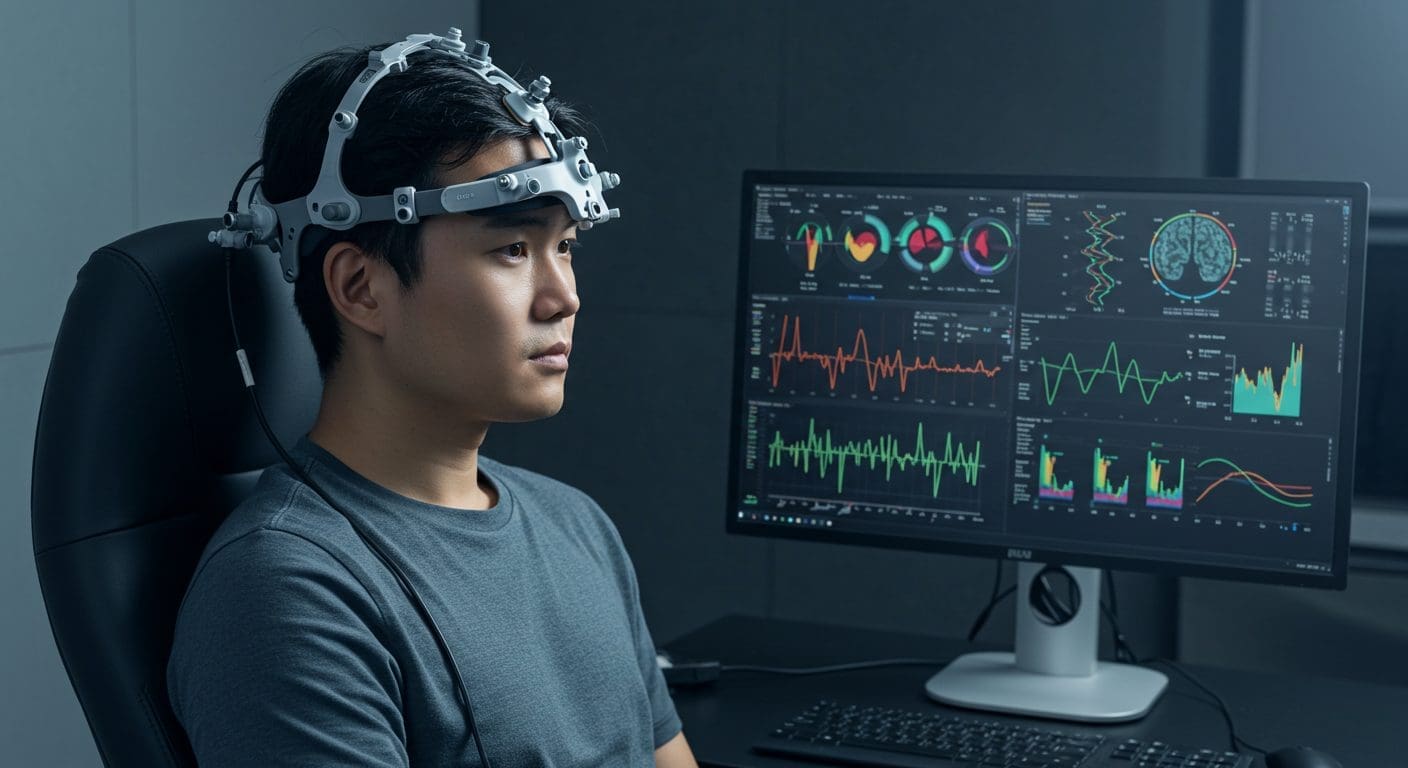
It began to be used primarily in the treatment of paralyzed patients. China's policy logic is clear: first, use it for treatment. Then, extend its use to other consumption areas.
In the first phase, which starts immediately, the use of BCI in treating Parkinson's, epilepsy, and paralysis will commence. Government insurance and policy support in this area are being strengthened for now.
According to Chinese government documents, the main focus of policy support and capital investment in BCI will currently be on health treatment and improving quality of life by enhancing memory.
The second phase, three to five years later, will focus on sleep management, attention enhancement, and 'Virtual Reality' interaction. In the second phase, these types of technologies will be advanced commercially in a human-friendly manner on a large scale. This will bring a fundamental revolution to the interaction between humans and machines.
Many companies are currently busy developing flexible 'electrodes' and 'neural decoding algorithms.' These are certain to displace 'open brain surgery' with easy, human-friendly BCI solutions. They are guaranteed to capture a large market share.
3. 'Six-G' or the Integrated 'Neural Network' of Earth and Space
If you believe in low-altitude economy, autonomous vehicle operation, or 'Embodied Intelligence' from the Earth's surface, '6G' becomes indispensable.
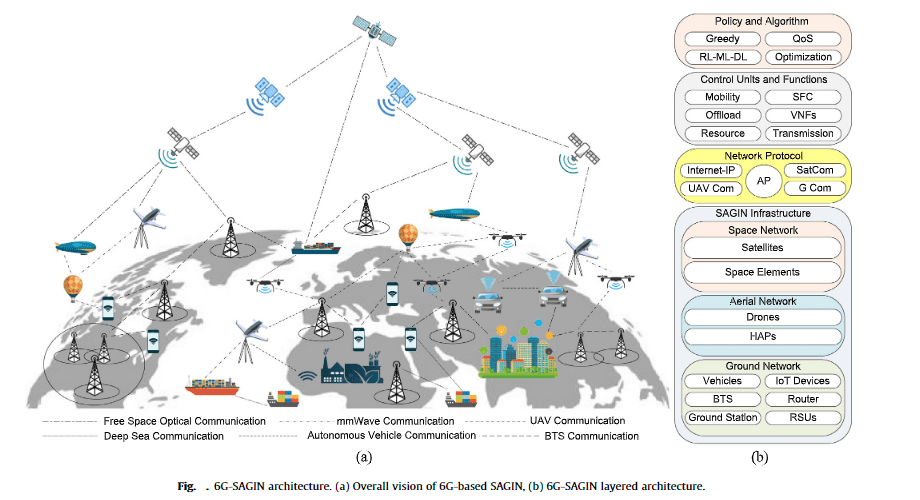
Ground-based stations cannot fully cover the sky and the sea. 'Satellite internet' becomes mandatory. This itself becomes a strategic basis for national security. While 'Five-G' solved the speed problem, 'Six-G' will solve the 'coverage' and 'latency' problems.
China conducted its second phase of 6G technical testing at the beginning of 2026. In the future, when satellite networks and surface base stations are interconnected, a major shift in the communication sector will occur. Direct satellite connectivity on smartphones will become commonplace.
4. Nuclear Fusion and Hydrogen: The Highest Form of Energy
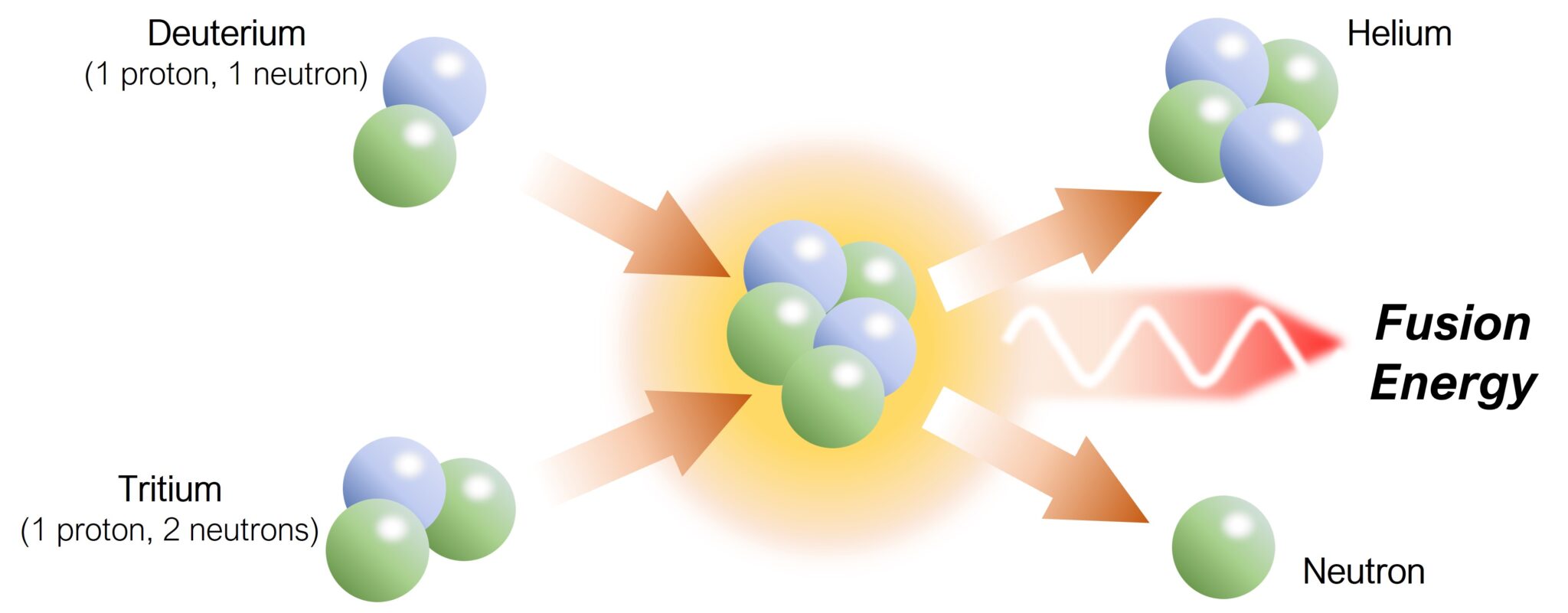
China is operating an artificial sun project, which will continue to set new records in sustainable 'fusion reactions' in the coming days. The next major achievement will be a 'Controlled Fusion Demonstration Reactor' that can be commercially used and operated.
Although it will take time for a system to be connected to the grid and sold, hydrogen energy will serve as a transitional solution. It will initially be used in trucks and transportation. In fact, this will be the only practical way to move away from fossil fuels.
5. Quantum Technology
Traditional computers and 'computing' technology are like an ox pulling a cart. Quantum technology represents a shock of the level of 'dimensionality reduction strike'—seemingly against the laws of physics—that is, reducing the dimension itself.
Traditional computers perform 'computing' tasks sequentially, one after another, like finding a way through a maze. But quantum computing is entirely different. It works by looking at things from an 'omniscient perspective.'

It tries all possibilities simultaneously and immediately finds the most advanced solution. Tasks that might take traditional computers thousands of years, like discovering new medicines, can be easily solved. By making good use of 'entanglement,' quantum communication can make it possible to create security systems that are theoretically unhackable in the financial and defense sectors.
Quantum sensing brings the ability to detect things down to the atomic level. This will allow for the easy detection of underground resources and submarines deep in the ocean.
In the current 15th Five-Year Plan, China's focus is stated as moving quantum technology beyond laboratory demonstrations to a level where it can be utilized in various areas of daily life. In the coming era, whoever controls quantum technology will also dominate the quantum nuclear weapons and information security systems of the future age.
6. 'Biomanufacturing,' or the Silent Revolution of Creation
Among the six areas, this might possibly be the least assessed. Traditional materials like nylon and plastic require the excavation of mineral oil to produce them. These substances consume excessive energy and create pollution.
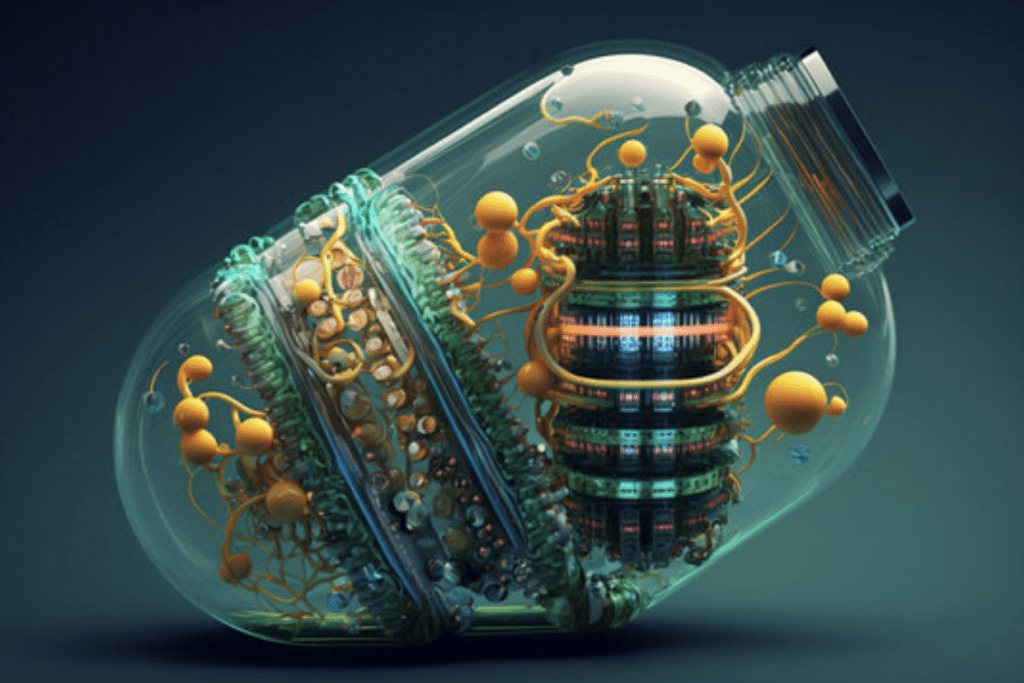
Some Chinese companies have already started making nylon comparable to that made from petroleum through the 'fermentation' of corn. The cost is also extremely low. This is not just about economic profit and loss; it also ties into the equation of energy security.
If biomanufacturing displaces even 20 percent of fossil fuel-based raw materials, China's dependence on imported oil will decrease dramatically. Viewed nationally, biomanufacturing is set to be another 'dimensionality reduction strike.'
This specific news has been automatically translated by AI. As a result, there may be some inaccuracies or language errors.