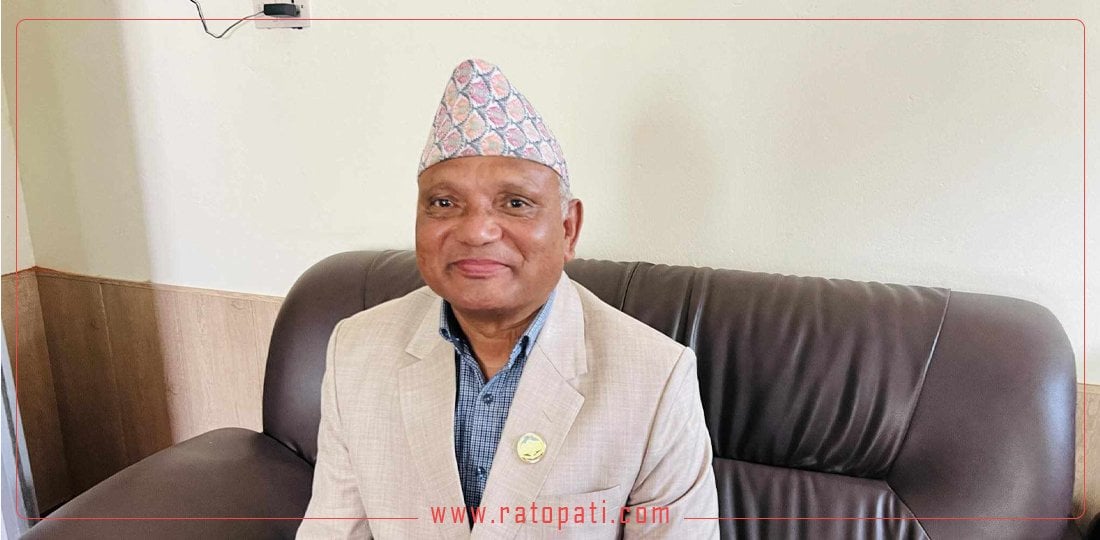
Inquiry Report Raises Serious Questions Over Armed Police Chief's Leadership During Recent Protests

.._854axCpzZ8.jpg)
Serious questions have been raised regarding the role of the Armed Police Force (APF) and the leadership of its chief, Raju Aryal, concerning the violent incidents that occurred on Bhadra 23 and 24 during the Gen-Z movement. The report from the investigation commission formed to probe the movement concluded that Inspector General Aryal failed to provide proper direction to his force, erred in command and control, and shirked responsibility during a sensitive time.
Specifically, the report pointed out that the APF used excessive and indiscriminate force during the confrontation in front of the Federal Parliament building on Bhadra 23, while on the 24th, they remained mere spectators, allowing national property to be looted.
The report stated that during the Bhadra 23 incident, the APF used lethal weapons such as SLR and INSAS rifles. Although APF officials claimed they only fired warning shots, the collected evidence and the number of dead and injured confirm that the APF fired indiscriminately. The commission determined that because Inspector General Aryal failed to clarify the 'Rules of Engagement'—the criteria for the use of force—during his tenure, commanders deployed in the field were confused, leading to unnecessary loss of life.
Due to a lack of training and mock drills, the personnel could not determine the appropriate level of force to use in any given situation, which resulted in the breakdown of the chain of command.
Aryal neither coordinated effectively to resolve the four-hour standoff in front of the Parliament building nor issued a ceasefire order to stop the firing. Furthermore, CCTV footage and testimonies revealed that he failed to assist the Nepal Police during the crisis.
It was found that APF teams stationed nearby did not assist the Nepal Police who were fighting the crowd alone at the New Baneshwor intersection, and the APF team deployed at the Baneshwor bridge allowed protestors heading to attack the police circle to pass without obstruction. Despite claims that all security chiefs were stationed together centrally, there was a complete lack of coordination between the APF and the Nepal Police in the field, which led to a widespread increase in looting and arson incidents outside the Kathmandu Valley.
Most seriously, despite repeated requests from the commission, Inspector General Aryal refused to provide the 'voice log' of the communication sets from that day. The act of concealing such sensitive evidence, likely out of fear that it would implicate him and his subordinates, clearly demonstrates Aryal's irresponsibility.
Similarly, the fact that the personal records of police personnel using ammunition and weapons were inaccurate and not disclosed to the commission exposed the organization's negligence. The absence of a provision to deploy only highly skilled security personnel with weapons on duty raised questions about how serious the leadership was about sensitive matters like weaponry.
Even when protestors looted weapons and ammunition from APF offices on Bhadra 24, Aryal made no concrete effort to secure those materials or neutralize the threat in time. The fact that weapons kept for state security fell into the hands of looters posed a major threat to national security.
The suspicion cast upon Aryal's professionalism stems from his failure to initiate the process of punishing the guilty by forming a special court as mandated by the Armed Police Force Act 2058, even after the weapons were looted. The commission's report states that APF Chief Aryal failed to uphold the dignity and responsibility of his office by being unable to effectively mobilize the intelligence gathering unit and by taking no initiative for risk mitigation.
This specific news has been automatically translated by AI. As a result, there may be some inaccuracies or language errors.

_mKzzIyOWNL.jpg)
_kE6hmvuewe.jpg)