Army Chief Testifies on Handling of Gen-Z Protests, Cites Constitutional Limits


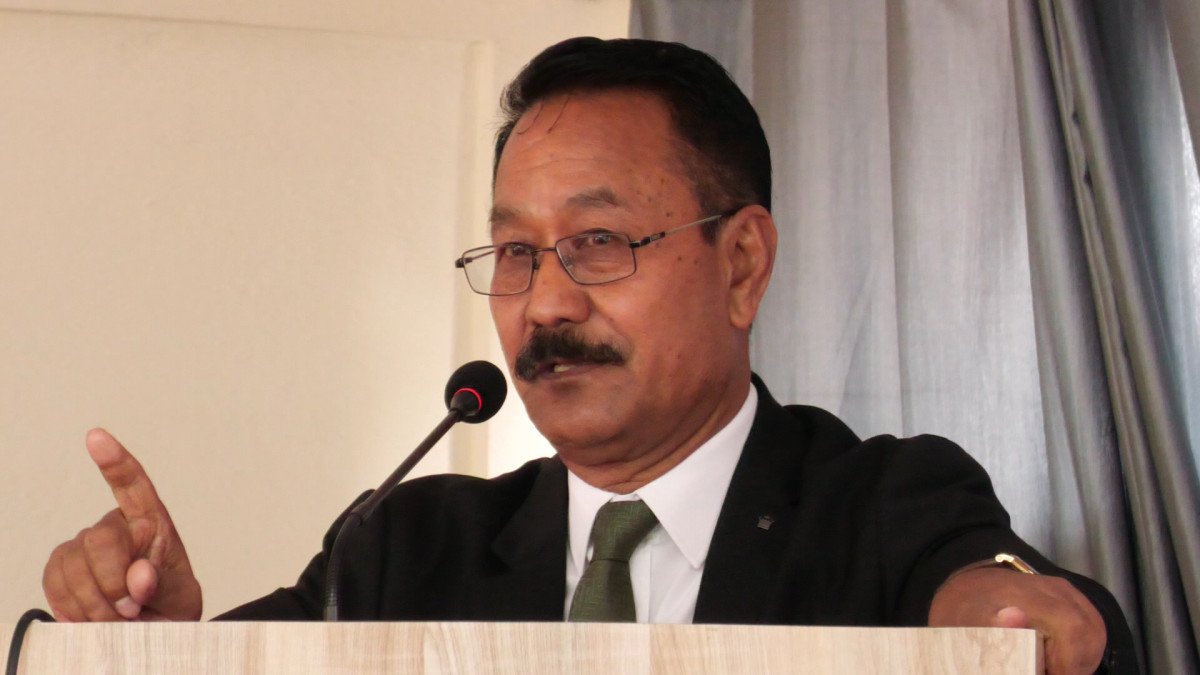
Kathmandu. The Chief of Army Staff (COAS) of the Nepali Army, General Purna Chandra Thapa, clarified that the army fulfilled its duties within constitutional and legal boundaries during the complex situation arising from the Gen-Z protests on Bhadra 23 and 24, 2082 BS. While testifying before the inquiry commission formed to investigate the protests, he provided detailed information regarding the strategic discussion held with the Prime Minister on the morning of Bhadra 24 and the constitutional compulsion for army mobilization.
According to COAS Thapa, during the meeting at the Prime Minister's residence in Baluwatar on the morning of Bhadra 24, he presented the Prime Minister with two clear options. As the first option, he suggested that resigning would be appropriate to seek a political solution and prevent further loss of life. As the second option, he stated that the army was fully prepared to control the situation if recommended constitutionally. However, he noted that after the Prime Minister's resignation, the security situation became even more chaotic, and the army was fully deployed only after 10 PM to restore peace.
- Delay in Curfew Declaration and Security Lapses
During his statement, General Thapa revealed that although the army suggested imposing a curfew from 5 AM on Bhadra 24, the administration declared it only at 8:30 AM, by which time a significant number of protestors had already gathered, rendering it ineffective. He denied allegations of a lack of coordination among security agencies, claiming that the heads of all three agencies were in constant contact.
He stated that the army rescued members of other security agencies during the risky situation and played a proactive role in safeguarding sensitive structures such as Singha Durbar, the President's residence, and the airport.
- Security of Data Centers and Sensitive Structures
He informed that the fire at the National Data Center located in Singha Durbar and the Ministry of Finance's data center was brought under control using the army's own fire tenders. He added that the army exercised restraint, using over 46 rounds of aerial firing to disperse the agitated crowd and employing physical force to protect vital installations. He mentioned that the army prioritized human safety over physical structures and is conducting joint operations to recover looted weapons and apprehended prisoners who escaped.
- Suggestion for Politically Uninterfered Security Mechanism
To prevent the recurrence of such incidents in the future, COAS Thapa suggested that the state's administrative and security mechanisms must be kept free from political interference. He concluded that the National Security Council needs to be made more active and responsible, and long-term structural reforms among security agencies are necessary. He clarified that the army will not take to the streets without a clear mandate and constitutional provision, emphasizing that army mobilization will always be strictly in accordance with the spirit of the constitution.
- Statement Details of COAS Purna Chandra Thapa:
I joined the Nepali Army on Falgun 3, 2043 BS, and have been serving as the Chief of Army Staff since Bhadra 24, 2081 BS. In my capacity as a member of the National Security Council, I discharged my duties in accordance with the spirit of the constitution and law during the complex and unusual situation arising from the demonstrations by the Gen-Z youth generation on Bhadra 23 and 24, 2082 BS.
In the meeting of the Central Security Committee held on Bhadra 22, information was received from the National Investigation Department and other security agencies that the agitation could escalate widely. However, since the National Security Council had not held a formal meeting by that date, no special strategic discussion took place. As the security situation around the Parliament building became critical on Bhadra 23, I directed the necessary security preparations in coordination with other security agencies as per the previous decision and alerted the subordinates to be ready to implement the curfew upon the request of the local administration. The Nepali Army was not mobilized that day; security arrangements were implemented under the leadership of the Ministry of Home Affairs.
The 39th meeting of the National Security Council was held at the Prime Minister's residence, Baluwatar, around 8:00 PM on Bhadra 23. The Nepali Army is not an institution that takes to the streets automatically: it can only be mobilized upon the recommendation of the Council of Ministers and the decision of the President, after completing the constitutional and legal process. When the meeting was held, the Home Minister had already resigned, the ban on social media had been lifted, and given the expectation that the protestors' demands would be addressed, there was no concrete estimation of a volatile situation arising on the 24th, so no decision or discussion took place regarding army mobilization.
During the discussion at the Prime Minister's residence on the morning of Bhadra 24, the Prime Minister sought my advice. I presented two options: 'First, as I understood some senior officials of his own political party were suggesting resignation, it might be appropriate to move towards a political solution to prevent further loss of life: Second, if recommended constitutionally, the Nepali Army is fully prepared to control the situation.' However, after the Prime Minister resigned, the security situation became even more chaotic, and the Nepali Army gradually issued statements and appeals, and from 10:00 PM onwards, it was fully deployed, playing an active role in restoring peace.
I reject the allegation of a lack of coordination among security agencies. The heads of all three security agencies were in constant contact and joint discussion, and even in risky situations, the Nepali Army provided security and rescue to members of other security agencies. The Nepali Army played a proactive role in safeguarding sensitive structures such as Singha Durbar, the President's residence, the Prime Minister's residence, Tribhuvan International Airport, fuel depots, prisons, and other vital installations, where extreme restraint was exercised to keep human casualties low. Everyone needs to be clear that the Nepali Army is not mobilized without a clear mandate and constitutional provision. Army mobilization can only happen according to the constitutional provisions under Article 266(1), 267(6), and 273(1) of the Constitution of Nepal.
Although I have heard complaints that requests for assistance to the Nepali Army on Bhadra 24 were not addressed in time, this is not the reality. The Nepali Army used fire tenders to control the fire that broke out at the National Data Center in Singha Durbar and the Ministry of Finance's data center. Furthermore, the main structures of the President's residence, the Prime Minister's residence, airports across the country including Tribhuvan International Airport, fuel depots, prisons, and other vital installations were saved through the initiative of the Nepali Army. The agitated crowd gathered outside Singha Durbar and the President's Office premises was dispersed after verbal warnings, more than 46 rounds of aerial firing, and repeated physical pushing and persuasion at the main gates. Although the Nepali Army suggested imposing a curfew from 5:00 AM on Bhadra 24, the curfew was declared in Kathmandu only from 8:30 AM, by which time a significant number of protestors had gathered, making the curfew ineffective.
I prioritized human safety over physical structures. My view is that criticism regarding army mobilization should be evaluated based on the constitutional compulsions and situational context of that time. Joint operations were conducted to recover looted weapons and escaped prisoners, a public appeal was made to return the weapons, and a coordinated security mechanism was kept active.
In conclusion, my finding is that to prevent the recurrence of such incidents in the future, the state's administrative and security mechanisms must be kept free from political interference and strengthened and made effective on a legal basis, the National Security Council must be made more active and responsible, and deep coordination and long-term structural reforms among security agencies are necessary.
This specific news has been automatically translated by AI. As a result, there may be some inaccuracies or language errors.