Communist Leaders Each Beat Their Own Drum Amidst Electoral Setbacks

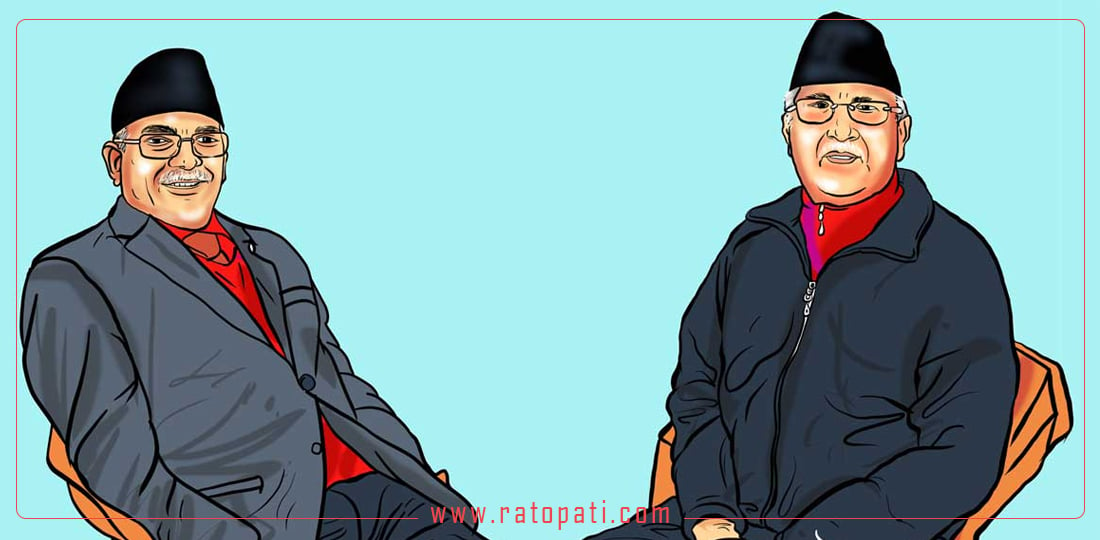
Biratnagar. In the House of Representatives elections held on Falgun 21, the people voted in favor of change. While the Rastriya Swatantra Party (RSP) and the Shram Sanskriti Party achieved victory, various parties bearing the communist name, as well as traditional parties like the Nepali Congress and Madhesi parties, suffered embarrassing defeats.
While various comments are being made regarding the mandate received and the rise of the two new parties, the question of how the reorganization of Nepal's so-called leftist parties is possible remains. Can they return to their old state, or is their decline unstoppable? This topic continues to be discussed and debated.
Among the communist parties, only CPN-UML and the Communist Party of Nepal (CPN) reached parliament. They are in third and fourth positions. The condition of other communist parties has become pitiable. However, both UML and CPN have lost about half of their vote share compared to the past.
After the elections, Ghanashyam Bhusal, Chairman of the Communist Party of Nepal (United), wrote a status on social media. The title of his status itself begins with the question, 'How will a communist party survive?'
He posed the question, 'Looking at my own form, I am delighted; am I destined to end like Narcissus? Or will I move forward like a Phoenix with new strength and life?'
However, his party, which keeps repeating the mantra of reorganizing a new communist party, received only 4,515 votes in the proportional representation category nationwide. If one compares this mandate with Ghanashyam Bhusal's speeches on political ideology, the speeches seem grander than the mandate.
The defeat of the Communist Party of Nepal (Maoist), which participated in the elections for the first time, is equally embarrassing. Although active for a long time, this party participated in the elections for the first time. After the elections, the party's General Secretary Netra Bikram Chand (Biplav) has not written anything about the votes his party received or the journey ahead. Instead, he stated that the mandate that has emerged, mentioning Rabi Lamichhane and Balen, is neither new nor surprising.
Biplav wrote, 'The fact that RSP took the place of the old parliamentarian parties in this election is new, but the fact that they will have a majority in parliament is not new or surprising. It is clear that the people wanted change.' He added, 'The result influenced by capital, propaganda, and deceit has led to the downfall of the parliamentary trend and power, either through arrogance or incompetence. What decisions Balen-Rabi will make regarding constitutional rewriting, state restructuring, form of governance, and economic policy will become clear after the government is formed.'
Biplav had sent his party leaders to the elections under the leadership of Khadga Bahadur Bishwakarma (Prakanda). The total proportional votes his party received nationwide were only 23,867.
Furthermore, the Rastriya Janamorcha is a party that has reached parliament from some constituency or another since 2048 in the history of Nepal's parliamentary politics. The party's chairman, Chitra Bahadur KC, says that this election result is not correct. At a press conference organized on Monday, he said, 'Those who threatened to burn Singha Durbar, those who threatened to burn the Supreme Court, those who threatened to burn parliament, they have now come in large numbers. It is not always true that the people make the right decision.'
KC claimed that what he said in the past has come true and showered criticism on other parties. However, his party received only 29,456 votes in the proportional representation category this time.
Similarly, the Nepal Workers and Peasants Party (NWPP), which has always won from Bhaktapur, was swept away this time. This party also reached parliament almost consistently since 2048. This time, the party received only 42,299 votes.
Apart from the mentioned parties, there are other parties bearing the communist name that managed to secure only a few thousand votes. This list includes the Communist Party of Nepal (Marxist-Leninist), which received 6,172 votes. Likewise, the Communist Party of Nepal (Marxist) (Pushpa Lal) received 4,835 votes.
Reacting to the latest mandate, CPN leader Indra Bahadur Angbo stated that in the name of change, the election results and the mandate have fallen into the hands of populists. He emphasized the need for an objective review of this defeat.
Addressing the leaders, he said, 'With an objective review of this shameful defeat, how will the Nepali communist party and leadership move forward? The new generation, especially leftist youth, are waiting with eagerness and patience. Respected leaders, do not disappoint the new generation.'
- What Analysts Say:
In Nepali politics, the mention of the word communist used to conjure an image of a large mandate and energy. The recent election has blurred this picture.
The electoral fate of CPN-UML, Maoist, and even small communist factions that look like tea stalls, raises a serious question—is the reorganization of the communist movement possible in Nepal now?
According to analyst Dambar Khatiwada, this downward trend for communists is not sudden. He said, 'I feel that the process of the communists' downfall did not start with this election. In the 2074 election, the people gave them nearly a two-thirds majority in the name of communist unity, but their failure led to the collapse of that government, which dealt a huge blow.' He added, 'The Oli government failed to do anything good, and the communist parties spent 3-4 years fighting among themselves. They unconstitutionally dissolved parliament twice. From that point, the people developed a feeling of tremendous hatred and disgust towards communists.'
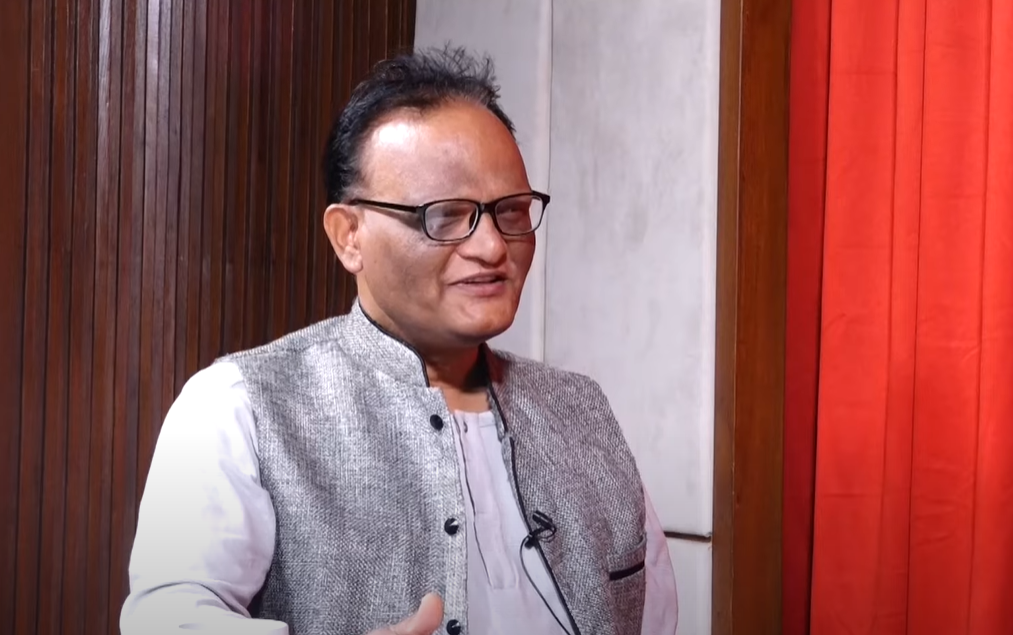
When the then Maoist party emerged as a major party in 2064, it had 29-30 percent of the vote. But it continuously declined. Now, even after 22 factions merged, the vote share has decreased further. Khatiwada asserts that revival is impossible without new generation leadership.
Leftist analyst Professor Krishna Pokhrel terms the recent election result as an 'avalanche.' Pokhrel said, 'In this election, all old parties were caught in an avalanche. This defeat is not just of the communists; it is a mandate against all old parties.'
Discussing the presence and results of small communist parties in the election, Khatiwada said, 'These parties had little significance in Nepali politics. They had neither ideological contribution nor a history of struggle. Mr. Biplav jumped into the election for the first time this time, came out beating his chest, but could not even cross 25 thousand votes nationwide.'
Khatiwada stated that NWPP has shown a model of development in Bhaktapur, where education and health are good, but they have not been able to sustain it.
Currently, there are many small communist parties in Nepal that get 2,000, 5,000, or 10,000 votes. Analyst Pokhrel suggests that these small shops need to be turned into large malls.
'For that, they must first self-reflect. Without showing any arrogance, they must consider where they stand. It is no use talking about immediate party unification now, but an environment for cooperation must be created,' he said. 'Should they cooperate and become like Kerala in India, or maintain arrogance and become like West Bengal? Communists ended in West Bengal, but they survive in Kerala. Which path will Nepali communists choose—Kerala's or Bengal's?'
Pokhrel claims that the communists have forgotten their own agenda. 'Both Maoist and UML, when aligning with the Congress, carried the Congress's agenda. There was no policy difference between them. If they are to dust themselves off and rise, they must bring agendas in education and health. Should private sectors be promoted in health, or should it be kept under state supervision?' Pokhrel questioned.
In Khatiwada's view, the main question is whether there is a possibility of reorganizing the communist movement in a new way by closing down the existing communist shops.
Pokhrel argues that the space taken by RSP was actually the space of Congress's liberal democracy. 'Only if the communists become honest in searching for their lost space and can transform small shops into large malls can the communist force be revived; otherwise, this downward journey is certain to deepen,' he concluded.
This specific news has been automatically translated by AI. As a result, there may be some inaccuracies or language errors.
_6BsDewPY2j.jpg)