West Asian Tensions Hit Chitwan Tourism Hard as Flights Become Costly and Unsafe
Chitwan. The escalating military tensions in West Asia are having a direct impact on the tourism sector here. With air travel becoming expensive and unsafe, many tourists planning to visit Nepal have canceled their trips.
Tourism entrepreneurs state that tourists from countries other than India, China, and Australia have canceled their visits to the Sauraha area. Entrepreneurs mention that in previous years, hotels in Sauraha used to be about 80 percent full around this time. According to them, only about 20 percent occupancy has been recorded this year.
The tourism sector in Sauraha, which was affected by elections for 15 days, was subsequently impacted by the conflict in the Middle East. Om Prakash Pandey, Chairman of the Regional Hotel Association Chitwan, stated that February, March, and April are the peak tourist season for Sauraha. He informed that while hotel occupancy used to be around 80 percent during this time in previous years, this year it is only around 20 percent.
He said, "Tourists from countries other than those involved in the conflict have also canceled their bookings." During this period, rhinos shed their horns, allowing for easy wildlife viewing in Chitwan National Park. "Major agencies have canceled most bookings," he said, "Who would come for tourism when the skies are unsafe?"
Gunaraj Thapaliya, the association's vice-chairman, noted that even Nepalis have stopped traveling, attributing it to the increased costs due to the conflict and the concern for friends and relatives in those affected countries, which dampens the enthusiasm of Nepalis to travel and enjoy. He also informed that tourists from other countries are not coming due to the excessively high airfares.
Tourism entrepreneur Suman Ghimire reported that 50 percent of the bookings at his hotel were canceled, mentioning that postponements for October and November have not occurred, but improvement is expected if the conflict stops soon. He noted that tourists mainly from European countries, the UK, the US, and Germany have postponed their travel due to the conflict, stating that the entire tourism business has been affected this year because this peak season was disrupted by conflict and elections. He said, "There is one month left. This season does not look promising." He expressed concern that the tourism sector is directly affected regardless of what happens elsewhere.
Prakash Neupane, General Manager of Banbas Resort, stated that tourists have canceled bookings due to the Middle East tension. He mentioned that a large number of tourists, including Europeans, usually arrive from various countries during this season, but this year it has been affected by the conflict. Neupane added that the tourism sector is directly impacted because flights that transit through Middle Eastern countries have been halted. He said, "The war has had a bad effect on Nepal's hospitality sector."
Tourism entrepreneur Santosh Giri stated that the conflict during the peak season has directly impacted the tourism sector, noting that tourists coming to Nepal have canceled bookings because the airlines they use and the transit airports have been shut down. He said, "After being caught in the crossfire of conflict, who would come to travel and enjoy?"
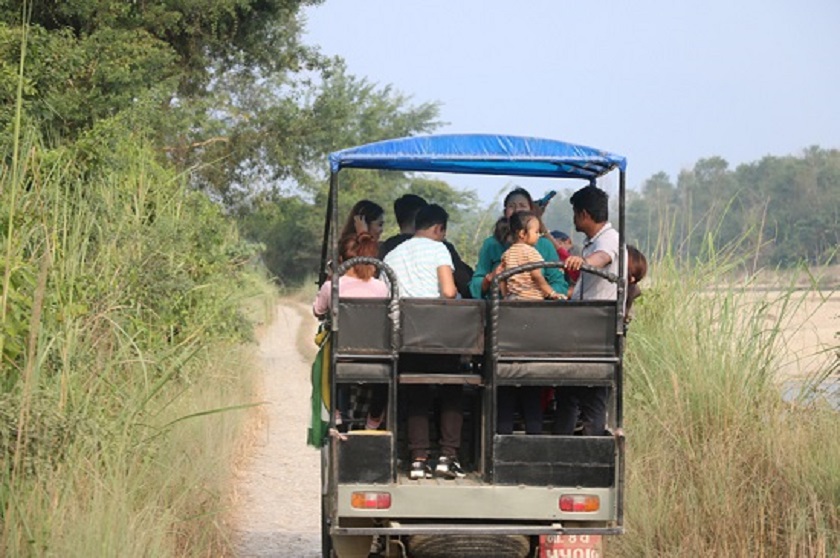
There are 148 hotels in Sauraha, with a capacity to accommodate 7,200 tourists. Around 6,400 people are directly employed in this sector, with the number of indirectly employed people exceeding 12,000. Domestic and foreign tourists visit here to see rare wildlife such as the one-horned rhinoceros, Bengal tiger, gharial crocodile, and other rare flora and fauna in Chitwan National Park and surrounding community forests.
In addition, Tharu culture in Sauraha is also popular among tourists. Furthermore, various organizations in Nepal organize events in Sauraha, and Indians also visit Sauraha for weddings. As the conflict has affected everywhere, the tourism sector here, along with other areas, has been impacted.
This specific news has been automatically translated by AI. As a result, there may be some inaccuracies or language errors.