Koshi Hospital to Establish Own Blood Bank Amid Rising Demand and Shortages

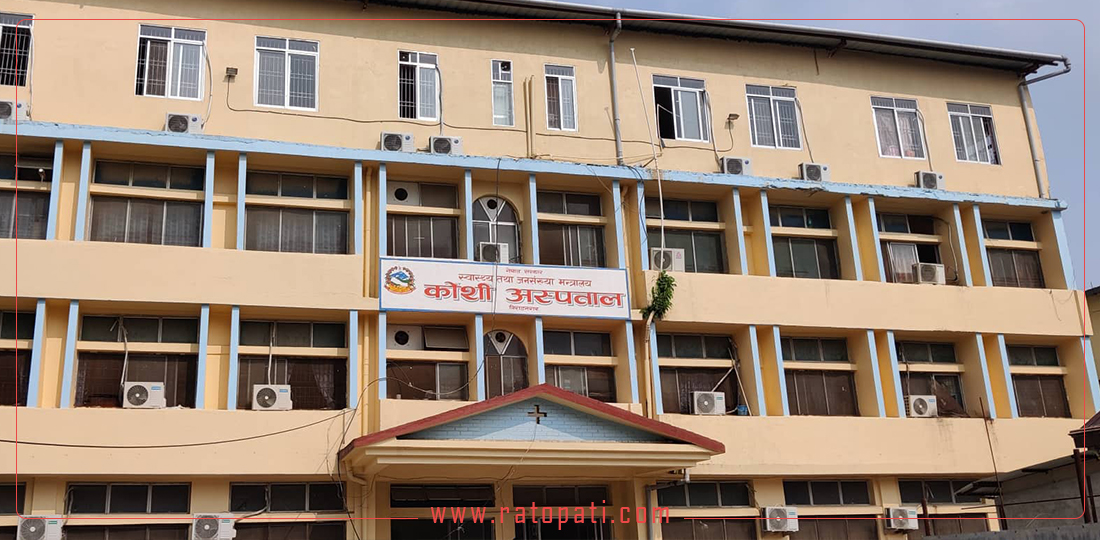
Biratnagar. Koshi Hospital is set to establish its own 'Blood Bank'. Preparations for setting up the 'Blood Bank' have begun after the largest hospital in Koshi Province started facing daily blood shortages due to the increasing patient load.
According to the Provincial Blood Transfusion Service, Biratnagar, the daily demand for blood in Koshi Province is around 900 to 1000 units.
Trilochan Neupane, the administration chief of the hospital, informed that the hospital is establishing a blood bank within its own structure to ensure timely blood supply to emergency patients. Patients in critical condition and their relatives have been facing significant hardship due to the daily blood shortages at the hospital.
It is particularly challenging to arrange blood in time for maternity and surgery patients. According to him, the hospital initiated the process by issuing a tender notice in the month of Poush (Nepali month) for the purchase of necessary materials to operate the blood bank. Accordingly, it has been stated that the necessary infrastructure construction, equipment installation, and service operation for the blood bank will be managed through the tender called by the hospital.
Administration Chief Neupane stated that once the 'Blood Bank', being constructed with a budget of approximately 24 lakh rupees, is established within the hospital, the process of blood collection, testing, and storage will be faster, leading to expected improvements in emergency services.
"Currently, we are dependent on external agencies, which sometimes leads to blood shortages," said Administration Chief Neupane. "Once the blood bank is operational within the hospital, we can provide faster and easier service to the patients."
He also informed that the vacancy for the necessary staff to operate the 'Blood Bank' has already been opened and is currently in the selection process. Doctors working at the hospital say that the demand for blood is extremely high as patients come for treatment from distant districts and neighboring Indian cities. Doctors state that treatment becomes difficult when blood is not available on time as per the requirement.
Dr. Anju Dev, Head of the Gynecology and Obstetrics Department at the hospital, mentions that the maternity and surgery services at the hospital are extremely critical, and this department faces the most problems when there is a blood shortage.
"We have an extreme need for blood for maternity and surgery patients here," she says. "But due to shortages, in many cases, we are forced to ask relatives to arrange one unit of blood before admitting the patient." According to her, the hospital has to depend on the Red Cross because it does not have its own blood bank. "Sometimes, private hospitals prioritize their own patients, and the poor patients here suffer," she adds.
Dr. Dev emphasized that maternity services are highly sensitive and emergency services, and she stated that the establishment of the 'Blood Bank' by the hospital itself will relieve many patients from the compulsion of finding blood on their own. The demand for blood is extremely high in hospitals, especially in Morang district. Regular blood donation programs have faded into the background recently.
This specific news has been automatically translated by AI. As a result, there may be some inaccuracies or language errors.