Residents of Kailali Camp Live Under Threat from Dry Trees Amid Legal Hurdles to Removal

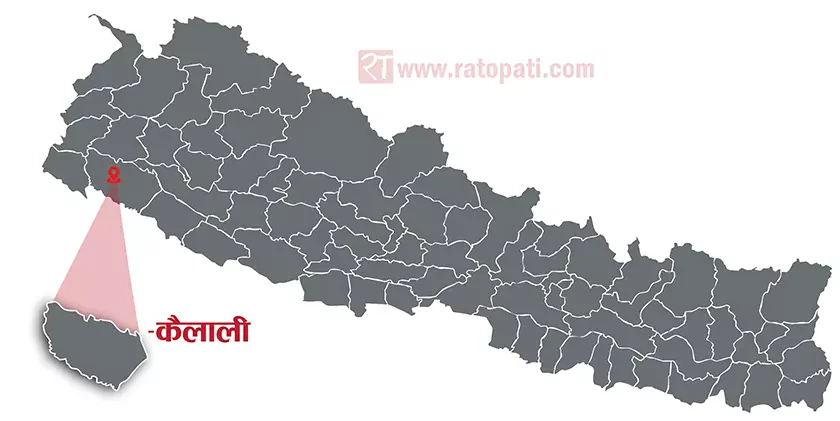
Kailali. In the Tikapur Ekata Camp in Kailali, Subhadra Chaudhary is constantly startled by the dry trees in her home's courtyard. The constant fear that these trees, which are in a state where they could fall at any moment due to being dried up, might cause an untoward incident keeps her on edge. The approaching stormy weather of the summer season further worries Chaudhary.
“Many lives have been lost due to trees falling right before our eyes,” Chaudhary said, “The fear of those incidents still remains in my heart.” Having no other shelter to move to, she says she has been enduring the fear and compulsion for two decades. Chaudhary states that the fear of insects during the monsoon, the cold in winter, and the threat of storms in summer have never left her.
The houses, plastered with mud, marked with blocks in some places, or built with raw bricks, are unsafe. The citizens of that area have no idea what kind of disaster might strike at any moment. “There is a risk of snakebites in this very camp, we suffer from waterlogging and muddy roads during the monsoon, and now as summer begins, the risk of storms and fire is equally high,” says local Kalyan Bishwakarma, “The extent of the fear is indescribable, there is nowhere to leave, and our stay is uncertain.”
The recently concluded elections have brought hope to the former Kamaiyas and squatters living in the camp. The former Kamaiyas and squatters, who have received assurances multiple times in the past, now believe that permanent settlement arrangements will be made after the Rastriya Swatantra Party secured a two-thirds majority in this election.
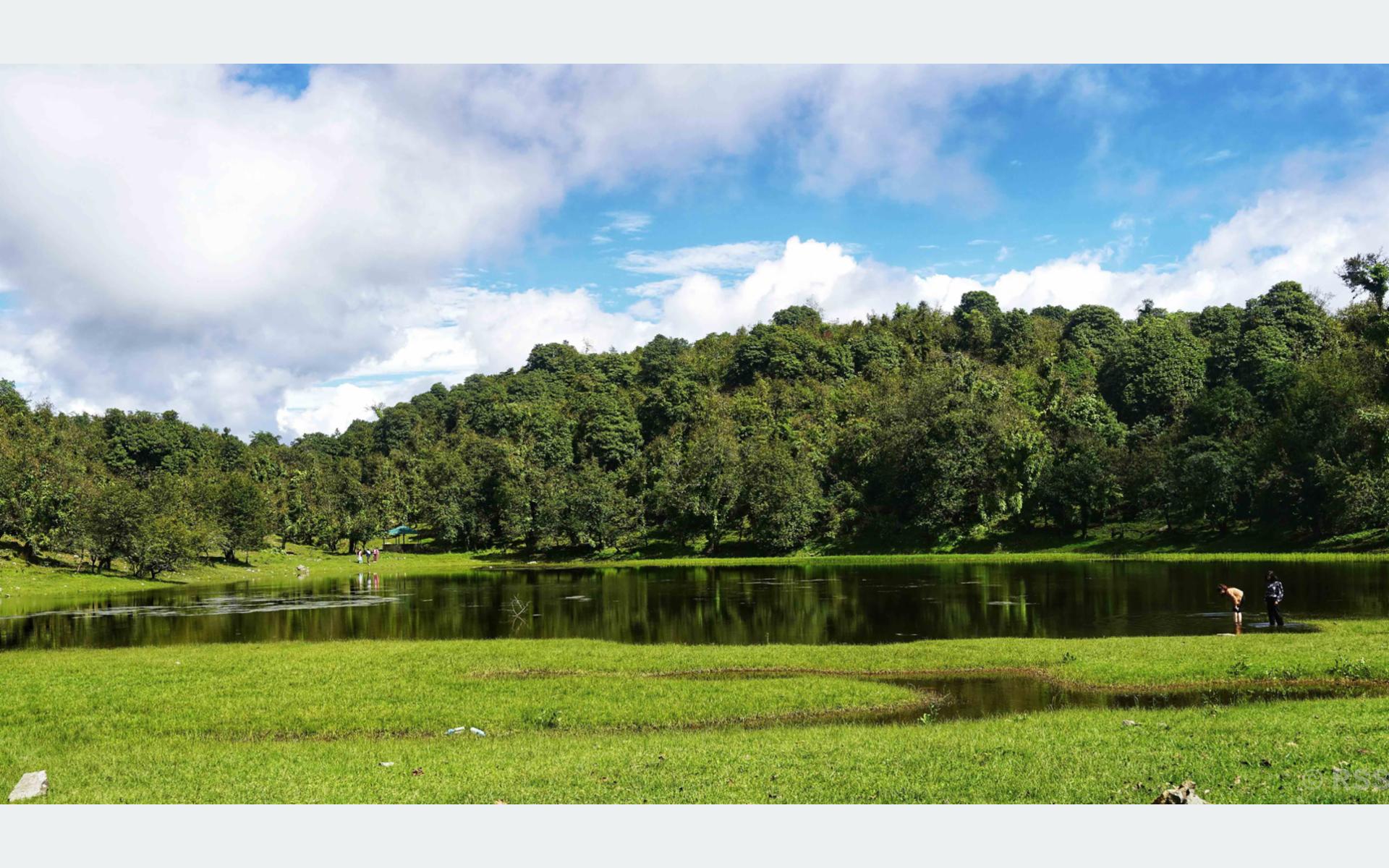
Hundreds of dry trees stand on the encroached land of Tikapur Multiple Campus under Sudurpashchim University. Although a few trees appear green, most are dry. The area, which was a forest before the encroachment in BS 2062, has become desolate over two decades. Campus Chief Dhabindra Rawal states that the process of cutting the dry trees has been initiated several times but has not succeeded due to legal complications. The wood collected by the campus has also not been sold yet. Chief Rawal mentions that the collected wood, worth millions, is rotting and becoming unusable because it cannot be sold.
Hundreds of Sal and Saaj trees are dry on the land under the campus's jurisdiction. Neither the campus nor the Sub-Division Forest Office has been able to conserve those trees.
“There are such legal complexities; we neither get permission to collect nor to sell,” Campus Chief Rawal said, “A case was even filed in the Commission for the Investigation of Abuse of Authority when we tried to collect the dry wood.”
At that time, it was decided to collect the dry and fallen trees once a year. Later, the campus lost interest after it was decided that the income from selling the collected wood would go into the government's account. “We stopped showing interest because the income from collection and sale had to be deposited in the government's account,” Campus Chief Rawal said, “If at least a small percentage was given to the campus, we could have put in more effort for the collection and distribution of the dry trees.”
Besides the Ekata Camp in Tikapur, there is a situation in many other areas of the district where dry trees falling pose a threat of damage to human settlements. Due to strong storms during the summer, incidents of people losing their lives when trees fall onto houses in some settlements have been occurring.
Ramvichari Thakur, Chief of the Divisional Forest Office, Dhangadhi, stated that the risk of dry trees falling due to storms exists in settlements in other parts of the district as well. He said, “The recently amended Forest Act regulations give the local level government the authority to cut dry trees in coordination with the Divisional Forest Office.”
This specific news has been automatically translated by AI. As a result, there may be some inaccuracies or language errors.




-(2)_QJLjKxR87n.jpg)