Middle East Tensions Escalate as Conflict Enters Second Week with Attacks Across Iran, Israel, and Gulf States

_AJbpOGoCxt.jpg)
As the conflict in the Middle East enters its second week, attacks, explosions, and retaliatory actions are intensifying. Recent developments in Iran, Israel, and various Gulf countries have further heightened regional tensions, seriously impacting energy supplies, maritime routes, and the overall security situation.
An official stated that fuel distribution in the Iranian capital, Tehran, has been temporarily halted following a joint attack by the US and Israel. Large fires erupted after attacks on fuel storage and distribution centers located in Tehran and five surrounding areas. AFP journalists reported seeing thick black smoke rising from various parts of the city since early morning.
Meanwhile, the process for changing Iran's supreme leadership has also gained momentum. It is reported that consensus has been reached among potential candidates within the 'Assembly of Experts,' the religious body tasked with selecting the next Supreme Leader, although the name of the new leader has not yet been made public.
Iranian officials have rejected claims that US President Donald Trump is influencing the selection of a successor. Conversely, the Israeli military has warned that any successor or person attempting such an appointment will be targeted.
Conflict has also spread to Lebanon. Lebanon's Ministry of Health reported that at least four people were killed in an Israeli airstrike on a hotel in Beirut. The Israeli military claimed the strike was a 'precision operation' targeting commanders associated with Iran's Revolutionary Guard's Quds Force.
Israel continues its fighting with Iran-backed Hezbollah in Southern Lebanon. According to the Ministry of Health, eight people were killed in airstrikes across more than 20 cities and villages.
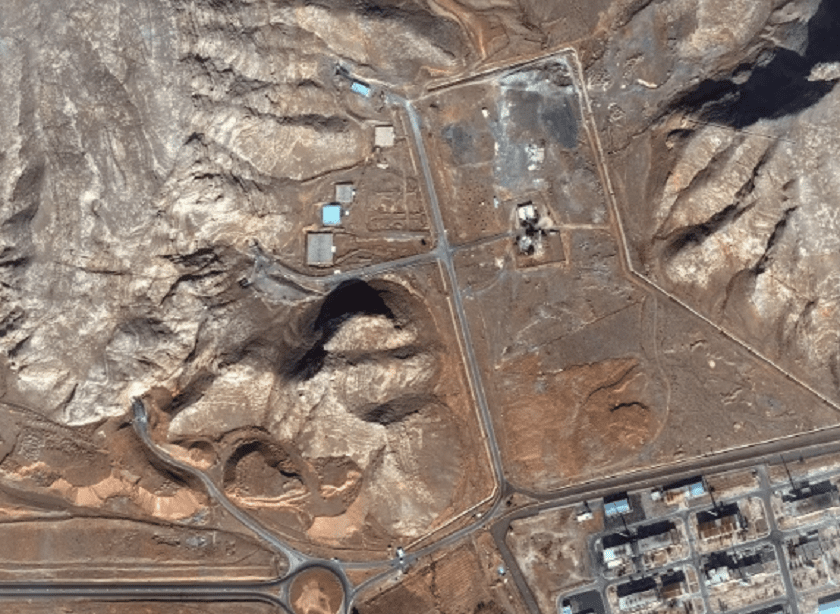
Explosions have also occurred in various locations within Iran. State media reported an explosion on Sunday in Iran's central Yazd province. According to the IRNA news agency, the explosion occurred on the outskirts of Yazd city, but the cause was not immediately clear. Previously, reports of explosions had emerged from Tehran, Isfahan, and other parts of the country.
Tension is also evident in the maritime sector. A tugboat flying the flag of the United Arab Emirates sank after an explosion in the Strait of Hormuz on Friday. According to Indonesia's Foreign Ministry, three Indonesian members of the seven-person crew are still missing. One crew member is receiving treatment in Oman, and search operations for others are ongoing.
The Strait of Hormuz is one of the world's most critical maritime routes, through which a large volume of global oil and gas is transported. Since the war began, attacks on vessels using this route have increased, affecting maritime traffic.
Various Gulf countries have also reported new attacks. Saudi Arabia, the United Arab Emirates, Qatar, Kuwait, and Bahrain reported attempts at missile or drone attacks in their territories.
According to Kuwait's Ministry of Interior, two border guards on duty died. The military stated that a drone attack targeted a fuel storage tank at the country's international airport.
Saudi Arabia's Ministry of Defense reported intercepting 15 drones, including one targeting the diplomatic quarter in the capital, Riyadh. Bahrain reported three injuries from falling missile debris and damage to a desalination plant that converts seawater into drinking water.
Iran, however, claims its military capabilities remain strong. A spokesperson for Iran's Revolutionary Guards stated that the country's military can sustain 'intense warfare' for six months. According to him, more advanced missile systems could be deployed in the coming days.
Iranian President Masoud Pezeshkian also stated that Tehran would be compelled to respond if attacks originated from neighboring countries' soil. In comments broadcast on state television, he said such a reaction would not be intended to create a dispute with any country but would be a necessary security measure.
A day earlier, Pezeshkian had also apologized to neighboring countries that provided their military bases for attacks against his country.
In related news, some crew members of an Iranian warship that sank after colliding with a US submarine have been discharged from a hospital in Sri Lanka. Twenty-two crew members were released after treatment, while treatment for ten others is ongoing.
Sri Lanka reported that the bodies of 84 crew members were recovered from the sunken vessel in international waters following the incident, and more than 60 people are still missing. Information was also released that another Iranian warship sought refuge in Sri Lankan waters following the attack.
This specific news has been automatically translated by AI. As a result, there may be some inaccuracies or language errors.