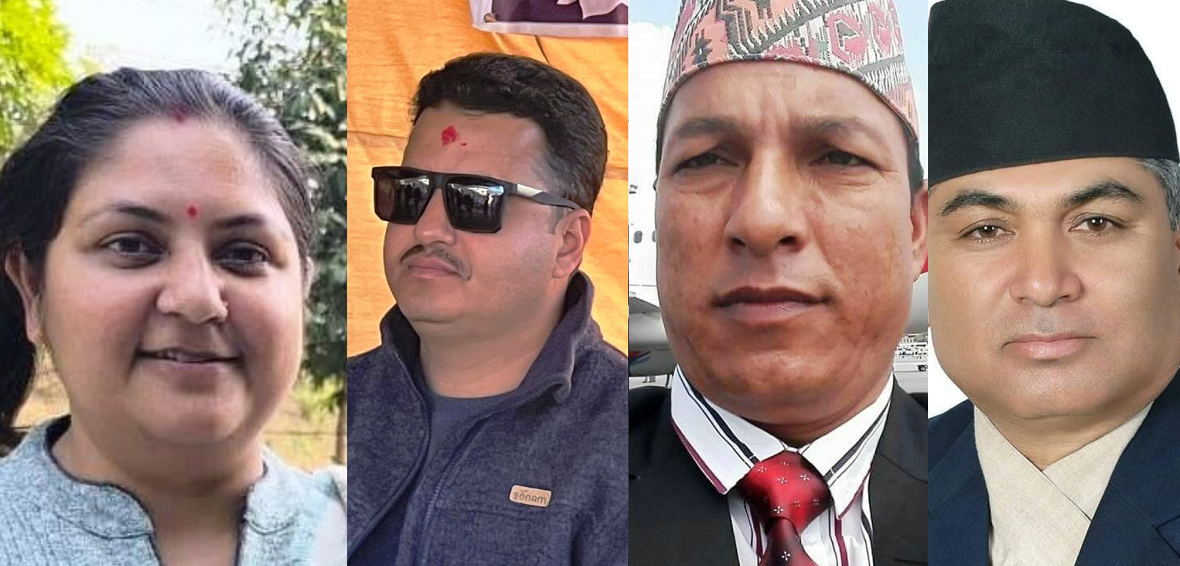
Harka Sampang's Victory in Sunsari-1 Marks New Era in Nepali Politics, Translating Street Activism into Parliament
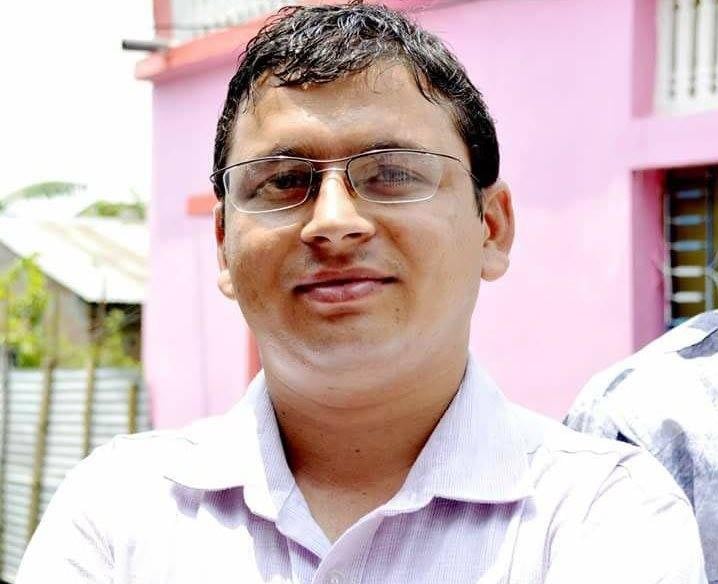

Biratnagar. When Harka Raj Rai Sampang used to drive tempos on the streets of Dharan or sweat in the scorching deserts of the Gulf, he probably never imagined that one day he would shake the very foundation of Nepal's parliamentary politics. However, as the election results for Sunsari Constituency No. 1 were announced on Sunday, a new history was written.
Sampang, the chairman of the Labor Culture Party, reached the door of the House of Representatives after winning with 35,741 votes. This victory is not just the triumph of an individual; it is an endorsement of the labor-revolution, putting traditional politics to rest.
Harka, born in Khartamchha, Khotang, in 2039 BS, has a life story no less dramatic than a movie. Although born into a British Gurkha soldier's family, his destiny was marked not by comfort but by struggle. After moving to Dharan for higher education in 2057 BS, he faced many hardships to make a living.
Due to his stubborn nature, he adopted 'Revolution' as his surname. That hunger for revolution took him to dangerous areas in Afghanistan and Iraq at times. But while sweating in the hot sands abroad, his mind was always preoccupied with Dharan's dry water sources and pervasive corruption. After returning home, he took on roles from the president of the Tempo Union to an activist, challenging irregularities from the streets.
Sampang connected politics not to speeches, but to labor. In the 2079 local elections, when he contested alone under the 'Lauro' (Spade) symbol, many did not believe in him. But when he defeated massive forces like UML and Congress, the era of Sampang began in Nepali politics.
After becoming Mayor, he did not sit in an air-conditioned room flipping files. Instead, he took a spade and an axe and ventured 42 kilometers into the jungle with the public to bring water from the Kokaaha River. His style of carrying stones and breaking gravel alongside the people touched the hearts of the common masses. His belief was that one does not need to sit in a chair to serve the people; voluntary labor is enough. That very belief propelled him to the seat in the parliament.
Harka Sampang is as controversial as he is popular. His sharp and sometimes seemingly disrespectful remarks against top leaders on social media kept him under criticism. His habit of not sparing anyone from Balen Shah to Rabi Lamichhane was seen by some as arrogance and by others as fearlessness.
Many considered his decision to resign as Mayor before completing three and a half years to contest the House of Representatives election as risky. However, the voters of Sunsari-1 have endorsed the 'Harkawad' (Sampangism) he has been advocating. With 35,741 votes, he left the candidate from the Rastriya Swatantra Party, Goma Tamang, and the UML candidate far behind.
Sampang, who does not hesitate to say, 'I entered politics to become Prime Minister,' has now reached the highest forum for national policy-making. He faces accusations of failing to fully resolve Dharan's water supply problem and abandoning his post midway. But now, the burden of not just Dharan, but the entire nation rests on his shoulders.
As Harka Sampang enters parliament carrying the flag of the Labor Culture Party and his own unique ideology, he faces a single challenge: how to translate the rebellion of the streets and the sweat of labor into the pages of law? When Harka Sampang speaks in his native style from the rostrum of the parliament, the walls of Singha Durbar will surely pause to think, 'Politics is no longer just a game of power and money; it is also a confluence of labor and courage.'
The Rastriya Swatantra Party is seen heading towards nearly a two-thirds majority in the House of Representatives. Sampang has also won two seats. The announcement of victory in one seat is still pending. Sampang's three seats are small in parliamentary arithmetic. But this is the beginning of his new politics. More than the opposition parties like Congress, UML, and CPN, the public will consider Harka Sampang the real opposition because people are interested and concerned about his style of speaking and his new approach. Perhaps realizing that he could create difficulties for them in parliament, Balen Shah, whom RSP is promoting as the Prime Ministerial candidate, is trying to keep Sampang balanced from the start.
'Well, now I declare myself the first [elected] from Sunsari, Victory to the Soil! Victory to the Nation!! Victory to the Labor Culture!!!,' Sampang posted on Facebook after winning in the House of Representatives.
Balen Shah commented on the post, writing, 'I always had, have, and will have love for you,' and 'I always love you and Dharan.' While Balen has expressed affection by commenting on Harka's status, the future journey remains to be seen given their different political backgrounds.
This specific news has been automatically translated by AI. As a result, there may be some inaccuracies or language errors.