Three Political Parties Position Themselves as Alternative Forces in Upcoming Nepali Elections

A coalition of parties featuring seasoned politicians who have significantly contributed to Nepal's communist movement are presenting themselves as an alternative force in the upcoming elections.
The Rastriya Janamorcha, Aam Janata Party, and Pragatisheel Loktantrik Party have unveiled attractive agendas centered on resolving the nation's existing problems and achieving economic prosperity for the upcoming House of Representatives election scheduled for Falgun 21.
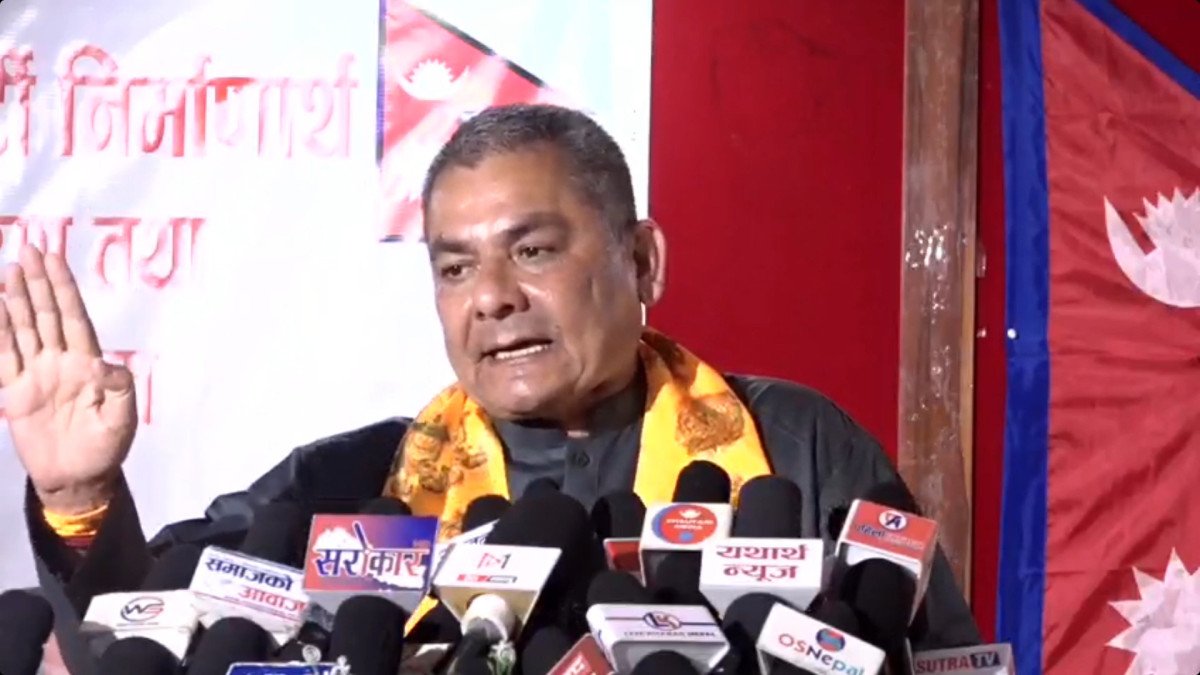
Chitrabahadur KC, Chairman of the Rastriya Janamorcha and a veteran politician, has been campaigning in districts including Rupandehi and Nawalparasi. "In my political life, I feel the country is facing its biggest crisis in history," he stated in an interview.
The party's manifesto mentions the need to reform the country's weak economic condition, which it attributes to the expensive federal system. Janamorcha advocates for an independent economy and accepting foreign aid unconditionally. The Rastriya Janamorcha is competing under the glass election symbol.
The party has fielded 70 direct candidates across 42 districts and 107 candidates on the proportional representation closed list. KC, who was directly elected from Baglung in the previous election, is now listed first on the proportional representation list this time.
The party has not formed an electoral alliance in any constituency except for Baglung Constituency No. 1, KC informed, adding that leaders and cadres are enthusiastically reaching out to the public to seek votes.
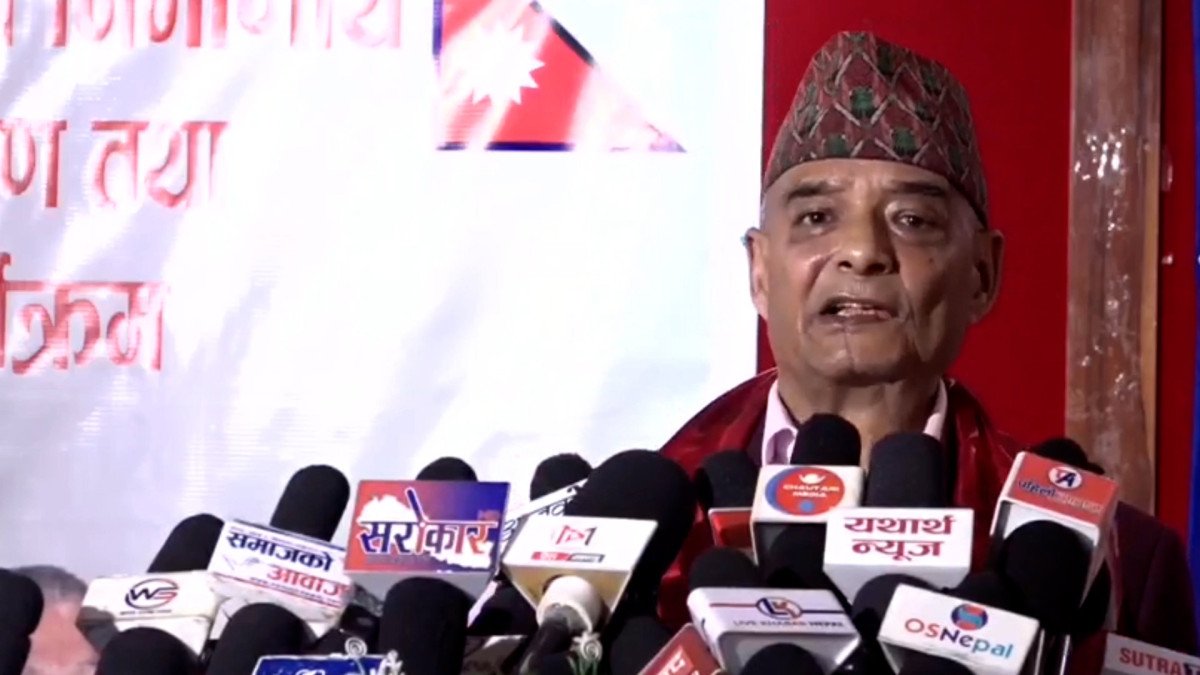
The Aam Janata Party, led by former minister Prabhu Sah, has entered the election emphasizing national independence, stability, and systemic reform. According to Chairman Sah, the party has registered over a hundred direct candidates and submitted a closed list of 110 candidates for proportional representation.
Chairman Sah, informing that the election campaign is proceeding enthusiastically, clarified that they are fighting to change the country's situation. "We do what we say, and we have shown it so far. Now there is a need to reform the system, and we have made nationalism our first agenda," he said. "Plans have been put forward to end foreign interference, ensure a stable government, maintain good governance, remove unnecessary tax burdens and corruption, and strengthen the economy."
According to Durga Sob, Chairman of the Pragatisheel Loktantrik Party, the party has put forward 87 candidates in the direct electoral competition. The party submitted a closed list of 97 candidates for proportional representation. The Pragatisheel Loktantrik Party claims to have released a manifesto with an implementation plan.
Issues such as political stability, national independence, geopolitical complexities, inclusivity, tourism promotion, job creation, ending compulsory foreign employment, and granting voting rights to Nepalis living abroad are included in the manifesto.
The agenda includes taking the country to a developed status within 25 years and achieving double-digit economic growth in five years. Chairman Sob stated that only the Pragatisheel Party has the policy, leadership, and program to provide an exit from the country's current problems. "Voters are looking for alternatives, and the Pragatisheel Party is providing that alternative," Chairman Sob said.
For the election, 65 political parties are competing with 61 election symbols under the First-Past-the-Post (direct) system. A total of 3,406 candidates are in the electoral competition for direct seats: 3,017 male, 388 female, and one other.
Similarly, 3,135 candidates are competing under the proportional representation system: 1,363 male and 1,772 female. Elections will be held for 165 constituencies under the direct system and 110 seats under the proportional system.
This time, there are 18,903,689 voters: 9,663,358 male, 9,240,131 female, and 200 others. Additionally, the Election Commission stated that 186,142 temporary voters have been registered.
For the election, 23,112 polling centers have been designated across 10,967 polling stations nationwide. 143 temporary polling stations have been established. For election security, 79,727 Nepal Army personnel, 75,797 Nepal Police, 34,567 Armed Police Force personnel, 1,921 National Investigation personnel, and 149,009 election police have been deployed.
Two hundred fifteen thousand employees will be deployed for the election. The Commission has already printed a total of 42,251,200 ballot papers for the direct and proportional systems. Four international and 39 national organizations are deployed for election observation this time.
This specific news has been automatically translated by AI. As a result, there may be some inaccuracies or language errors.
_cvUCBlwFTZ.jpg)