Trump's High-Stakes Gamble: Attacking Iran and Killing Supreme Leader Risks Reshaping Middle East, But Future Unclear


US President Donald Trump has made a massive gamble by attacking Iran and killing its Supreme Leader: attempting to redraw the map of the Middle East using American military force, a feat previous presidents failed to achieve.
If the US succeeds in completely destroying Iran's nuclear program and bringing about regime change in Tehran through airstrikes alone, Trump will claim it as a historic victory. However, Washington appears to have no clear plan for what happens after the end of the Islamic Republic.
But if this military strike, dubbed 'Operation Epic Fury' by the Pentagon, fails or escalates into a regional war forcing the US into a prolonged entanglement, it could tarnish Trump's legacy. Furthermore, it could jeopardize the Republican Party's chances of retaining control of Congress in the upcoming November midterm elections.
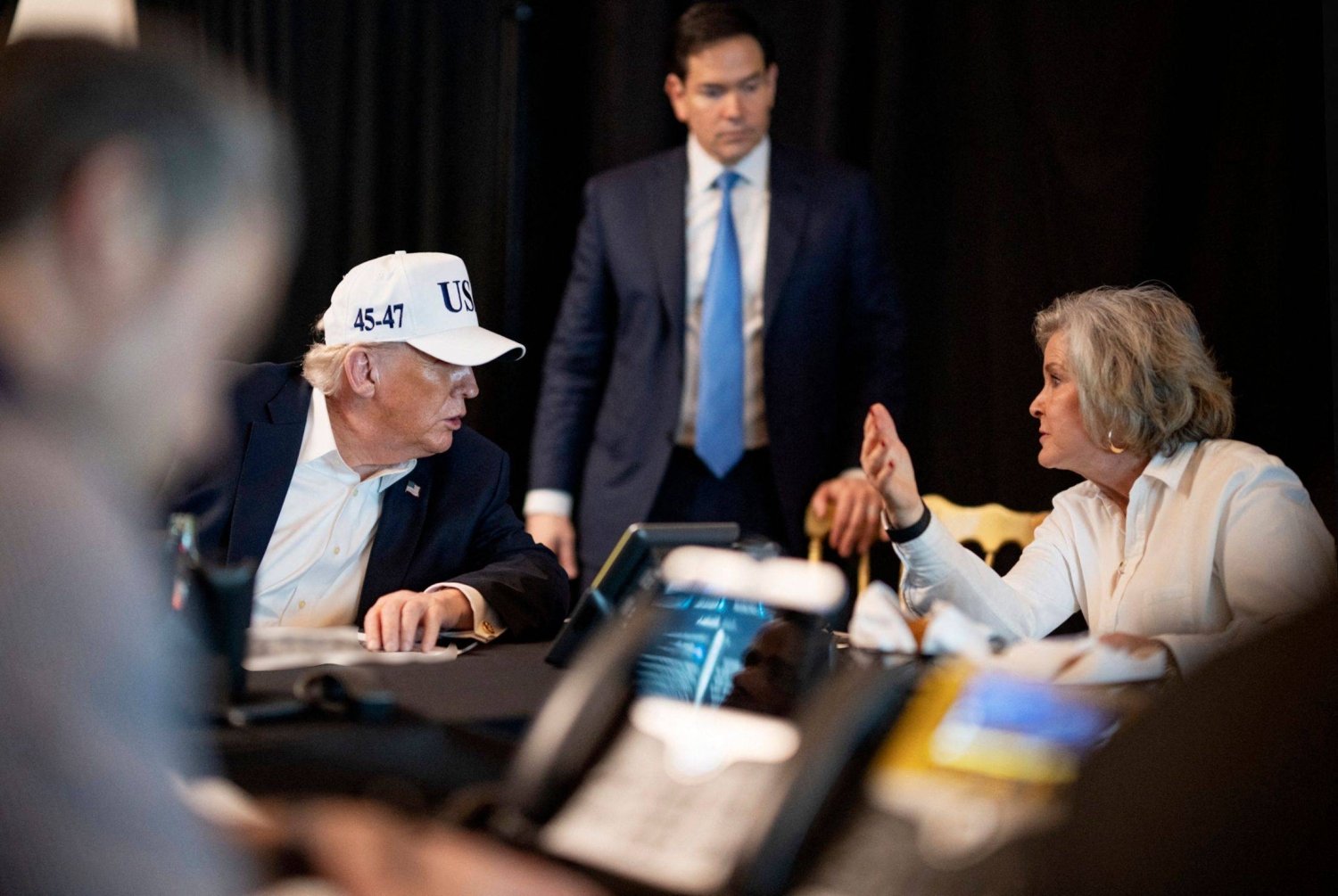
President Trump signaled the high risk involved when announcing the start of military operations in Iran on Saturday morning. "We may have to lose some of our American heroes," Trump said. He argued that this price was necessary to strike a blow against the regime that has been causing unrest in the Middle East since seizing power in 1979.
"For 47 years, the Iranian regime has chanted 'Death to America'," Trump said. He added, "We will no longer tolerate this."
However, as the world waits to see how the Iranian regime will react following the Supreme Leader's death, it remains to be seen whether Trump can prevent this from turning into a long military campaign.
Also, whether he can convince the American people, and especially his staunch 'MAGA' base who oppose foreign military intervention, to support another war in the Middle East remains an unanswered question.
This is a decisive moment for Trump, who came to power just a year ago promising to end 'endless wars' like those in Afghanistan and Iraq. However, he has already launched military operations in countries including Iran, Venezuela, and Syria.
Before this bombing, the US and Israel had warned Iran that an attack would occur if it did not agree to abandon its nuclear weapons program, halt ballistic missile production, and cease supporting groups like Hamas and Hezbollah.
After deploying a massive military force to the region, Trump monitored the attack live on Friday night from his Florida residence, Mar-a-Lago, with top advisors.
Meanwhile, in Washington's White House 'Situation Room,' Vice President JD Vance, Director of National Intelligence Tulsi Gabbard, and other senior administration officials gathered. According to an informed source, they were connected via conference call with Trump, receiving real-time updates on the bombing.
Khamenei's assassination has pushed the conflict into a highly dangerous phase, and analysts warn that the situation could spiral beyond Trump's control.
Professor Mohammad Hafez of the Naval Postgraduate School stated, "The die has been cast, and the US must go all the way to bring about regime change. But the problem is, this is not possible without putting troops on the ground."
He added that Iran's retaliatory attacks on US partners in Bahrain, the UAE, Qatar, and elsewhere indicate that Iran plans to fight much more aggressively this time compared to the US attack last year.
"The Iranian regime's strategy will be to create a regional conflict that affects the global and US economies, and this is not good for Trump," said Hafez, an expert in Islamic political violence and Middle East politics. "This could drag the US into a quagmire."
A prolonged conflict in the Middle East could also affect Trump's other priorities, such as the reconstruction of Gaza after the Israel-Hamas war and improving relations with Saudi Arabia.
_ZRg2rDvdPy.jpg)
This could also disappoint his supporters back home, especially at a time when his popularity is declining due to inflation and other domestic issues causing voter dissatisfaction.
According to a former senior official from Trump's first term, who remains close to his team, many senior administration officials expressed concern in recent weeks about launching a major military campaign in Iran.
This internal disagreement reportedly surfaced when Trump publicly threatened to attack Iran and ordered the deployment of the largest US military force to the Middle East since the 2003 Iraq invasion.
Trump, ending weeks of speculation by deciding to launch the attack, showed full confidence in the mission on Saturday. However, he also gave mixed signals that raised new questions about the true objective of the US war.
"I can go in for a long time and take complete control, or I can end it in two or three days," Trump told Axios, leaving open the option of further strikes.
He later wrote on social media, "This heavy and precise bombing... will continue for a week or as long as necessary."
Critics say these statements highlight Trump's arbitrary approach to foreign policy. He shows little interest in building a consensus among lawmakers and the public before launching a military strike.
_R2bjHoBDRv.jpg)
However, Trump's supporters argue that it is precisely this unconventional style that has led to successes such as the Gaza ceasefire and increased European financial commitment to NATO.
Trump did not prepare the public by explaining why war with Iran is in the US interest. He could have made this argument in last week's 'State of the Union' address, but he did not.
The President launched this military campaign without prior approval from Congress. However, most Republicans supported the move on Saturday.
"Iran is facing serious consequences for its malicious acts," said House Speaker Mike Johnson in a statement. "President Trump and the administration made every possible effort to find a peaceful and diplomatic solution in response to the Iranian regime's continuous nuclear ambitions, terrorism, and the killing of Americans and their own people."
But some anti-war leaders from the Democrats and even Trump's own party are upset about the lack of coordination with Congress.
"Donald Trump is pushing America into a war that the American people do not want," said former Vice President and 2024 Democratic candidate Kamala Harris in a statement. She added, "Our soldiers are being put at risk for Trump's selfish war."
Senate Minority Leader Chuck Schumer stated that the administration has not provided Congress and the American people with crucial details about the scope and severity of the threat. "The cycle of attacking on President Trump's whim and risking widespread conflict is not a practical strategy," he said.
The strong opposition from Democrats on Saturday shows that as the primary elections leading up to the crucial November midterms begin, Trump, leading a new war in the Middle East, will also have to fight political battles domestically.
House Democrats are scheduled to meet on Sunday evening to discuss the reaction to the military operation.
_NApa8p7uuc.jpg)
House Minority Leader Hakeem Jeffries announced that Democrats will renew efforts next week to vote on a proposal to cut Trump's war powers in Iran.
"It's easy to capture a leader of another country, like in Venezuela, but what happens in the days after?" said a senior Democratic aide in the House. "The administration has not clarified any strategy or objective."
Meanwhile, Trump told NBC on Saturday regarding Iran, "At some point they will call me and ask who I want as a leader. I am only slightly joking about this."
The November midterm elections will be crucial in determining what Trump can achieve in the remainder of his term. But, as previous presidents have experienced, his decision to take such an extraordinary military step in the Middle East could have an even greater and far-reaching impact on shaping his political legacy.
This specific news has been automatically translated by AI. As a result, there may be some inaccuracies or language errors.