AI Advances Bring Scientists Closer to Decoding Human Thoughts and Visual Experiences


Electrical signals generated within our brains have long been considered extremely complex to understand. However, Artificial Intelligence (AI) is now changing this.
The woman barely moved, except for the slight rise and fall of her chest as she breathed. Her eyes were focused, and her hands were clenched into fists. Words were forming on the screen in front of her, slowly joining together to create full sentences. These were sentences she could not speak aloud.
The 52-year-old woman, paralyzed due to a stroke 19 years ago, cannot speak clearly. But here, the conversation happening inside her mind was appearing on the screen before her eyes.
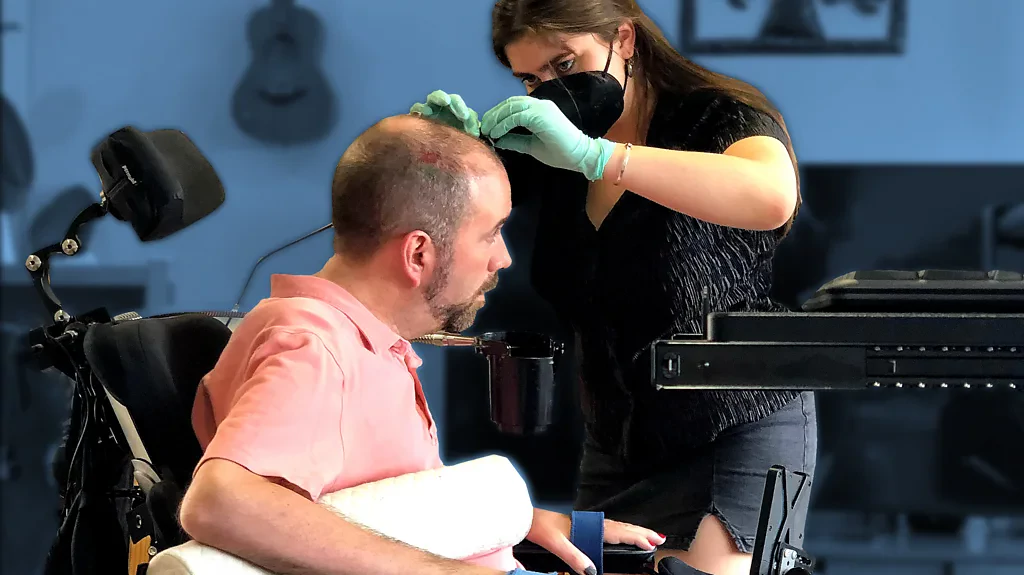
Participant T16 had a small array of electrodes surgically placed in the front part of her brain. An AI-equipped computer was now decoding the signals generated by her neurons when she imagined speaking a word, translating them into letters on the screen.
She was participating in this study at Stanford University in California, alongside three other patients with the neurological disease ALS. The goal was to test technology capable of translating human thoughts into text in real-time.
This was the moment scientists came closest to 'mind-reading' technology.
Researchers publicized this success in August 2025. A few months later, researchers in Japan unveiled 'mind-capping' technology capable of generating detailed and accurate descriptions of what a person is seeing or imagining. This involved combining three different AI tools and a brain scanning method to translate brain activity.
Both these studies are among the major recent breakthroughs that have opened a new window for neuroscientists to understand the inner workings of the human brain and offered a means of communication for people who cannot speak. In the future, this could completely change the way we interact with the world around us and with each other.
“In the next few years, we will start seeing these technologies being commercially produced and widely used,” says Maitreyi Vaidya, a neuroengineer developing brain-computer interfaces at the Neuroprosthetics Lab at the University of California, Davis. Many companies, including Elon Musk's Neuralink, are attempting to bring this technology out of the lab and into the real world by producing commercial 'brain chips.' Vaidya adds, “This is very exciting.”
Scientists have long worked on creating devices that can communicate directly with the human brain, known as Brain-Computer Interfaces (BCI). In 1969, American neuroscientist Eberhard Fetz demonstrated that monkeys could be taught to move a meter's needle using the activity of a single neuron in their brain, tempted by food. In another curious experiment from the same era, Spanish scientist Jose Delgado succeeded in stopping a charging bull mid-charge by remotely controlling its brain.
For decades, BCI technology has been decoding signals related to movement, allowing users to control prosthetic limbs or cursors on a screen. However, the development of BCIs to translate speech or other complex thoughts from brain signals was progressing slowly. “Most of the early work was done on animals like monkeys... and clearly, speech cannot be studied in animals,” says Vaidya.
Nevertheless, in recent years, the field has made significant progress in attempts to decode the speech of individuals who have lost the ability to communicate (such as paralyzed patients or ALS patients with locked-in syndrome).
For example, in 2021, researchers at Stanford University succeeded in producing English sentences from a person with limb paralysis by having them imagine writing letters in the air. Using this method, they could write 18 words per minute.
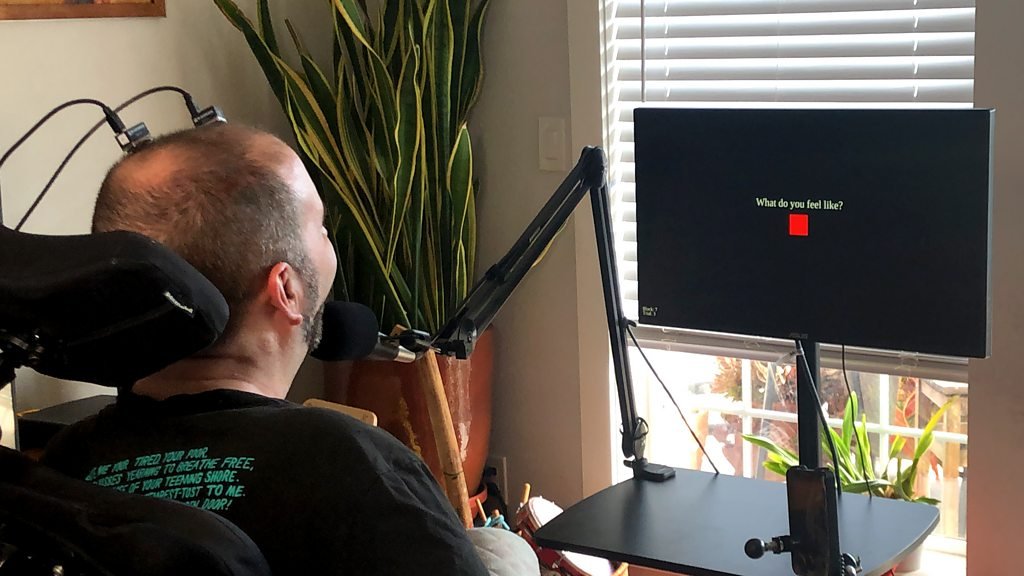
Normal human speech is about 150 words per minute, so the next step was to decode words directly from the neural activity generated by speech. In 2024, Vaidya's lab tested technology that directly converted what a 45-year-old man with ALS intended to say into text on a computer screen. Achieving a speed of about 32 words per minute with 97.5% accuracy, Vaidya explains, was the first evidence of how speech BCI can aid in daily communication.
These methods rely on tiny microelectrodes surgically placed on the surface of the brain. These electrodes record the pattern of neural activity in the area where they are placed, and computer algorithms translate these signals into meaning.
This is where the power of Machine Learning, a type of Artificial Intelligence, has shown its magic. These algorithms are adept at identifying patterns from vast amounts of data. In the case of decoding speech, machine learning algorithms are trained to recognize patterns of brain activity associated with small units of language.
Scientists have compared this process to what happens in smart assistants like Amazon's Alexa. However, here the AI interprets neural signals instead of sound.
Unlocking Inner Speech
Despite the impressive nature of these recent attempts to decode speech, some problems remained. Generally, patients had to physically attempt to pronounce the words they wanted to say for the BCI technology to translate them correctly. This is because the electrodes are usually placed in the 'motor cortex' (the part of the brain controlling muscle movement).
However, attempting to speak requires effort, making the communication process slow and laborious. In their latest attempt, Stanford University researchers wanted to test if there was an easier way: could they design a method to capture what someone was thinking silently in real-time, alongside the attempt to speak?
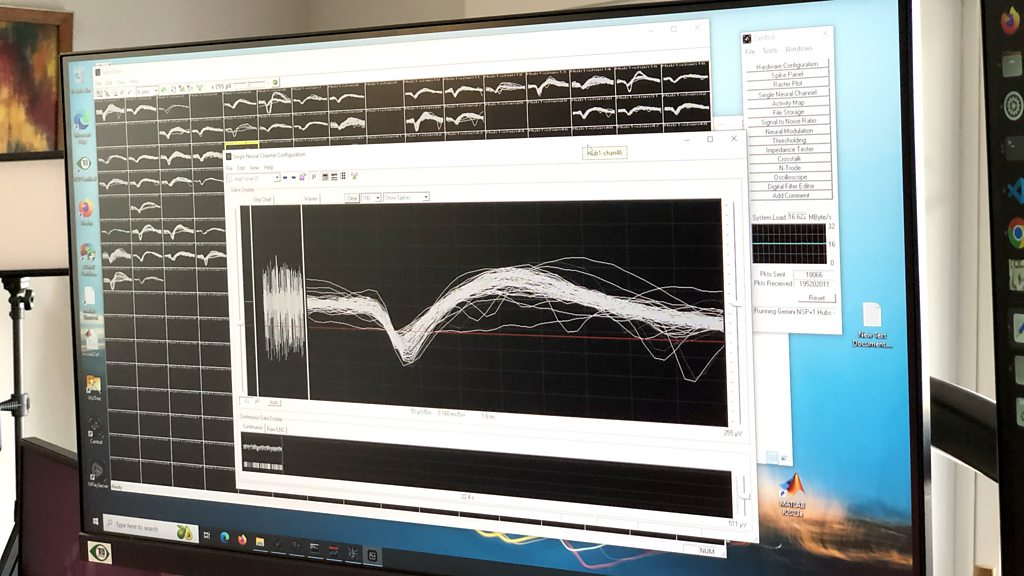
“We asked them to count the number of colored shapes on the screen, because we thought that when doing such a task, people count numbers silently,” says Frank Willett, a co-director of the Neural Prosthetics Translational Lab at Stanford University and an author of the paper mentioned at the beginning, referring to the study involving the woman. “We found just that. We detected signals of those numbers passing through the motor cortex, which we were able to capture.”
Can this technology recognize inner speech? The initial answer was 'yes.' In the task of imagining sentences silently, researchers succeeded in achieving up to 74% accuracy in real-time. While accuracy was slightly lower in tasks designed to elicit spontaneous inner speech, it was still above expectations. However, when participants were given open-ended prompts like recalling dialogue from a favorite movie, the decoded language was largely nonsensical.
“With current technology, we cannot capture someone's entire inner monologue with 100% accuracy,” Willett said. “But we were able to clearly capture signals of inner speech in these various tasks.”
This study shed more light on how inner speech works in our brains. It found that the neural patterns of inner speech are very similar to the patterns of attempted speech in the motor cortex, but the signals generated are weaker.
Beyond Words
Vaidya's lab at the University of California, Davis, achieved another major breakthrough in 2025. They showed that it was possible to decode not just words, but also non-verbal aspects like speaking style, pitch, speed, and rhythm. Essentially, this allowed patients to express their emotion and emphasis along with the words.

“Human speech is not just the letters you see on a screen,” says Vaidya. “Most of our communication depends on how we speak, how we express ourselves; the meaning of what we say differs depending on the context.”
Vaidya and her colleagues demonstrated that their prototype could convert what an ALS patient with severe speech impairment intended to say into sound.
Crucially, the participant was able to modify their words to convey meaning. “Our participant was able to ask a question by changing their intonation at the end of a sentence and alter their pitch while speaking,” Vaidya said.
It was not fully accurate, but evaluators reported being able to understand 60% of the words. While this is still behind the best technology, it shows what might be possible in the near future.
Both Vaidya and Willett are confident that further progress will come quickly. One way to improve this is by increasing the number of microelectrodes placed in the brain. “Our brain has billions of neurons and trillions of connections,” says Vaidya. “In our latest study, we were only sampling 256 of them.”
“Newer devices and better technology will be able to sample from many more neurons, get more detailed information, and produce clearly understandable speech in real-time,” she adds.
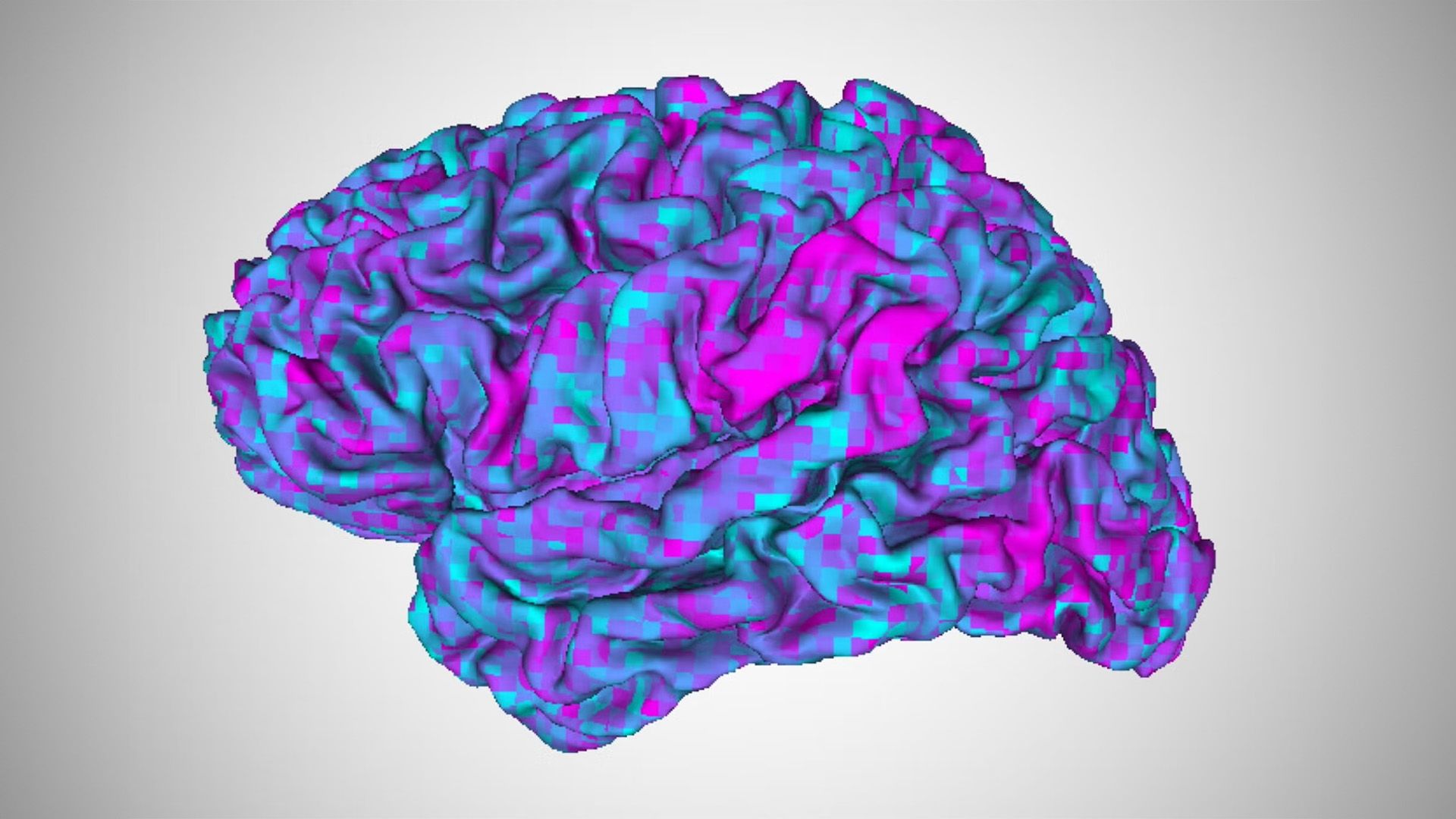
Willett is particularly interested in further exploring inner speech. He suggests that the part of the brain involved in auditory processing might also play a role in inner speech. Studying areas outside the motor cortex could also be crucial in helping individuals whose brains have damage in this area, such as stroke patients.
Seeing is Believing
While researchers are focused on the practical application of helping patients on one hand, progress is also being made in understanding how the brain works by decoding brain scans.
One area of this focuses on reconstructing images a person has seen by analyzing brain scans with the help of AI. Participants are shown images, and their brain activity is recorded via 'Functional Magnetic Resonance Imaging' (fMRI). These neural data are then decoded by algorithms and sent to an AI image generator, which attempts to create images similar to those the participant saw.
The wave of generative AI has given this field a huge boost. Recent AI image generators like Stable Diffusion have brought significant improvements in the quality of the generated images.
Yu Takagi, an associate professor at the Nagoya Institute of Technology in Japan, published a study based on this method in 2023. In most cases, the AI managed to present a good representation of the original image. However, it failed to accurately render a picture of a bowl of salad. This field is now advancing rapidly. Last year, researchers in Israel succeeded in reconstructing even more accurate images.
Such studies help in understanding how the brain processes visual information, Takagi explains.
The Tune of Music
Attempts are also being made to reconstruct auditory experiences. In 2025, Takagi published a study where an attempt was made to reconstruct the same audio using Google's algorithm from fMRI scans taken while participants were listening to music.
This might be more challenging than reconstructing images, says Takagi. “The quality is a bit lower compared to image reconstruction,” he says, “but we succeeded in reconstructing the nature and the basic category of the music.”
Takagi is excited about the potential of these methods in the future. He suggests that these technologies could be used to reconstruct the hallucinations experienced by patients with mental illnesses like schizophrenia, allowing for a better understanding of their condition. Such technologies could also be used to understand how animals perceive the world or to reconstruct human dreams.
“Many people ask about this,” Takagi says, laughing. He hopes to one day put dreams onto a screen, but for now, it remains extremely complex. Some research even points to the possibility of direct 'brain-to-brain' communication with multiple individuals simultaneously.
For those hoping for the possibility of generating visual or auditory experiences directly in the brain for entertainment, Takagi advises patience. While theoretically possible, he estimates it may not be feasible for another 10 to 20 years due to technical limitations.
This specific news has been automatically translated by AI. As a result, there may be some inaccuracies or language errors.