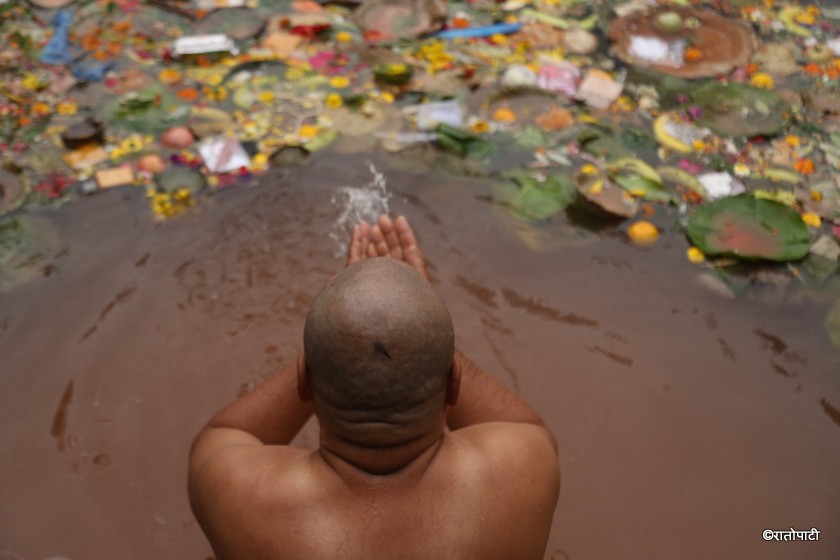
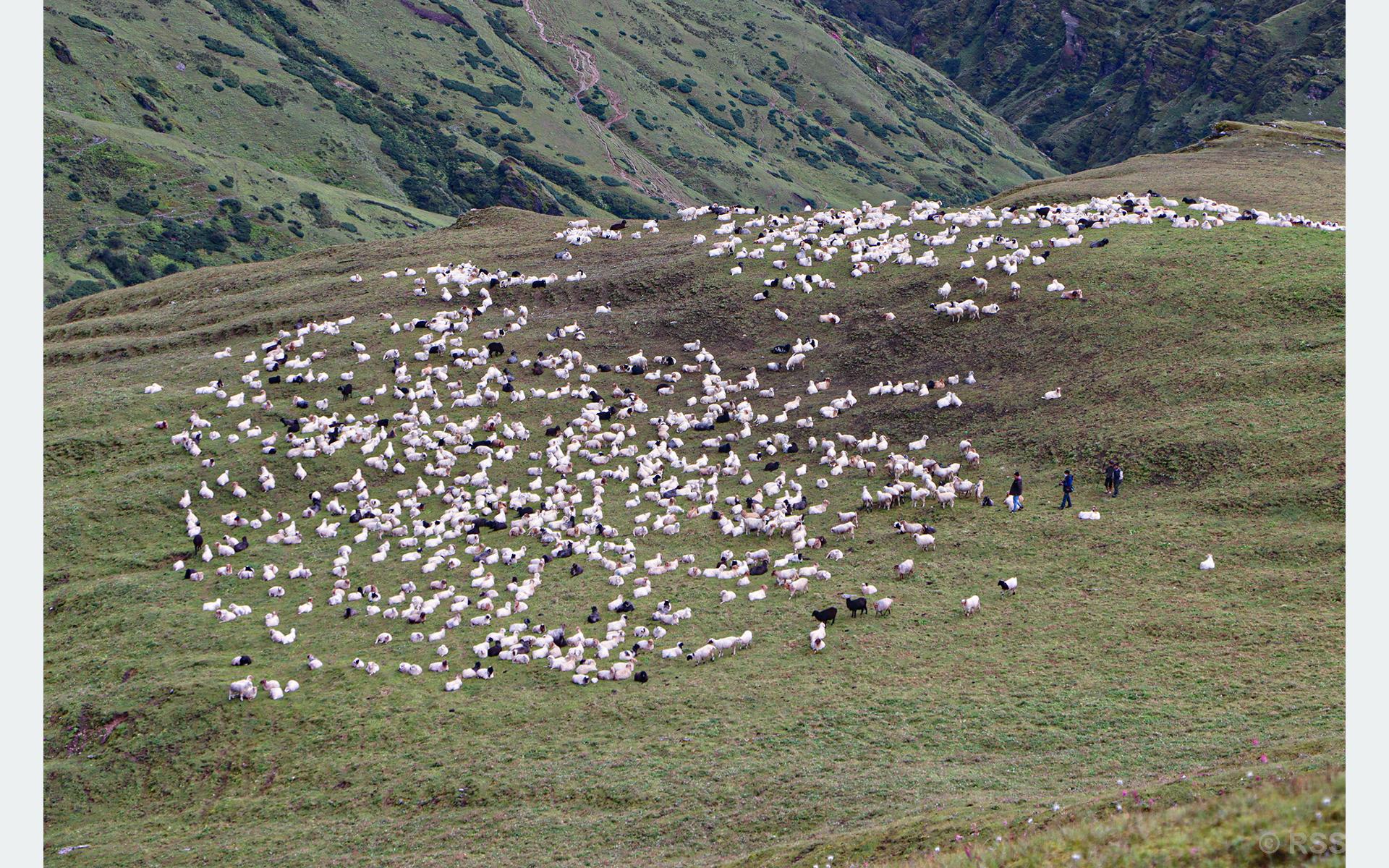
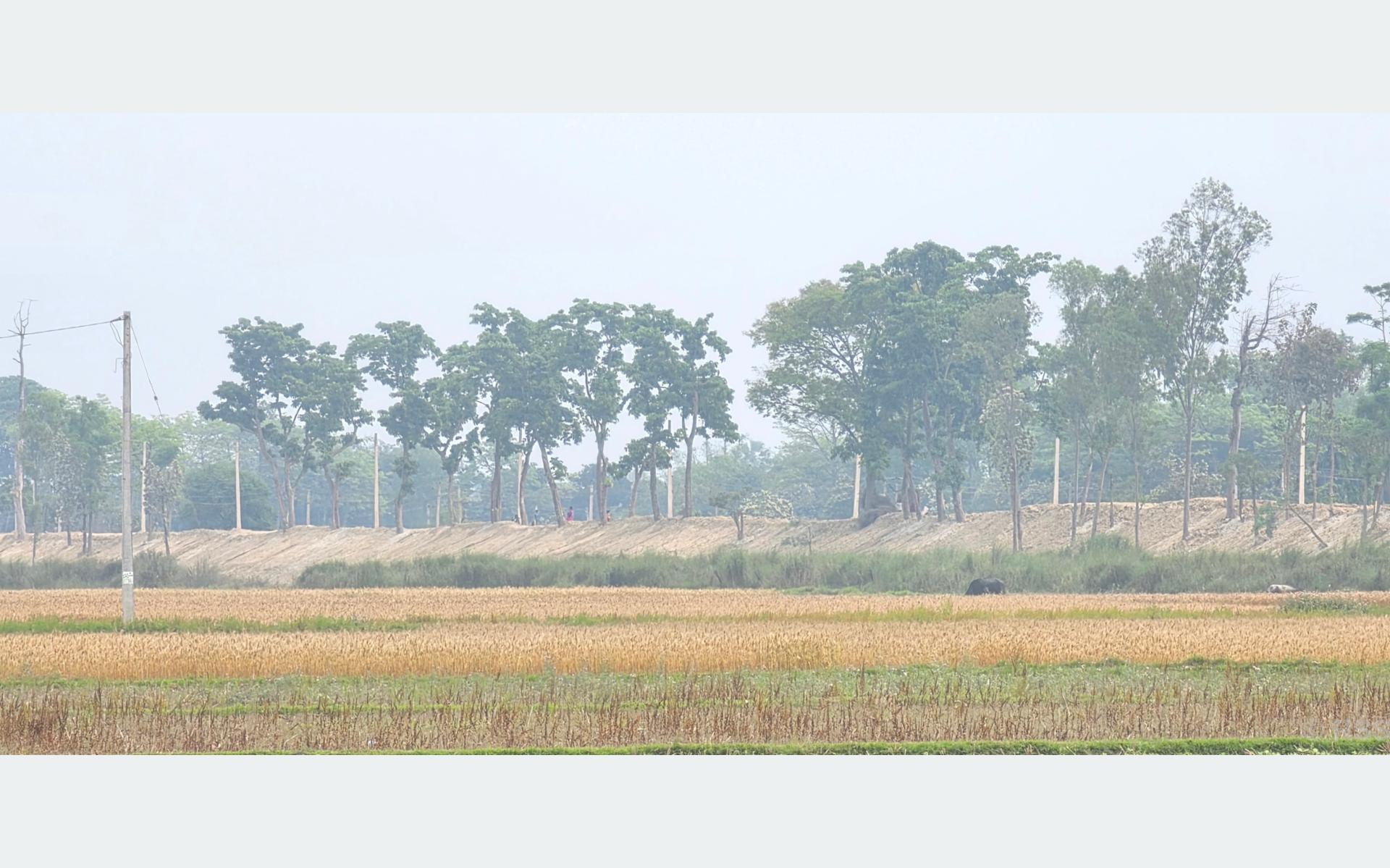
Mithila Madhyamiki Parikrama Pilgrims Cross Back into India for Overnight Stays

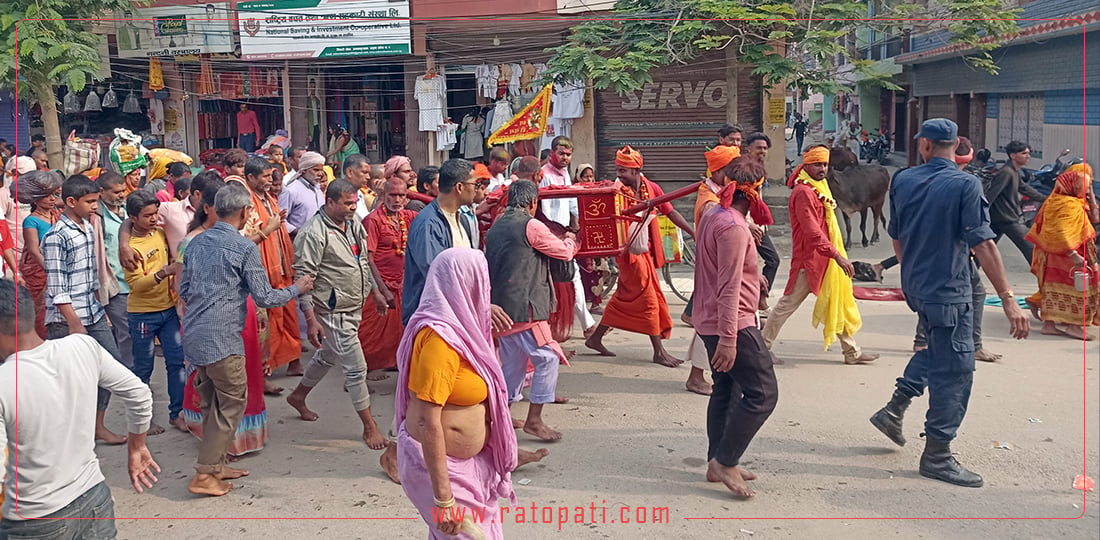
Mahottari. Pilgrims of the Mithila Madhyamiki Parikrama have crossed into India again. The pilgrims, who spent the second and third days of this fifteen-day circumambulation in Kalyanewar (Kalna) and Girijasthan (Phulhar) in India's Madhubani district, returned to India on the 13th day, Saturday.
Towards the latter half of the journey, the pilgrims spent Saturday night in Karuna, also in Madhubani, on the 13th day, and are heading to Bisaul, also in Madhubani, today, Sunday, the 14th day. All pilgrims are expected to reach Bisaul by noon today. After spending the night in Bisaul, the pilgrims will return to Janakpurdham tomorrow, Monday, for the final, 15th day. Residents on both sides of the border describe this journey, which circumambulates pilgrimage sites in Mahottari, Dhanusha, and Madhubani districts, as a unique example of Nepal-India cultural relations.
Residents on the Indian side of the border state that not only officials but also common citizens and people's representatives share joys and sorrows, despite being citizens of two different countries, Nepal and India, on either side of the border. There are numerous occasions for cultural exchange between Nepal and India.
Among these, the Jhula festival celebrated during the bright half of Shrawan, Chhath celebrated during the bright half of Kartik, the Ram Janaki Vivah Mahotsav celebrated on the Panchami Tithi of the bright half of Mangsir, the Mithila Madhyamiki Parikrama during the bright half of Falgun, and Holi are the main ones. Hariprasad Mandal, the chief of Matihani Municipality in Mahottari, states that from sadhus and saints to ordinary householders from both Nepal and India become one during these religious and cultural festivals.
“On the fourth day of the Mithila Madhyamiki Parikrama, pilgrims coming from Girijasthan in India arrive via Madhwapur market, and all of them are welcomed by the residents of Madhwapur and brought towards Nepal,” he says, “We are residents on both sides of the intervening Dashgaja (border strip); any new pilgrim unfamiliar with this geography cannot distinguish us (residents of Matihani and Madhwapur) as citizens of different countries.” Balram Mishra, former Sarpanch of the then Madhwapur Gram Panchayat, mentions that due to similar dialects, customs, attire, and festivals on both sides, they never feel like they are crossing into a different country when moving back and forth. Mishra clarifies that he has no difficulty speaking, writing, or reading Nepali because he presented various programs on Nepali FM radio stations for a long time in the past.
The Mithila Madhyamiki Parikrama is considered to follow the footsteps of Lord Shri Ram and Sita Ji's travels after their marriage during the Treta Yuga. The Madhyama Parikrama, which is performed in a 133-kilometer circle centered around Janakpurdham, the capital of ancient Mithila (Videha) state, for 15 days, has a tradition of four overnight stays in the Madhubani district. The number of Nepali and Indian participants in this journey is equal. Dhruv Ray, a Maithili cultural expert and resident of Pateli, Jaleshwar-5, notes that it is impossible to tell who is Indian and who is Nepali during this journey.
“This journey, as described by the sadhus and saints, is truly extraordinary, and also one of joy and carefree spirit,” Ray says, “The strong aspects of the journey include the cultural relations between Nepal and India; both regions and citizens of Nepal and India participate in this journey, and it is also a bridge for our multifaceted relationship.”
This 15-day journey, which begins on the Amavasya of Falgun and continues through the bright half, has a tradition of 15 overnight stays. Of these, 11 nights are spent in Nepal and four nights in India's Madhubani district. The overnight stays in India's Madhubani district on the second, third, 13th, and 14th days of the journey are at Kalyanewar (Kalna), Phulhar (Girijasthan), Karuna, and Bisaul, respectively. The 11 days in Nepal are spent with six nights in Dhanusha and five in Mahottari.
The narratives of the Mithila Madhyamiki Parikrama are the same for both Nepal and India. Lord Shri Ram is Indian and Sita Ji is the daughter of Nepal. Shrinivas Pandey, a 70-year-old resident of Karuna, the overnight resting place on the 13th day of the Parikrama, states that since this marital relationship, marriages between both sides have become increasingly dense. Hemnarayan Lal Karna, Principal of Yagyavalkya Lakshminarayan Vidyapeeth in Matihani, states that these cultural traditions further strengthen the relationship between the states.
This specific news has been automatically translated by AI. As a result, there may be some inaccuracies or language errors.