Remote Nepali Village Ignored by Candidates Ahead of Elections, Residents Demand Basic Infrastructure

Kanchanpur. As the date for the House of Representatives election draws nearer, electoral fervor is high in the urban and accessible rural areas of the country, including Kanchanpur. Candidates are busy with door-to-door campaigning.
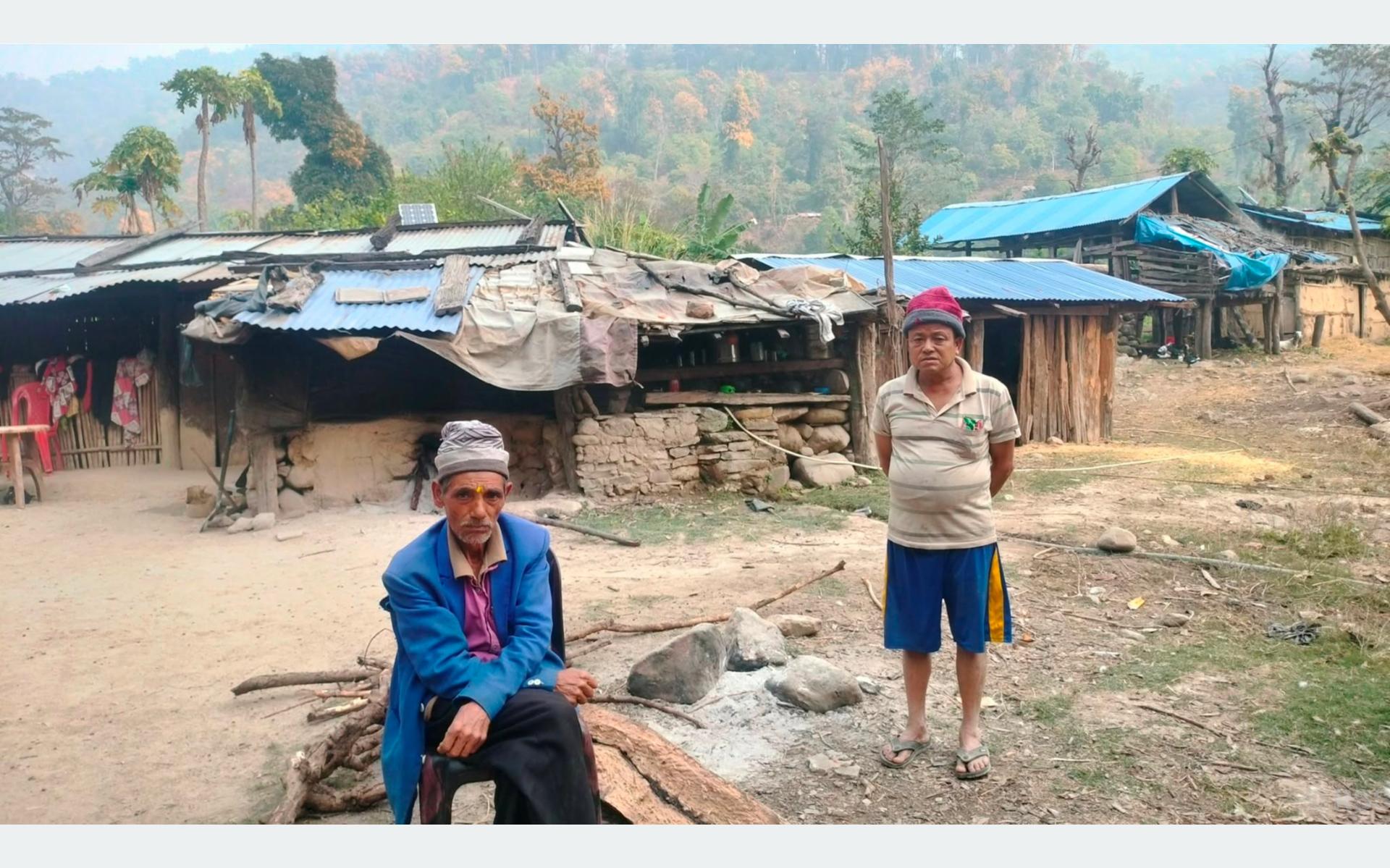
There is a flurry of activity with corner meetings and rallies taking place at every intersection. However, in Dharapani village, located at the foothills of the Chure range in Shuklaphanta Municipality-8, there is no sign of this election. Not a single candidate has visited this settlement of twenty-four households to seek votes so far.
Dharapani, situated in the lap of the Chure hills, is as naturally picturesque as the lifestyle of its residents is arduous. During the summer, people flock to the Dharapani stream for bathing, picnics, and enjoying the nearby waterfall, but ironically! The village, irrigated by the water from that very waterfall and stream, has not been touched by basic infrastructure. Although the settlement began in 2012 BS, this village has remained virtually 'invisible' to the state to this day.
Dharapani village, once bustling, is now gradually emptying out. Due to the lack of employment and infrastructure, 15 families have locked their homes and migrated to India for livelihood. Currently, only nine families reside here.
Local Balaram Gautam said, with tears welling up in his eyes, "The main problem is the lack of employment for the youth within the country. If there were jobs here, why would we send our sons to India to wash dishes? This is our compulsion." According to him, only the elderly remain in the village now.
Every parent desires for their children to pursue higher education, but when the very basis for living is absent, sending them off to work in foreign lands at a young age has become the fate here.
Due to the lack of a reliable drinking water system, the residents of Dharapani have been drinking water from the stream for years. Gautam says, "Drinking stream water is our compulsion; during the monsoon, we have to let the muddy water settle before drinking it." Forget drinking water, there isn't even a reliable road reaching the settlement.
According to local Raybhan Thagunna, the path that is barely walkable in winter gets completely blocked by landslides as soon as the monsoon sets in. "Our contact with other areas is cut off once the monsoon starts," Thagunna said, "That's why we have to stock up on salt, oil, and food supplies for the house before the monsoon arrives." Some poles have recently been erected to bring electricity to the village, but no one knows how many years they will have to wait to flip the switch for electricity.
Dharapani's soil is fertile enough to grow gold. Lemons, sour fruits, mangoes, and other fruits grow abundantly in the orchards here. A large amount of honey is produced through beekeeping. However, due to the lack of road networks, all these products go to waste.
"We are only the elderly in the village; we cannot carry things to the market on our backs," Thagunna lamented, "Neither do traders come to the village, nor do vehicles run, so the harvested fruits rot in the orchard." He stated that he plans to vote only for the candidate who takes initiative to market their produce this time. During the monsoon season, the village itself is at risk when the Dharapani stream swells.
Local Saimale Dhami says, "When there is heavy rain, floods enter the settlement; there is a constant worry about which day the flood might sweep us away. Embankment construction took place a few years ago to prevent floods, but it hasn't been completed. Our biggest wish is for it to be completed." According to him, even though elections are near, leaders are not visiting the settlement, so they haven't even found a place to voice their grievances.
The condition of health and education is even more fragile. If someone falls ill in the village, they cannot even receive primary treatment. They have to walk 12 kilometers on foot to reach the market for treatment. Young children have to traverse a risky path through the forest and river area to reach the school four kilometers away. Local Parbati Dhami said, "If there was even a child development center in the village, our children wouldn't have to suffer."
The residents of the settlement are equally troubled by wildlife. Monkeys destroy the crops planted in the fields, while leopards prey on goats taken for grazing in the forest. Local Surendra Mahara said, "Not just in the forest, sometimes the leopard even drags goats from the shed and eats them. We are looking for a candidate who will help with wildlife control and the construction of secure sheds."
While some candidates visited to seek votes in the previous local level elections, the residents of Dharapani are surprised that no one has come this time. Nevertheless, they have decided to vote collectively after consulting among themselves.
"Our vote will go to whoever solves the basic problems of the village—road, electricity, water, and health," the locals said in unison. Despite residing in the settlement for years, the residents of this area have not received ownership of their land. The residents are looking for a candidate who will take the initiative to survey the land and provide land ownership certificates.
How long will the residents of this remote settlement, rich in natural resources but lagging in development, have to endure the state's neglect? Whether this grand festival of elections will change the face of Dharapani or remain limited to mere promises remains to be seen. It will likely remain neglected, as it has for years.
This specific news has been automatically translated by AI. As a result, there may be some inaccuracies or language errors.