Election Commissioner Outlines Measures Against Malpractice During Silence Period

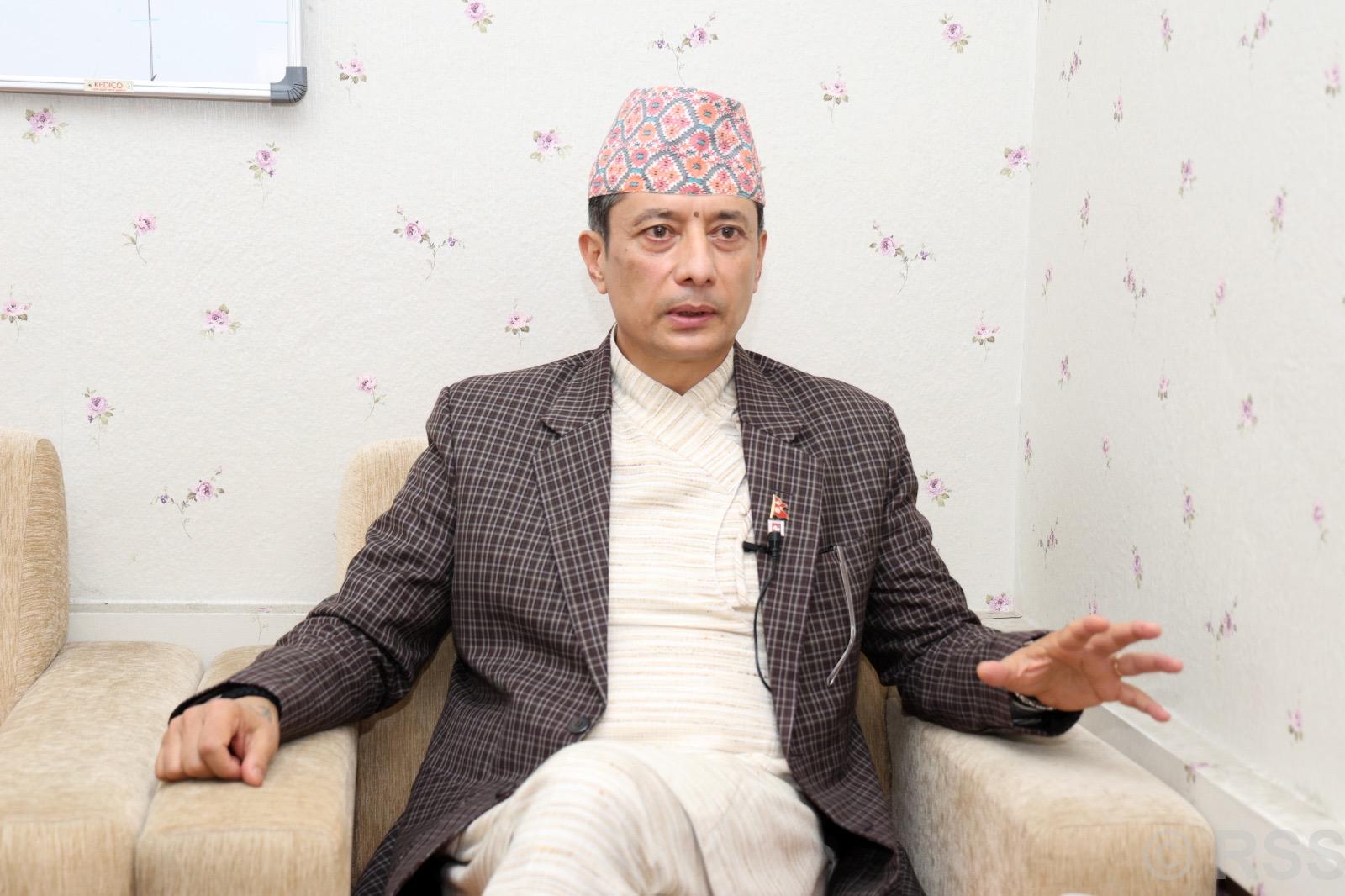
Kathmandu. Election Commissioner Sagun Shamsher Rana stated that special monitoring arrangements have been put in place to prevent potential manipulation during the election's silence period.
He appealed to candidates to refrain from any activities violating the election code of conduct, noting that the silence period is designated for tired candidates to rest and remain calm, and for voters to thoughtfully and independently decide on their choice of representative.
Commissioner Rana said, "The Commission is alert to the possibility that political parties and candidates might influence voters against the election code of conduct during the silence period. District monitoring officers and security agencies have been mobilized to prevent illegal activities and special surveillance has been arranged."
This election, which is the cornerstone and lifeblood of democracy, is taking place this time on the foundation and achievements of the youth movement that occurred on Bhadra 23 last year. It is believed that the country's democracy is strengthened through the periodic practice of elections.
Periodic elections, political culture, and democratic norms are considered the pillars for keeping the democratic state system vibrant. It is believed that only an election held in a clean, free, impartial, economical, and fearless environment with the broad participation of the people can bring good leadership to the country, thereby advancing the journey towards good governance, development, and prosperity according to the people's wishes.
This is an excerpt from the interview with Election Commissioner Rana regarding the preparations for the House of Representatives election scheduled for this coming Falgun 21, the overall peace and security situation, and other related matters:
Only a few days remain until the upcoming House of Representatives election. What is the status of election preparations and security?
All election preparations have reached the final stage. Approximately 342,000 security personnel have been mobilized for security management. Employees are also working day and night in corresponding numbers. Ballots have been delivered to all constituencies. Security mechanisms are deployed for all polling stations and centers. Polling stations will be set up in a few days. Meanwhile, the training for the presiding officers has been completed. They have reached their respective locations. We are also focusing on how voters can cast their ballots in a civilized manner and reduce invalid votes. Monitoring of the code of conduct is also accelerating rapidly. Political parties and candidates are preparing for the election competition. Election campaigning has reached its peak. We are fully prepared to conduct the elections; there are no problems.
How is coordination taking place between the Election Commission and the government to ensure the election is clean, free, impartial, and fearless?
This involves the security apparatus. Election security seminars were held in all seven provinces under the chairmanship of the Home Minister of the Government of Nepal. As the coordinator of the Election Security Committee, the Commission has convened the committee meeting many times to analyze potential security challenges in the election and address the necessary requirements. Coordination with the Government of Nepal is extremely effective. The main responsibility and mandate of the current government is the election. The main responsibility of the Election Commission is to conduct, oversee, and regulate the election. Therefore, both the government and the Commission are committed to successfully completing the election.
The upcoming election is at its peak in terms of campaigning. What issues do political parties and candidates need to focus on at this time?
Our main expectation is the full compliance of the election code of conduct by political parties and candidates. The silence period, or static time, begins the day after tomorrow, the 18th, in the evening. In past elections, incidents of physical violation of the code of conduct were more common during campaigning. The use of wall writings, caps, and shirts bearing election symbols has decreased. However, violations of the code of conduct on social media have increased. To control this, the Commission is striving to make the election clean, free, and trustworthy through the use of technology and coordination with social media platforms, the Cyber Bureau, and other security agencies. The Commission expects candidates and political parties not to engage in mutual accusations. Let us strive to conduct the election in a clean environment; let us campaign in a civilized manner for that purpose.
What feedback has been received regarding voter education?
Voter education has just begun. The door-to-door program for voter education was previously common. It was stopped in the previous election. Complaints arose that only certain candidates or parties were campaigning. It was stopped then following complaints that the Government of Nepal's money was not being used for its intended purpose. However, due to renewed strong demand from the general voters, volunteers have been deployed to reach local villages and hamlets for campaigning, and we expect good results this time. We will only know after the election how much the percentage of invalid votes has decreased, but the feedback currently is positive.
What are the challenges seen so far in adhering to the election code of conduct?
The main challenge seen during the current election time is the misuse of social media and AI. Technology, which should be used positively for good election results, is being used to spread accusations and misleading materials. For example, candidates could use it for campaigning and providing correct voter education to bring positive results, but here it is seen to be used more for mutual accusations. The Commission has mobilized technology and a technical team to control this. Specifically, arrangements have been made to quickly remove content violating the code of conduct in coordination with TikTok. Nevertheless, compared to previous elections, the election is proceeding in a more civilized manner.
What preparations have been made to prevent potential manipulation during the election's silence period?
The silence period in an election is the time provided for political parties and candidates to remain quiet and rest. This period is also for voters to be able to make independent decisions. The Commission is alert to the possibility that political parties and candidates might influence voters against the election code of conduct during this period. District monitoring officers and security agencies have been mobilized to prevent illegal activities during this period, and special surveillance has been arranged.
What should voters pay attention to in order to reduce invalid votes and increase the percentage of valid votes?
This involves the aspect of public awareness; ultimately, the voters are the ones casting the votes. Although, if we look at past elections, there is a history of votes being invalidated even in the election for President and National Assembly, where educated representatives choose their guardians. Voters must place the tick mark clearly only inside the box for the election symbol on the ballot paper. Attention must also be paid to folding the ballot paper correctly. The Commission has mobilized volunteers for voter education, and awareness campaigns are also being conducted through digital means. We hope that invalid votes will decrease this time.
What arrangements have been made regarding polling management?
One center has been established in places with a voter population of one thousand. If the number exceeds that, an additional polling center is arranged. Efforts are being made to provide a comfortable environment for voters, prioritizing elderly, disabled, pregnant women, and sick voters as much as possible, by maximizing the use of available resources. I want to call upon all voters to exercise their precious right to vote.
In the past, there have been complaints that vote counting was slow; what preparations and arrangements have been made this time to prevent that from happening again?
The necessary manpower has been increased this time to speed up vote counting. However, we do not have an automated machine system for counting votes. Counting will still be done manually. Due to geographical conditions, it may take some time to collect ballot boxes from some districts and bring them to the center, but efforts have been made to make the process faster and more effective by improving manpower management.
Finally, what message do you want to give to the voters?
Voters must exercise their right to vote. This is not an ordinary election; it is an important election taking place under special circumstances. To provide a way out for the country, strengthen democracy, empower citizens, and advance society towards development and prosperity, a capable candidate must be chosen. For that, I appeal to all voters to mandatorily vote in the election scheduled for this Falgun 21.
This specific news has been automatically translated by AI. As a result, there may be some inaccuracies or language errors.