Supreme Court Orders Government to Incentivize Electric Vehicles to Protect Citizens' Right to Clean Environment
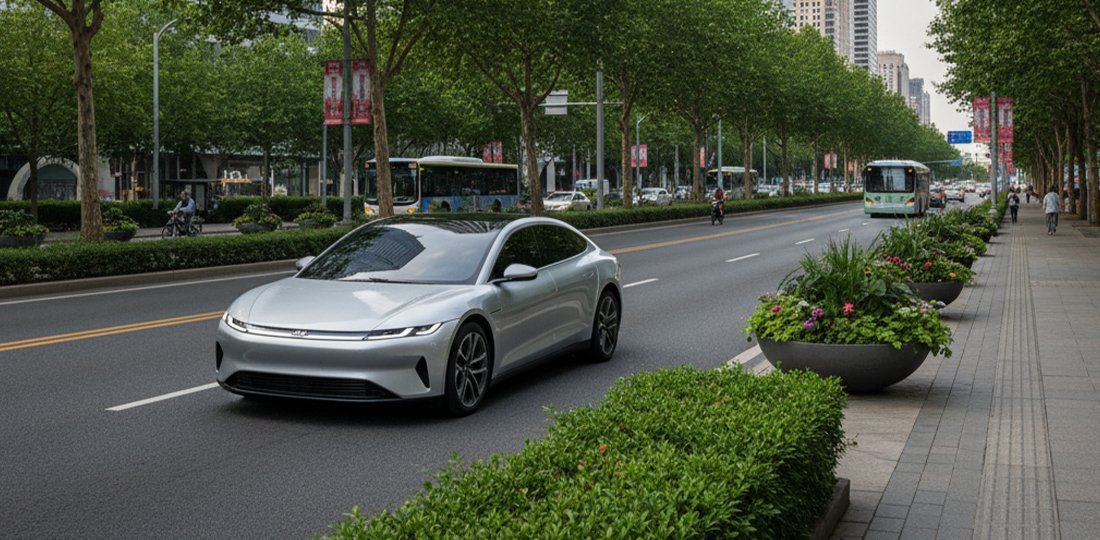
The Supreme Court has issued a mandamus order in the name of the government to specially promote and provide concessions for electric vehicles to protect the fundamental right of citizens to live in a clean environment. The court has directed that a 'meaningful difference' be maintained in tax and loan policies compared to electric vehicles and petroleum-fueled vehicles.
A joint bench of Supreme Court Justices Binod Sharma and Meghraj Pokharel, while publicizing the full text of the verdict delivered on Poush 30, determined that promoting environmentally friendly vehicles is a constitutional obligation of the state.
The Supreme Court ruled that Nepal Rastra Bank should not treat electric and petroleum vehicles equally when providing vehicle loans. An order has been issued to set the loan limit in the upcoming monetary policy or directives in a way that provides more concession to electric vehicles.
The court issued a mandamus order in the name of the government to issue loan policies/directives in the coming days after timely review, ensuring that environmentally friendly technology and electric vehicles are used, promoted, and protected, while fossil fuel/petroleum-fueled vehicles are discouraged, maintaining a meaningful gap between the two for energy transition.
Similarly, the Ministry of Finance has been directed to determine customs and tax rates in a manner that promotes and protects the use of electric vehicles. A mandamus has been issued to determine customs and tax rates and formulate tax policy in a way that promotes, protects, and encourages the use of environmentally friendly technology and electric vehicles, discourages vehicles running on fossil/petroleum fuels, and maintains a meaningful gap between the two for energy transition.
The court stated that those who damage the environment (petrol/diesel vehicles) should cost more, and those who protect the environment (electric vehicles) should receive state encouragement. The court deemed the recent decision by the central bank to reduce loan facilities for electric vehicles, placing them almost in the same category as others, flawed from the perspective of environmental justice.
Taking the alarming air pollution data of the Kathmandu Valley as a basis, the court considered pollution a 'public health crisis'. The court argued that discouraging fossil fuel-powered vehicles means increasing the lifespan of citizens.
Interpreting Article 16 (Right to Live with Dignity) and Article 30 (Right to a Clean Environment) of the Constitution, the court mentioned that reducing dependence on fossil fuels is mandatory to control air pollution. Citing the Paris Agreement and Nepal's 'Net Zero Emission' goal, the court stated that state policies must align with these commitments.
The Supreme Court emphasized that citizens have the right to live in a clean environment and pointed out the need to promote electric vehicles. The full text of the verdict stated, 'From the perspective of protecting the fundamental rights guaranteed by the Constitution, it appears necessary and appropriate for the state to provide economic, technical, and policy facilities in the promotion of electric vehicles. It has also been established that implementing tax, customs, and loan facilities in the promotion policy of electric vehicles is part of the constitutional obligation.' It further stated, 'This court needs to fulfill its responsibility of judicial review more consciously by maintaining a balance between judicial activism and judicial restraint, which refrains from interfering in policies and actions that adversely affect the right to a dignified life and a clean environment, which falls within the purely executive domain.'
The verdict stated, 'The right to life is not merely existence but the right to live in a clean, healthy, and pollution-free environment, and such a fundamental right imposes obligations on the state to reduce pollution and also compels the private sector to implement environmental safeguards. Viewed from this jurisprudential basis, the policy of promoting electric vehicles and discouraging the use of fossil fuel-powered vehicles is an essential part of protecting the right to life and health.'
The Supreme Court stated that it has the constitutional responsibility to remind other organs of the state of their duties while maintaining a balance between judicial restraint and judicial activism, and that judicial activism should be limited, constructive, and within the scope of reminding constitutional obligations.
Stating that the court's intervention should not be in policy formulation but in ensuring compliance with constitutional and legal obligations, the verdict stated, 'It is the constitutional obligation of all organs of the state to promote electric vehicles in the country and discourage fossil fuel-powered vehicles that increase pollution. Viewed through the lens of the aforementioned constitutional obligation, it is seen that this court is competent to judicially review policy matters that are contrary to fundamental rights and issue appropriate orders to bring them within the constitutional limits.'
Regarding the question of whether matters related to tax policy and loan policy can come under judicial scrutiny in light of the fundamental right to a clean and healthy environment granted by the Constitution, the Supreme Court stated in its verdict: 'Pure policy formulation is the domain of experts, and the court cannot assume jurisdiction over such purely policy matters. However, if the matter of policy formulation is seen to adversely affect the fundamental rights guaranteed to citizens by the Constitution of Nepal, it is the judicial duty to protect fundamental rights,' the verdict mentioned. The verdict stated that if it is seen that the state itself is acting in a way that directly impacts the right to a clean and healthy environment provided in Article 30 of the Constitution, it constitutes a direct attack on fundamental rights, and the court cannot remain a silent spectator.
This specific news has been automatically translated by AI. As a result, there may be some inaccuracies or language errors.