Nepal's Growing Education Budget Fails to Restore Public Trust Amid Quality Concerns


Out of the total national budget of NPR 19 kharba 64 arba 11 crore for the current fiscal year 2082/83, NPR 2 kharba 11 arba 16 crore 69 lakh has been allocated to the sector of Education, Science, and Technology, accounting for 10.75 percent of the total budget.
Numerically, this amount appears substantial. However, the core question remains: what impact has this budget had on the quality, access, and social trust in public education? The irony is that while the education budget increases annually, trust in public schools continues to decline. This contradiction is currently the central focus of Nepal's public education debate.
According to the structure where the majority of the budget for school education is implemented by local levels, 68.99 percent of the education budget is allocated to local levels, 2.33 percent to provincial levels, and the remaining 28.68 percent to the federal level. While this structure seems appropriate in principle according to the spirit of federalism, it has not yielded the expected impact in practice.
Examining the status of funds transferred to local levels clearly reveals the real challenges in the education sector. Out of the total allocated budget of NPR 1 kharba 45 arba 67 crore 88 lakh for local levels, NPR 1 kharba 14 arba 66 crore 10 lakh 74 thousand is spent on teachers' and staff salaries and allowances, which constitutes 78.71 percent of the local level's total education budget.
Amidst these declarations, the reality that parental trust in community schools is weakening cannot be concealed.
When mandatory obligations such as midday meals, textbooks, scholarships, operational costs, free sanitary pads, and education programs for conflict-affected families are added, nearly 92 percent of the local level's budget is confined to compulsory expenditures. Consequently, only 8 percent of the budget remains available for use in improving physical infrastructure, expanding learning technology, professional development for teachers, and quality enhancement. Such a structure makes qualitative improvement in public education difficult to expect.
Nepal's public education system is not merely about schools and textbooks. It is a fundamental question linked to the state's commitment, social justice, and nation-building. The Constitution guarantees education as a fundamental right, and 'Quality Education for All' has become the permanent slogan of government policy.
However, amidst these declarations, the reality that parental trust in community schools is weakening cannot be concealed. Student enrollment is decreasing, many schools are struggling for existence, and the rapid expansion of private schools has weakened the social image of public education. This creates a risk of dividing the education system along class lines, thereby increasing social inequality.
This does not mean there has been no achievement in public education. In recent decades, school access has expanded significantly. Enrollment rates at the basic level have increased, and improvements in girls' education are a positive sign. Initiatives such as targeted scholarships for children from Dalit, Janajati, disabled, and marginalized communities, distribution of free textbooks, midday meal programs, and the establishment of schools in remote areas are significant achievements of the state. These programs have contributed to school enrollment and retention.
However, the expansion of access has overshadowed the issue of quality. A large number of children still remain outside the reach of schools. In some places, student numbers in schools are extremely low, while in others, there is excessive pressure in the same grade. Teacher management is unbalanced—some places face teacher shortages, while others have more teachers than necessary.
Many community schools are in difficult situations due to not receiving sufficient minimum expenditure required for daily school operation. Physical infrastructure is weak; access to laboratories, libraries, playgrounds, and information technology is limited. Learning outcomes in the classroom failing to reach expected levels has become a long-term problem for public education.
Political interference in teacher management is another serious problem. When influence, rather than merit and performance, dominates teacher appointments, transfers, and promotions, the dignity of the teaching profession is undermined.
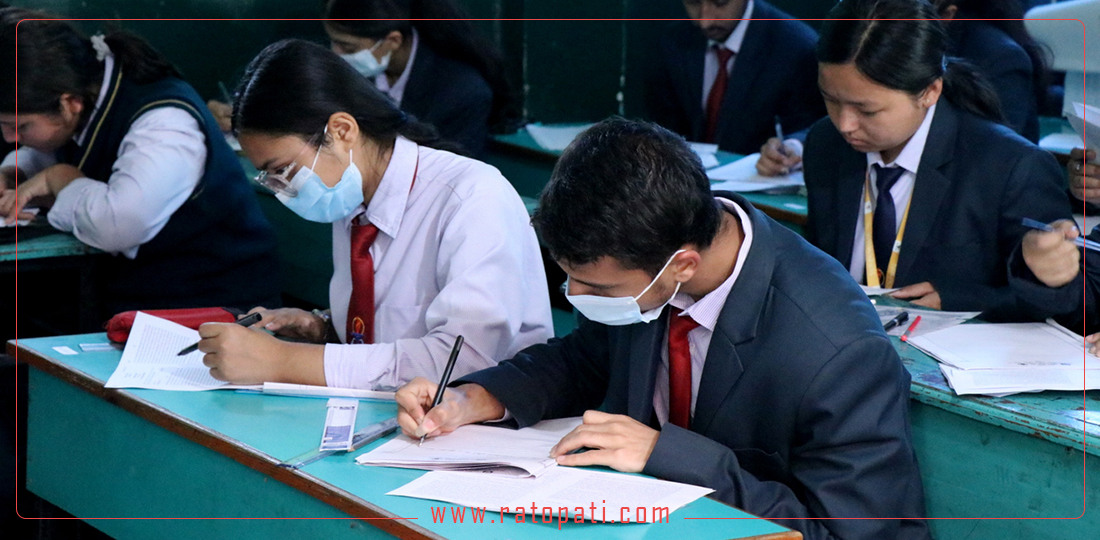
Secondary level examination results have deepened the questions raised about the academic quality of public schools. This forces parents to send their children to private schools. This creates a situation where opportunities are divided based on economic status within the education system, which is a serious challenge from the perspective of social justice.
The reasons for public education appearing weak are multifaceted. Education policy changes frequently, but long-term vision and continuity are lacking. Although authority for education management was divided after the federal governance system, there is a lack of clear division of responsibilities and effective coordination. The gap between policy formulation and implementation negatively affects school administration, teacher management, and quality.
Political interference in teacher management is another serious problem. When influence, rather than merit and performance, dominates teacher appointments, transfers, and promotions, the dignity of the teaching profession is undermined. Teacher training programs are mostly limited to formality, the impact of which is not seen in classroom learning. The tendency to view teachers merely as employees, rather than agents of change, weakens the foundation of public education.
What is even more serious is that teacher morale is declining. Due to a lack of transparency in promotions, transfers, and training, experienced teachers are moving away from the profession. In some schools, due to teacher shortages, the same teacher is forced to teach two or three classes, which directly affects student learning quality.
Meanwhile, the social perception of public schools is also declining. Many parents have started viewing public schools as a last resort. The trend of policymakers, high-ranking officials, and influential classes sending their children to private schools sends a message of distrust towards public education. When the state itself does not appear confident in its own schools, expecting trust from society becomes difficult.
The active participation of parents, local levels, and the state is essential for improving public education.
Nevertheless, improving public education is not impossible. Community schools that achieve excellent results despite limited resources and difficult circumstances serve as examples. Capable leadership, accountable teachers, active community, and transparent management have proven decisive in those schools. This proves that improving public education is possible with willpower and good governance.
The greatest strength of public education is its inclusive character. The future of children from poor, rural, marginalized, and deprived communities is linked to public education. Therefore, improving public education is not just an educational matter; it is a question directly linked to social justice, equal opportunity, and national development.
What is needed now is a vision that views education not as an expense, but as a long-term investment. Budget increases alone are not enough; their transparent, effective, and results-oriented utilization must be ensured. Political interference in teacher management must end, and a system based on merit and performance must be implemented. It is imperative to develop clear indicators and a strict monitoring system to measure learning outcomes in schools and the accountability of local levels.
The active participation of parents, teachers, local levels, and the state is essential for improving public education. Teachers must view teaching not just as employment but as a professional and social responsibility. School leadership and management committees must develop schools as centers of learning, not just administrative units. Public education cannot be strengthened without the support of parents and the community.
Ultimately, public education is the foundation for building Nepal's future. If the state, teachers, parents, and society fulfill their respective roles honestly, trust in public education will be re-established along with the increasing budget. Only this trust will open the path to building an equitable and capable society.
(The author is the Principal of Janata Model School, Biratnagar.)
This specific news has been automatically translated by AI. As a result, there may be some inaccuracies or language errors.