Nepal Imports NPR 57.88 Billion in Agricultural Goods in Seven Months, Impacting Trade Deficit


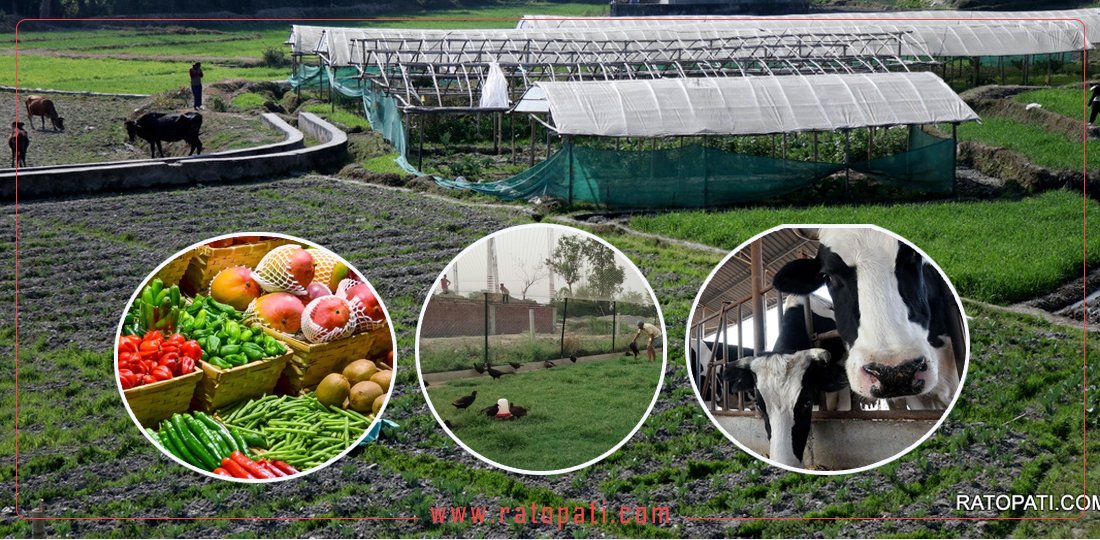
In Nepal, an agrarian nation, a significant amount of money is being spent on importing agricultural products, ranging from rice and grains to vegetables, from foreign countries.
According to import data released by the Customs Department, NPR 57.88 billion worth of food grains and vegetables were imported in the first seven months (until the end of Magh) of the current fiscal year 2082/83.
Of this, NPR 35.629 billion worth of food grains and NPR 22.2578 billion worth of pulses and vegetable products were imported, according to the department's statistics. Most of the food grains and vegetables are imported from neighboring countries India and China.This import directly affects Nepal's trade deficit and foreign exchange reserves. The country's economy is weakening as billions are spent annually on purchasing agricultural goods.
The large volume of imports from foreign countries makes it difficult for domestic farmers to compete, eventually leading to migration away from agriculture and the outflow of youth to foreign countries. In this context, the continued dominance of agricultural imports increases the risk of further weakening the rural economy.
NPR 35.62 Billion Spent on Food Grains
In the first seven months of the current year, NPR 35.62 billion was spent on importing 744,994.99 metric tons of food grains (cereals). Customs collected NPR 2.271787 billion in revenue from the import of these grains.
According to the department, the largest amount was spent on rice imports. Until the end of Magh, 348,410.20 metric tons of paddy were imported at a cost of NPR 12.8479 billion. Secondly, rice imports followed.
The department's statistics show that 348,410.20 metric tons of rice were imported at a cost of NPR 12.3784 billion. Thirdly, among the most imported food grains is maize, with 193,021.15 metric tons imported at a cost of NPR 83.0912 million.

Over NPR 22 Billion in Pulses and Vegetables Imported
During this seven-month period, NPR 22.2578 billion was spent on importing pulses and vegetable products. A total of 519,428.72 metric tons of pulses and vegetables were imported during this period. Customs revenue collected at the border points for this volume of vegetable product imports was NPR 2.462383 billion.
Of this, NPR 14.100962 billion worth of 439,905.14 metric tons of vegetables were imported, and NPR 915.55 million worth of 2,491.59 metric tons of tubers (yam, sweet potato, taro) were imported. Furthermore, NPR 8.065318 billion worth of 77,031.99 metric tons of pulses and legumes were imported. Of this, kidney beans worth NPR 4.05 billion (38,734.23 metric tons) and lentils worth NPR 2.43 billion (25,689.10 tons) were imported. Additionally, pigeon peas worth NPR 392.773 million and peas worth NPR 378.4 million were imported.

Vegetables Alone Worth NPR 14 Billion
According to the department's statistics, vegetables alone were imported worth NPR 14.10 billion in seven months. Of this, potatoes worth NPR 6.56 billion (20,721,396.630 metric tons) were imported. Similarly, the department's statistics mention that onions worth NPR 4.254 billion (102,080.16 metric tons) and garlic worth NPR 1.73 billion (12,325.05 metric tons) were imported.
Vegetable Import Volume

This specific news has been automatically translated by AI. As a result, there may be some inaccuracies or language errors.