Capital Expenditure Declines, Economy Stagnates

Kathmandu. Capital expenditure is considered the backbone of the country's economic prosperity. Therefore, as development expenditure increases, the economy becomes stronger and more dynamic, but the declining rate of development expenditure in recent years has made the economy sluggish. Expenditure is not being met as targeted due to errors in budget formulation itself.
The government announces a large target for development expenditure in the budget, but the situation where it is not implemented in practice persists. The tendency of 'Ashare development' which occurs at the end of the financial year does not seem to be fruitful.
According to experts, the 'Ashare development' done in haste at the end of the financial year is causing more disorder and wastage of resources than results. They believe that the economy has not been able to become dynamic due to the continuous decline in the country's development expenditure every year.
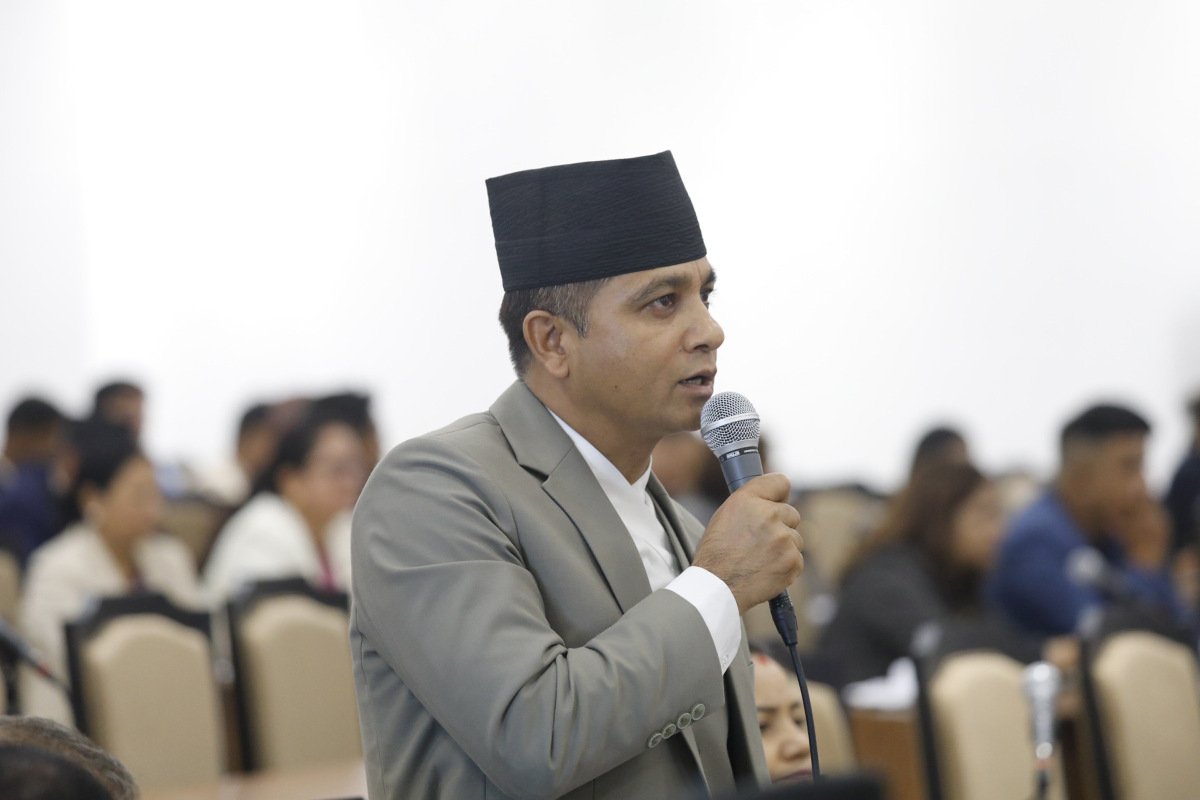
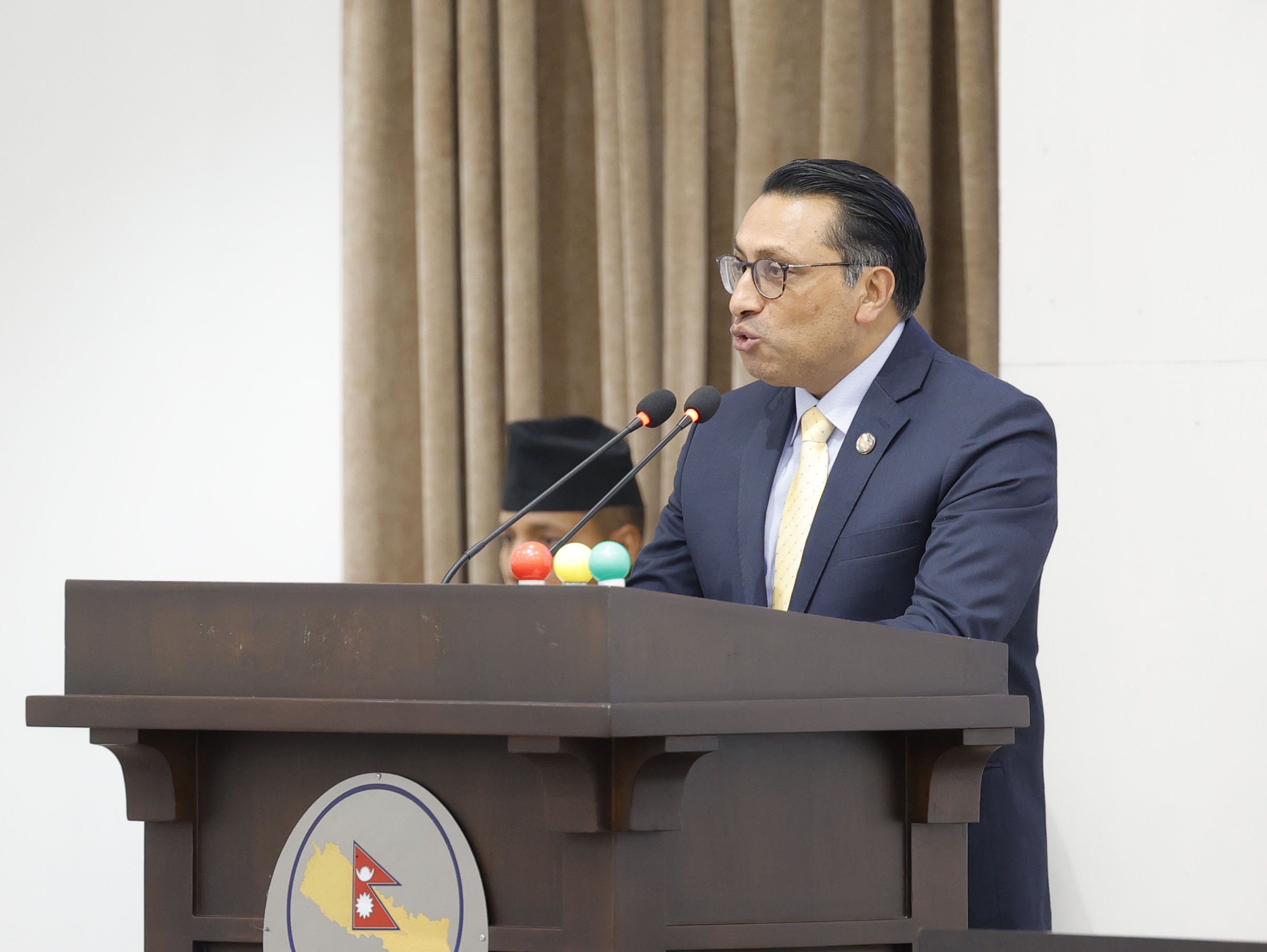
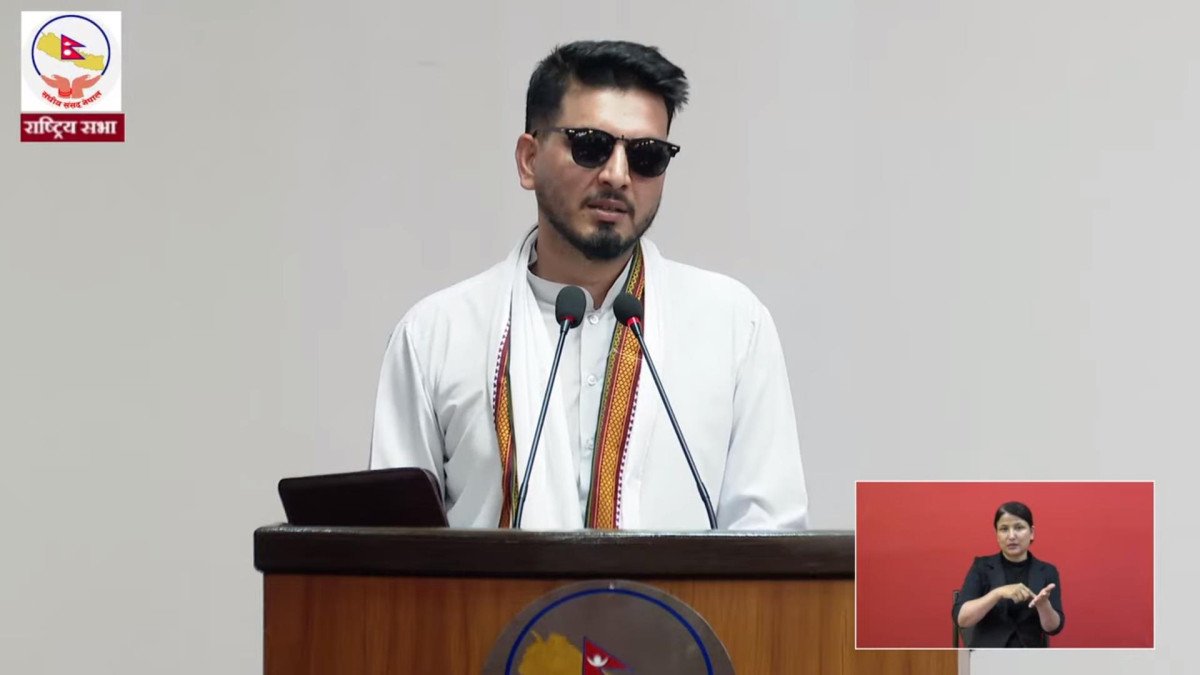
This fact has also been acknowledged by the Finance Minister Dr. Swarnim Wagle. While responding to questions raised by MPs about the upcoming fiscal year's budget in the National Assembly meeting on Monday, Finance Minister Wagle said that Nepal's economic activities have been in recession since the Janji movement.

However, he also claimed that the country's politics took a turn after the Janji movement. He mentioned that the country's economy has not yet fully returned to normal after the Kovid pandemic. He indicated that the economy has also become sluggish due to low development expenditure.
Finance Minister Wagle claimed that the new budget has been introduced with the objective of making economic activities dynamic and clarified that the government is committed to advancing economic activities by encouraging the private sector.
Three governments ran the budget for the current fiscal year (2082/083), in which the then government led by KP Sharma Oli presented the budget, but the government collapsed due to the Janji movement before completing two months of implementation.
The interim government formed after the Janji movement further cut development expenditure and prioritized elections and reconstruction. That interim government also had the compulsion to conduct elections. This also led to a contraction in development expenditure.
A new government with about a two-thirds majority has been formed through the general elections held in February. It has been more than two and a half months since the government was formed under the leadership of Balen Shah.
However, the state of development expenditure appears to be dire. Despite the powerful government's efforts to improve development expenditure through policy reforms, the results have not yet materialized.
To increase capital expenditure, the Ministry of Finance has made the provisions for reallocation more flexible than in the past with the aim of improving development and overall budget expenditure.
Although the ministry itself has tried to untangle procedural knots through policy by reallocating funds, there has been no significant improvement in the government machinery and the traditional trend of public expenditure.
As a result, even after eleven months of the current fiscal year (end of Jestha), the state of development expenditure appears dire, which once again makes the repetition of the 'Ashare development' series certain.
The data from the Office of the Auditor General has raised serious questions about the government's capacity to spend capital. The government had set a target of Rs 407.88 billion for capital (development) expenditure for the current fiscal year.
However, only Rs 132.6677 billion has been spent by the end of Jestha. This is only 32.53 percent of the total allocated development budget.
Whereas, the ordinary (current) expenditure has already reached 76.91 percent. While Rs 908.26 billion has been spent on employee salaries, allowances, and administrative work, the development expenditure remains in a dire state.
There is not much difference in the same period of the fiscal year 2081/082. In the last fiscal year, capital expenditure was around 35 percent by the end of Jestha. Experts say that the lack of improvement in expenditure trends, even with political stability and strong leadership, highlights the structural flaws in Nepal's budget implementation system.
Looking at the data until the end of Jestha, spending 81.47 percent on financial management while capital expenditure is limited to 32 percent indicates that the government is more focused on loan principal-interest payments and administrative expenses than on development.
Former member of the National Planning Commission and economist Dr. Ramesh Poudel pointed out that the inability of the state machinery and policy weaknesses are the main reasons for the annual decline in achieving capital expenditure targets.
He said that only 32.53 percent of capital expenditure has been made even after eleven months of the current fiscal year, which raises serious questions about the country's development process. He said, 'Last year, capital expenditure was around 35 percent in the same period, but this year it has decreased further. Although the government has taken steps like policy reform and delegating budget reallocation authority to ministries, their effective results have not been seen.'
Poudel said that due to the lack of clear provisions to address the risk of price increases in the current contract and quotation system, contractors are unwilling to work at a loss.
Economist Dr. Poudel stated that development does not happen merely by allocating a budget, emphasizing the need to increase the spending capacity of the state machinery. 'Unless the automatic pricing system is made effective and the problems of construction entrepreneurs are addressed at the policy level, the tendency to develop only in Ashar every year will not end,' he said.
He warned that the tendency to spend the budget in haste only after Ashar starts every year also leads to a decline in the quality of development.
Challenge of spending 20 billion daily only in the month of Ashar
The government, which has been moving at a tortoise's pace in terms of budget implementation for the past eleven months, now faces the situation of having to run at a hare's pace in the single month of Ashar. However, according to economist Poudel, the government's speed does not suggest it can become a hare.
According to Dr. Poudel, the state machinery is not functioning according to the country's needs. 'Our need is to increase capital expenditure, but we allocate less even during budget planning, and the capacity to spend the allocated amount is decreasing year by year,' he said.
He said that political events like elections and government changes have also hindered development works this year. He stated that the increase in petroleum prices due to the Russia-Ukraine war has made construction materials expensive. He said, 'Because of this, construction entrepreneurs are not ready to work at the current rates. The failure to reduce fuel prices in Nepal, even when the price of crude oil in the international market has fallen from $130 per barrel to $82, has negatively impacted the construction sector.'
Out of the total budget of Rs 1964.11 billion for the current fiscal year, only Rs 1346.65 billion has been spent by the end of Jestha. The government now has only 30 days to spend the remaining Rs 617.45 billion.
To meet this target, the government needs to spend an average of Rs 20.60 billion daily in the month of Ashar, according to Dr. Poudel. However, looking at the past development expenditure trends, it is unlikely that such a large amount of expenditure will be transparent in such a short period. Due to the lack of transparency, development is also unlikely to be sustainable. Economist Poudel says that paving roads only in Ashar, digging drains in a hurry, and doing development work just to get by only exploits the government treasury.
Gap between revenue and income, increasing debt burden
The balance between the government's income and expenditure has also deteriorated significantly. By the end of Jestha, the government's total income is only Rs 1110.4938 billion, which is 72.42 percent of the target.
In the last eleven months, revenue collection has been Rs 1081.31 billion (73.04 percent), while foreign grant receipts have shrunk to only Rs 22.88 billion (42.82 percent).
While total income is Rs 1110 billion, expenditure has already exceeded Rs 1346 billion. This has created a huge fiscal gap of Rs 236 billion. The government will have to rely on internal and external loans to bridge this gap.
Finance Minister Swarnim Wagle's words and test
Finance Minister Dr. Wagle has repeatedly questioned the style of implementation of old budgets. While presenting the budget for the upcoming fiscal year, he announced that he would work in a mission mode and end the tendency of spending only in Ashar.
He has put forward slogans such as improvement in procurement processes, stability of project chiefs, and flexibility in reallocation.
However, the dire statistics of the current fiscal year show that the upcoming year will be an even bigger challenge for the Finance Minister. The constitutional provision of presenting the budget on Jestha 15 was primarily aimed at reducing the pressure of Ashare development by starting contracting from Shrawan 1. However, in practice, the budget of Jestha 15 has been limited to formality.
Economists also admit that development expenditure could not be made because the budget for the current fiscal year was election-centric. The Finance Minister has the convenience of saying that the development budget was low because it was also used for elections.
However, there is hope that the announcement to work in mission mode and end the tendency of spending only in Ashar in the upcoming budget will be realized. Every year, the Office of the Auditor General warns that Ashare expenditure is a 'violation of budget discipline'. Experts argue that reallocation and additional disbursements made with the intention of finishing the budget at the end of the fiscal year encourage corruption.
More expenditure at the end of the year
According to constitutional provisions, the budget is presented on Jestha 15 every year, but budget implementation starts about a month and a half after the budget speech.
However, due to the long implementation process, the tradition is that budget payments are mostly made at the end of the year. Due to this tradition, there is a situation where a lot of expenditure occurs at the end of the year.
Economists point out that this situation will continue until the government makes structural reforms in capital expenditure.
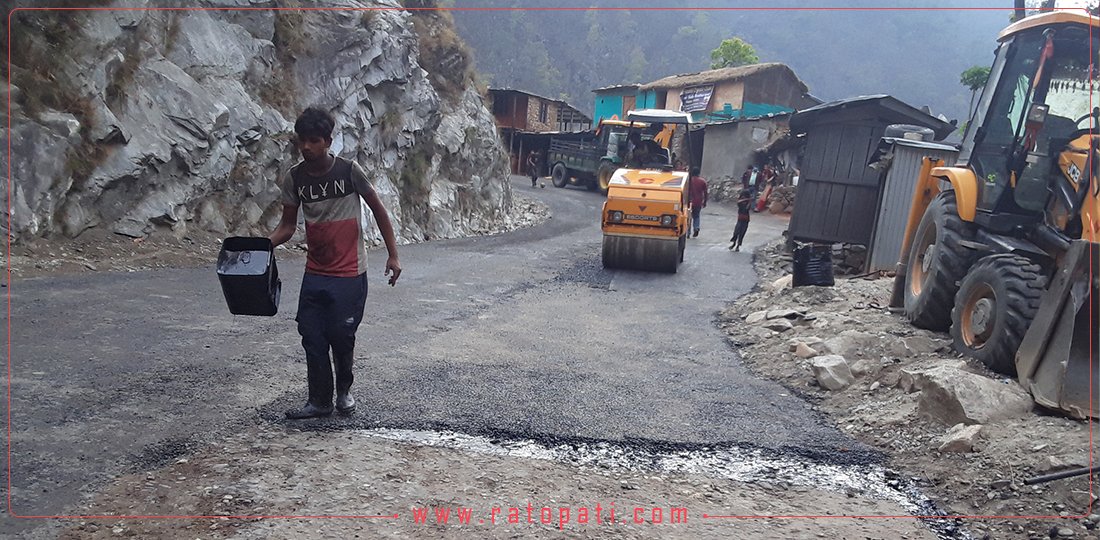
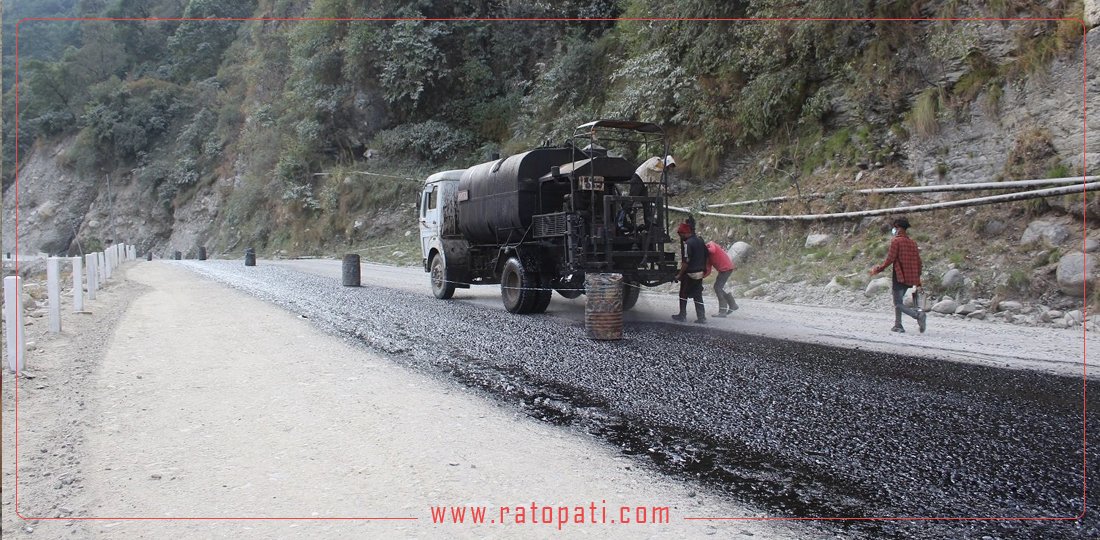
In the past, road construction used to be more common in Ashar, but now it has been somewhat controlled. The Office of the Auditor General shows capital expenditure of around Rs 225 billion in the month of Ashar alone.
However, the government has now implemented a system of giving reallocation (budget transfer) authority to the concerned ministries themselves. The old practice of having to go to the Ministry of Finance for minor expenses and internal adjustments has been removed to facilitate ministries that spend large budgets. Under this system, the concerned ministry can now make necessary reallocations itself.
Although the government estimates that capital expenditure will increase with this new system, its results have not been seen so far.
This specific news has been automatically translated by AI. As a result, there may be some inaccuracies or language errors.

_8xHho19k4P.jpg)