Parliamentary Committee Slams Minister's Absence Amidst Critical Infrastructure Debate

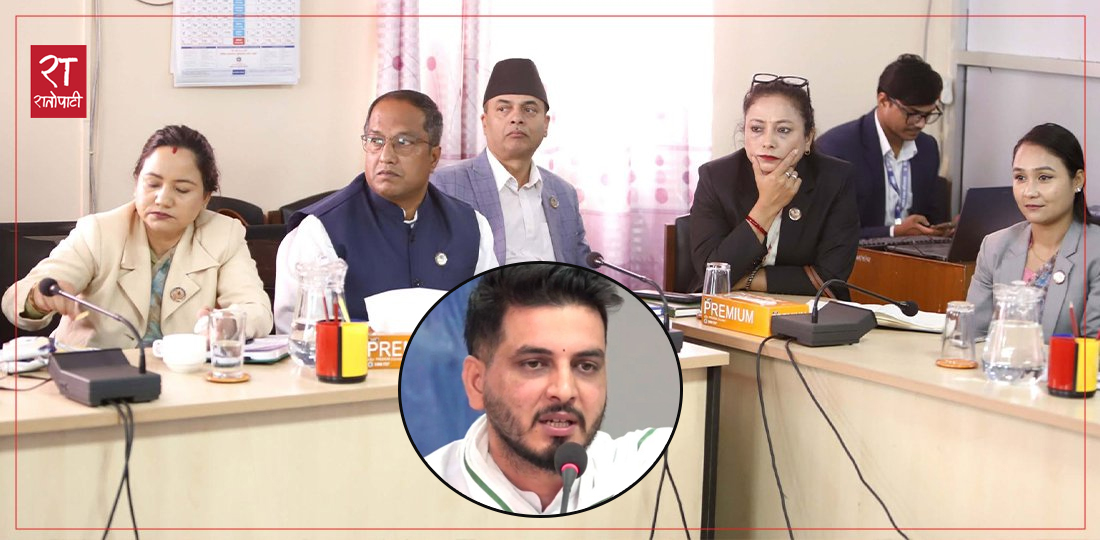
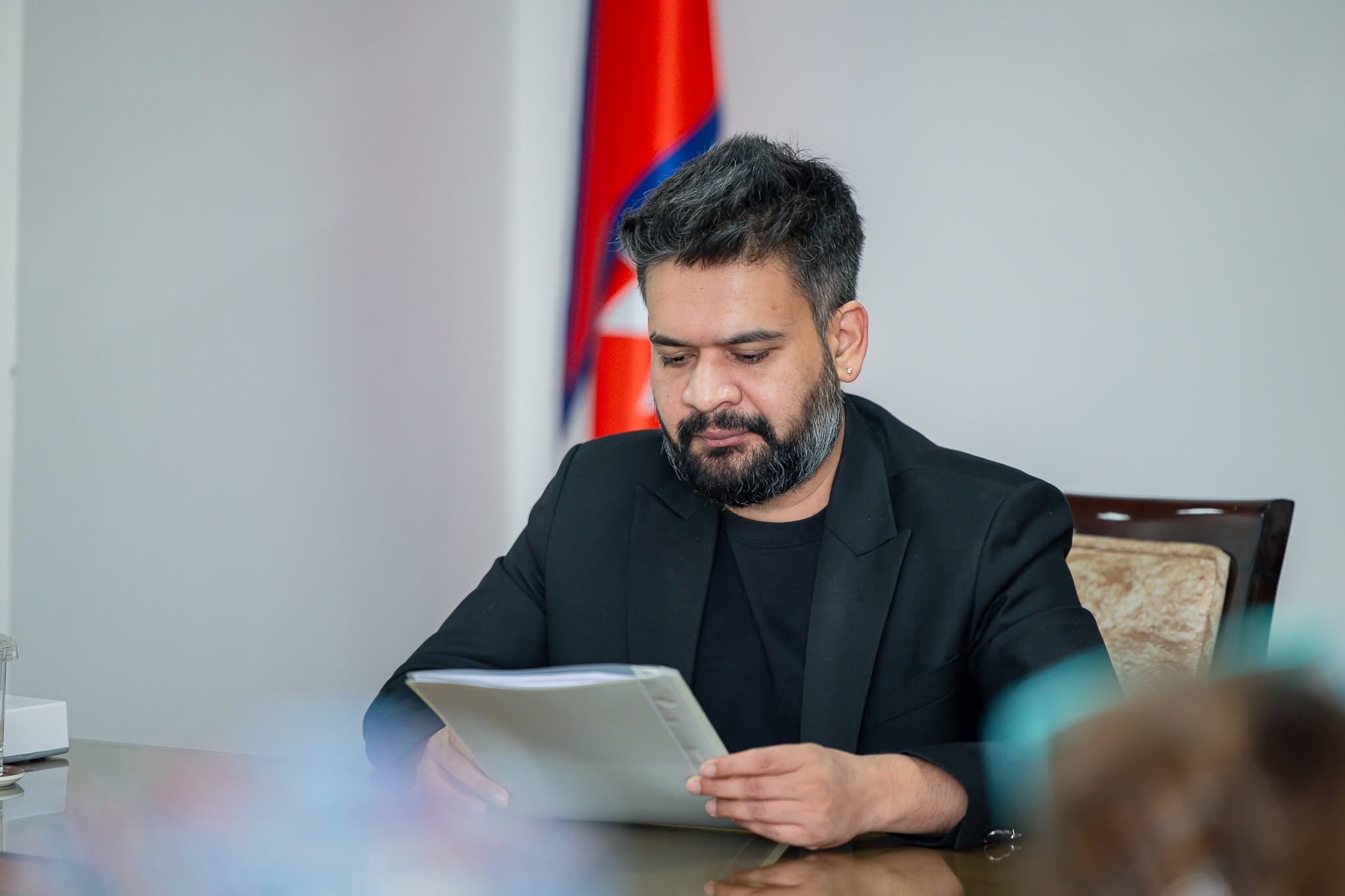
Kathmandu. Stakeholders complained that if the traffic system of Kathmandu Valley is not improved immediately, it will not be possible to walk on the roads within two years. They stated that the traffic sector is on the verge of collapse due to warnings from security agencies and dilapidated infrastructure. However, the main official responsible for policy decisions, Minister of Physical Infrastructure and Transport, Sunil Lamsal, was absent from the parliamentary committee meeting on Tuesday, despite stakeholders raising such a sensitive issue.
A serious discussion on preserving the country's overall transit, transport, and road infrastructure took place in the meeting of the House of Representatives' Infrastructure Development Committee on Tuesday. However, the MPs, angered by the minister's absence, strongly objected to the ministry's indifference.
Mini Parliament Heats Up in Minister's Absence
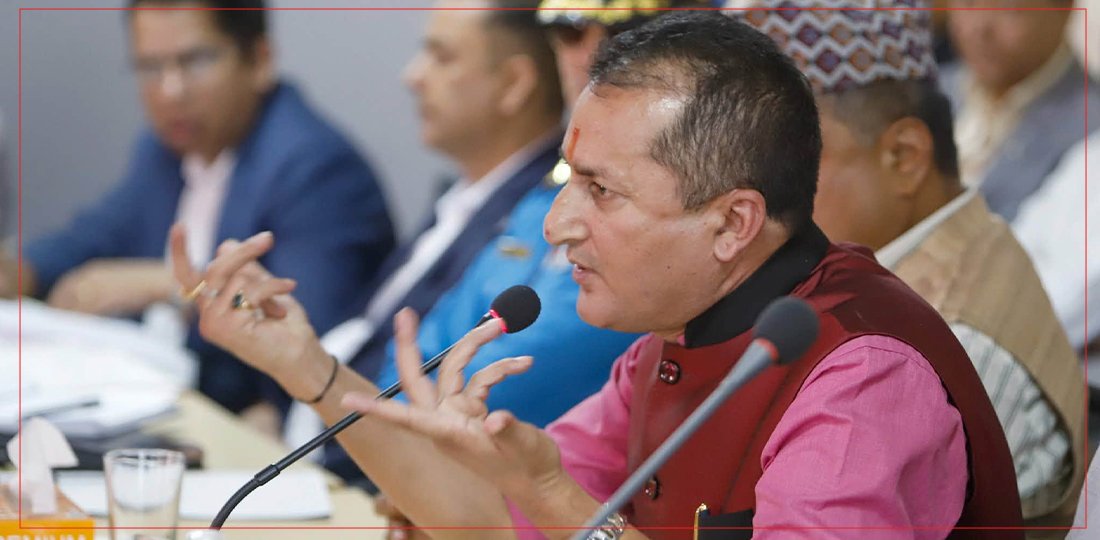
When it was her turn to speak at the Infrastructure Development Committee meeting, MP Basana Thapa presented her views in an agitated manner. She expressed strong dissatisfaction with Minister Lamsal's absence from the meeting. 'It would have been good if the minister had been present when we were presenting our views. We heard the stakeholders' concerns, but we should have been able to present our views to the minister. Today's agenda is extremely important and meant for the minister. It's a 15-20 minute matter, and he should have been brought here before I spoke.'
Stating that the parliamentary session was about to begin soon and that time was limited, MP Thapa insisted that she would not speak without the minister's presence. She called the failure of the ministers, despite there being three or four ministers under physical infrastructure development, to deem it necessary to attend the meeting as irresponsible.
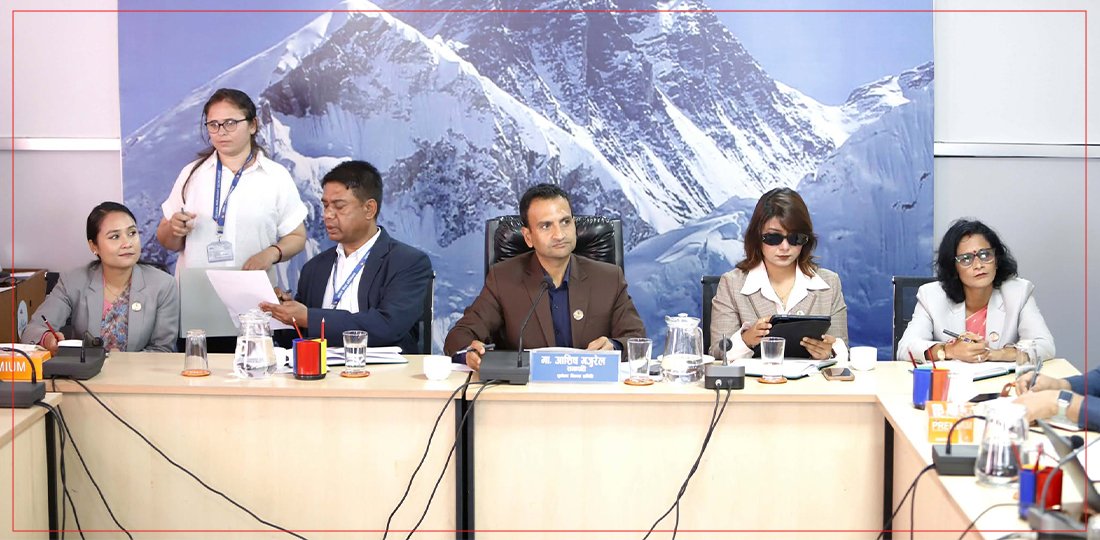
MP Nita Ghatani also strongly objected to the committee's meeting procedures and the minister's absence. She argued that MPs come to the meeting well-prepared after consulting with experts, and such valuable time should not be wasted due to the minister's absence. She also drew the chairman's attention to the poor time management, as the meeting called for 9 AM had to be hastily concluded within 2 hours because the session was scheduled to start at 11 AM.
MP Sunil KC also raised questions about the weak presence and scheduling of stakeholders and ministers in the meetings. 'Meetings are held, but the concerned ministers are either absent or cite lack of time, which does not lead to problem-solving,' he said. 'Talking is not enough now; we need to act. The issues raised in the committee are not just for media headlines but must be taken to the implementation level.'
MP Bharat Bahadur Swar stated that the problems of construction and transport entrepreneurs should be viewed not just as their own but as national problems. He demanded that the government immediately take concrete steps to boost the morale of entrepreneurs, who are the main backbone of the state, and ensure their immediate implementation through the ministry, rather than limiting it to discussions.
MP Dhanendra Karki said that the small but serious problems in road accidents and infrastructure in the country should not be ignored. 'On one hand, roads are being dug, and on the other hand, they are not being maintained. The committee must facilitate and find solutions with the ministry on such issues. We are raising this issue, and it is a very serious matter,' he said. He urged everyone to work above partisan interests and demonstrate action rather than just words.
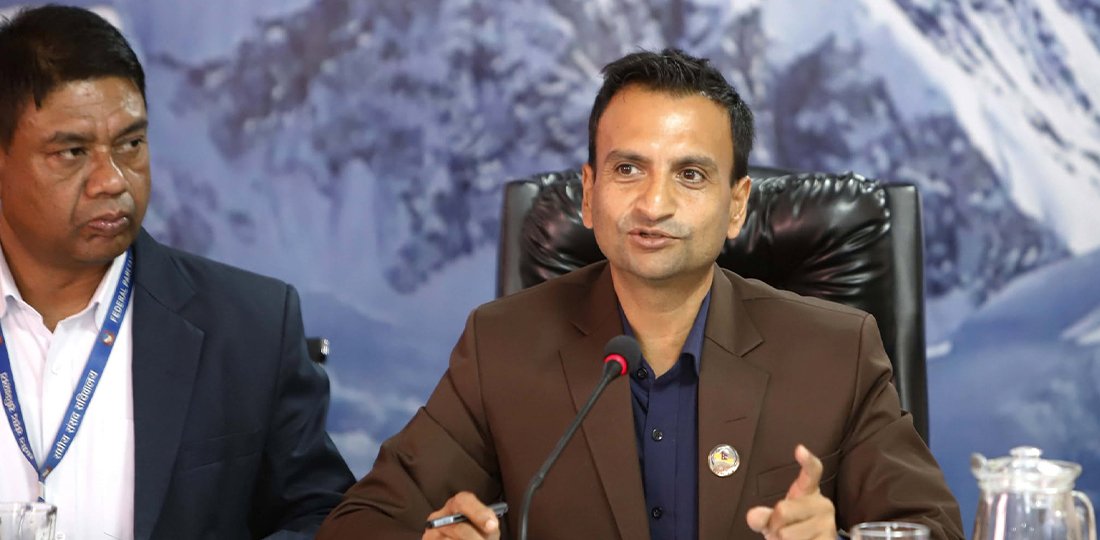
Following the MPs' strong protests, Committee Chairman Ashish Gajurel expressed dissatisfaction that the meetings were limited to mere formal discussions and clarified that meetings without the presence of ministers would be meaningless from now on. 'We hold meetings, we discuss, but what is the conclusion? What has improved? What feedback has been received? These things must be clear,' he said. Chairman Gajurel pledged to ensure the minister's mandatory presence in the next meeting and issue strict directives.
'If Not Improved, It Won't Be Possible to Walk on Kathmandu's Roads Within Two Years'
At the meeting, Senior Superintendent of Police (SSP) Suresh Prasad Kafle of the Kathmandu Valley Traffic Police Office warned that if the existing traffic system in Kathmandu Valley is not improved immediately, a dire situation will arise where it will not be possible to walk on the roads within the next two years. Presenting on 'Public Transport and Freight Management,' SSP Kafle clarified that the traffic management in the valley is becoming increasingly complex due to the lack of technology-friendly systems.
According to SSP Kafle, Nepal currently has about 6.5 million registered vehicles, with an average of 2 million vehicles plying daily in Kathmandu Valley alone. He mentioned that only about 2500 to 2600 traffic police personnel are deployed nationwide to manage such a large number of vehicles.
He proposed a significant increase in fines to discourage traffic violations. 'The current fines of 500 and 1000 rupees are too low; they don't deter anyone,' he said. 'There is a need for legal provisions to impose fines ranging from 5,000 to 50,000 rupees for violations.'
He suggested implementing an AI-generated integrated traffic light system to replace the current manual traffic management on Kathmandu's roads, which is estimated to require an investment of about 15 to 20 billion rupees. 'The current traffic lights are not synchronized with each other, making traffic management difficult,' Kafle added. 'If we don't invest in technology, ambulances may not reach hospitals on time after some time.'
He also suggested making dashboard cameras mandatory in public and private vehicles to collect evidence of accidents and resolve disputes, establishing digital integrated checkpoints at entry points, and arranging government-operated weighbridges ('dharmakanta') for vehicles. He also stated that a 'scrap policy' should be introduced immediately to remove old and expired vehicles from the roads. He mentioned that including traffic rules in the school curriculum and increasing the use of drones and robots for traffic monitoring are also necessary. SSP Kafle argued that the practice of not considering road capacity and structure when issuing route permits also contributes to traffic congestion.
'Government Has Neglected Transportation'
Saroj Sitaula, Chairman of the Federation of National Transport Entrepreneurs of Nepal, stated that the state has severely neglected the transport sector. He expressed his dismay that although the ministry's name is 'Ministry of Physical Infrastructure and Transport,' the word 'Transport' is missing from its signboard.
'Entrepreneurs have invested up to 15 million rupees in the transport sector and brought European-standard luxury buses, but the state has not even built a simple rest station for drivers on the highways,' Sitaula expressed his frustration.
He drew the government's attention to the highly discriminatory policy regarding the movement of freight and public vehicles between Nepal and India. 'Indian vehicles, after obtaining a 72-hour permit from Kakarbhitta, Sunauli, or Raxaul, can travel anywhere in Nepal. However, if our Nepali vehicles need to go to India, we have to apply at the embassy and deposit 100,000 to 200,000 rupees,' he said. He demanded the immediate implementation of a policy where vehicles carrying up to 50 tons from India, which are damaging Nepal's bridges and roads, are only allowed to come up to the dry ports at the border, and Nepali vehicles transport the goods from there.
Sitaula stated that there is a severe shortage of drivers in the country due to the government's flawed driving license policy. 'Why shouldn't a person who has learned to drive a particular vehicle be allowed to take the trial for that vehicle? The impractical policy of requiring individuals capable of driving heavy vehicles to first obtain a license for light vehicles and wait for 7 years for a heavy vehicle license has led to a shortage of drivers in the transport sector,' he said. He cited the lack of a clear government policy as the main reason for the chaotic traffic management in the city and questioned who gave permission to operate small 15-seater vans crammed with passengers on large roads.
Integrated Transport Policy and Overload Control Needed to Save National Infrastructure from Crisis
Arun Kumar Shrestha, Central Vice-President of the Federation of Freight Entrepreneurs Nepal, emphasized the need for an 'Integrated Transport Policy' to make Nepal's freight transport business organized, modern, and effective. Presenting data showing that the transport sector contributes about 7 to 8 percent to Nepal's Gross Domestic Product, he stated that a triangular coordination of policy, infrastructure, and technology is necessary to strengthen this sector.
Shrestha proposed the establishment of 'refreshment centers' every 40 to 50 kilometers on highways and 'road maintenance teams' for road repairs. He also suggested implementing a regular scanning and inspection system for freight vehicles to bring transparency to transportation and strictly enforcing operations within the road's load-bearing capacity.
Truck Entrepreneurs Association Chairman Rajendra Bikram Baniya stated that controlling overload (carrying more than capacity) is essential for the safety of road infrastructure and the reduction of road accidents. He expressed concern that roads and bridges built with state investment are deteriorating in a short period due to overloading.
'Bridges on the Butwal-Narayangadh road section have been damaged due to overloading. To protect infrastructure, the practice of carrying overload must be controlled at any cost,' Baniya said. He pointed out that the rate of accidents on Nepal's roads is increasing due to the excessive speed and overloading of Indian vehicles, emphasizing the need for strict adherence to traffic rules to manage this.
Contractor Delays and Undermining of Good Governance
During the meeting, complaints were heard that despite sufficient budget for road construction, quality roads were not being built due to a shortage of construction materials, contractor delays, and engineering errors. MP Thapa commented that it was objectionable for the minister to threaten physical action against construction entrepreneurs who fail to complete state projects on time.
The MPs were angered by the ministry's indifference, given that citizens are losing their lives daily due to road accidents. 'We are in favor of good governance. However, the ministry's work does not end with awarding contracts; regular monitoring and evaluation are necessary,' said Chairman Gajurel.
The parliamentary committee has decided to demand further action plans from the ministry to bring construction entrepreneurs under legal purview and expedite development works to protect the country's overall transit, transport, and road infrastructure. The committee is preparing to ensure the mandatory presence of the concerned minister, Sunil Lamsal, in the next meeting and issue strict directives to manage the country's sensitive and crisis-prone transport sector.
This specific news has been automatically translated by AI. As a result, there may be some inaccuracies or language errors.


_xNfaHPeaw1.jpg)