
Major Political Parties Detail Plans for Cooperative Sector Reform and Depositor Repayment in Election Manifestos


Kathmandu. The Rastriya Swatantra Party (RSP), which is contesting the upcoming House of Representatives elections scheduled for Falgun 21 with the aim of leading the government, has pledged to return funds to small depositors within 100 days of forming the government.
In its manifesto released on Thursday, the RSP clarified that its objective is not only to jail the operators of problematic cooperatives but also to ensure the return of depositors' money.
The manifesto states on page 31: 'Our objective is not just to jail the operators, but to return the depositors' money. Therefore, in line with the policy of resolving issues by 'listening rather than jailing,' if the operator or management of any cooperative financial institution is ready to return the depositors' funds and has a reliable source and plan, we will facilitate a legal path for 'settlement.' In such cases, we will provide them the opportunity to manage assets and recover loans while remaining outside of custody, with a full guarantee and a set timeline for the return of savings.'
RSP Chairman and candidate for Chitwan-2, Rabi Lamichhane, is currently facing cases in five district courts on charges of cooperative fraud. The government has filed cases against Rabi in Kaski (Surya Darshan Cooperative), Kathmandu (Swarnalakshmi Cooperative), Chitwan (Sahara Cooperative), Rupandehi (Supreme Cooperative), and Parsa (Sano Paila and Loan Cooperative) for misappropriation of savings.
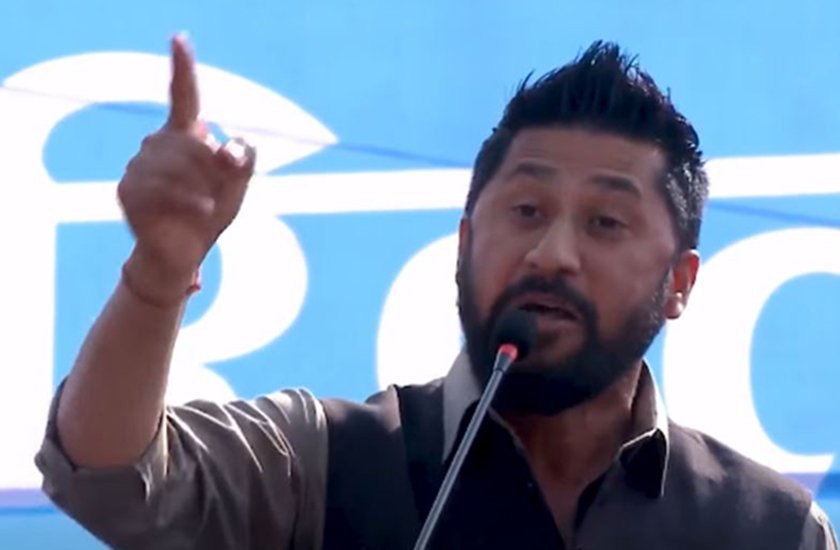
He was released on bail after depositing collateral of 6.5 million rupees in the Kaski District Court, 6 million in the Kathmandu District Court, 5.4 million in the Chitwan Court, 10 million in the Rupandehi Court, and 10 million in the Parsa Court. Besides cooperative fraud, Rabi also faces charges of organized crime and money laundering in the Kaski and Rupandehi courts. After being imprisoned for nearly a year in total during pre-trial detention, he was released on Jestha 4, 2082, after depositing an additional 26.8 million rupees as bail based on the order of the Butwal Bench of the High Court.
Other major political parties contesting the elections, particularly the Nepali Congress and CPN-UML, have made cooperative fraud a central issue.
The Congress-UML coalition government led by KP Oli had previously formed a high-level parliamentary investigation committee under the convenorship of the dissolved House of Representatives member, Suryabahadur Thapa Chhetri.
The committee investigated the status of problematic cooperatives nationwide and the misappropriation of savings at Gorkha Media Pvt. Ltd., where Rabi was the Managing Director, and recommended action to the government through the Speaker.
Based on the committee's recommendation, Rabi and Chhabi Banjade were arrested. GB Rai, the chairman of Gorkha Media, remains at large.
- Provisions in RSP's Manifesto:
We will return funds to small depositors within 100 days of forming the government to secure the hard-earned money of the general public. To secure depositors' earnings, we will establish an 'Integrated Savings Security Fund' from the state, which will prioritize payments to depositors of distressed institutions, starting with small depositors. Our objective is not just to jail the operators, but to return the depositors' money. Therefore, in line with the policy of resolving issues by 'listening rather than jailing,' if the operator or management of any cooperative financial institution is ready to return the depositors' funds and has a reliable source and plan, we will facilitate a legal path for 'settlement.' In such cases, we will provide them the opportunity to manage assets and recover loans while remaining outside of custody, with a full guarantee and a set timeline for the return of savings.
- Congress-UML Aggressive
While the RSP appears lenient on the issue of problematic cooperatives and misappropriated savings, the Congress, which is in the race to lead the future government, appears tough. The election pledge letter published by the Congress clearly states the full implementation of the parliamentary investigation report.
On page 141 of the Congress's pledge letter, it states: 'We will ensure justice for the victims by fully implementing the reports of the task forces formed to study cooperatives and the parliamentary investigation committee.'

The report prepared by the 'Special Parliamentary Investigation Committee on Misappropriation of Cooperative Savings' led by Thapa Chhetri mentioned that 87.89 billion rupees were misappropriated from 40 cooperatives. The report noted that there are currently 31,000 cooperatives across the country, with savings totaling 478 billion rupees. The report stated that 870 million rupees in savings were misappropriated from 'Galaxy 4K' television, operated by Gorkha Media Pvt. Ltd.
It appears that the Congress has raised the cooperative problem as a priority based on the high-level investigation committee's findings.
The Congress stated its commitment to achieving socio-economic transformation, social justice, redistribution of resources, and poverty alleviation through cooperatives.
The Congress clarified that it has put forward a policy of 'zero tolerance' against fraud and effective implementation of a savings protection fund to address the current challenges seen in the cooperative sector.
The Congress expressed a firm resolve to make cooperatives a risk-free, digital, production-oriented, and reliable pillar of the economy through strong regulation and institutional good governance to address the current challenges in the cooperative sector, and has made a 9-point pledge for the development, reform, and security of cooperatives and microfinance institutions:
1. Strong Regulation and Supervision: We will regulate through the National Cooperative Regulation Authority by implementing the following actions under the policy of 'zero tolerance' against fraud and for the security of depositors. For credit and savings cooperatives with transactions exceeding 250 million rupees, we will arrange for regulation by the Nepal Rastra Bank.
To eliminate duplication between federal, provincial, and local levels and make regulation effective, we will implement a supervision system equipped with technical manpower and digital technology.
To secure depositors' funds, we will arrange for transparent accounting, regular audits, digital tracking, early warning systems for risks, and provisions for action against fraud.
2. Return of Small Depositors' Savings: We will take the following actions to return savings to depositors of problematic cooperatives:
We will return the funds of small depositors up to five lakh rupees through the Authority by issuing domestic bonds guaranteed by the government. We will facilitate the return of savings of large depositors by bringing their sources into the tax net as per the law. We will ensure legal certainty for returning savings by confiscating the assets of those who defraud cooperative funds.
3. Efforts Focused on Problematic Cooperatives: We will take the following actions regarding problematic savings and credit cooperatives.
We will arrange for the authority to recommend liquidation or reorganization by forming separate working groups based on the latest transactions to settle assets and liabilities. We will enact legal provisions to freeze the bank accounts of those who intentionally default on loans and bar them from government services and candidacy in elections.
We will bring the tendency of running cooperatives like private businesses, being captured by interest groups, and making decisions against member interests under the legal framework and take action.
4. Level-wise Authority and Regulation: Based on the provisions in the schedules of the Constitution, we will clarify the provision for the federal government to set standards and regulate cooperative institutions, while provincial and local levels will effectively manage the registration, records, and good governance systems of cooperative institutions.
5. Savings Insurance: We will make insurance mandatory for savings up to a certain limit in savings and credit cooperative institutions.
6. Fully Digital Cooperatives: We will implement an 'Integrated Digital System' allowing regulatory bodies to monitor in real-time by mandating full digital record-keeping for all cooperative transactions and information systems.
7. One Village, One Product: We will arrange to bring the concept of 'One Village, One Product' to every village by arranging special concessions and subsidies to involve cooperatives in production and export.
8. Full Implementation of Parliamentary Investigation Report: We will ensure justice for the victims by fully implementing the reports of the task forces formed to study cooperatives and the parliamentary investigation committee.
9. Pledges by Nepali Congress for Microfinance and Moneylending Victims: We will take the following actions to resolve the anomalies and problems seen in microfinance and moneylending.
Meanwhile, the UML has written in its manifesto that it will quickly return the money of depositors victimized by problematic cooperatives.
It states on page 62: 'We will return the money of depositors victimized by problematic cooperatives quickly, transparently, and accountably. We will establish a Savings Return Guarantee Fund with provisions for strict action against the guilty and recovery from them.'
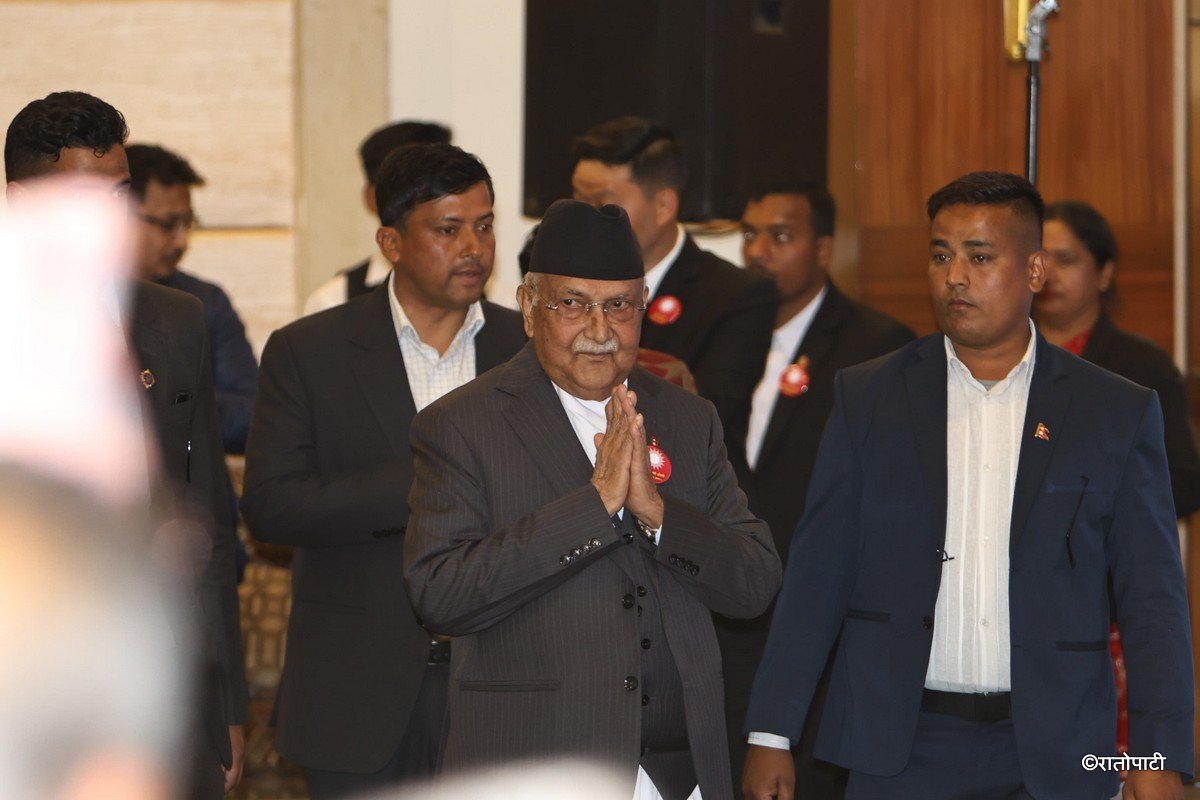
It committed to re-establishing cooperatives as a secure, productive, and trustworthy economic pillar based on good governance, transparency, and a member-centric system.
- What is in the Manifesto:
We will re-establish cooperatives as a secure, productive, and trustworthy economic pillar based on good governance, transparency, and a member-centric system. We will strengthen the rural economy through cooperatives by placing them at the center of agriculture, production, value chain, processing, storage, and market management.
We will fully digitize the registration, reporting, monitoring, and information systems of cooperatives. We will expand national and international market access for cooperative products through commercialization, branding, quality certification, and e-commerce. We will prepare the foundation for a prosperous Nepal and secure savings through a long-term national cooperative policy.
We will quickly, transparently, and accountably return the money of depositors victimized by problematic cooperatives. We will establish a Savings Return Guarantee Fund with provisions for strict action against the guilty and recovery from them.
We will clarify the scope of work between the federal, provincial, and local levels to make cooperative regulation integrated, simple, and effective, and eliminate duplication. We will provide the National Cooperative Regulation Authority with the necessary legal authority, modern technology, and skilled manpower for strict monitoring of financial transactions by cooperatives. We will adopt zero tolerance for fraud, embezzlement, and illegal activities.
We will ensure the leading role of cooperatives in agriculture, value chain, processing, storage, and market management. We will expand the use of digital technology in registration, reporting, monitoring, and information management. We will connect cooperative products to national and international markets through branding and e-commerce.
We will create employment and self-employment opportunities through cooperatives targeting youth, women, laborers, and marginalized communities. We will implement a special legal mechanism to resolve the problems of borrowers whose collateral is held due to loans taken from closed or inactive cooperatives. We will conduct capacity-building programs for cooperative activists, operators, employees, and regulators. We will develop cooperative administration as a professional, accountable, and specialized public service.
- What is the CPN's Stance?
The other major party, the Communist Party of Nepal (CPN), mentioned arranging for effective supervision of savings and cooperatives. In its 56-page election pledge letter, it committed to implementing a special revival package that guarantees depositors will receive at least their specified minimum principal back. However, the CPN appears silent on taking action against individuals who committed cooperative fraud.

The CPN's manifesto states on page 16: 'For the revival of the cooperative sector, a special revival package will be implemented for genuine cooperatives affected by the transition impact and unable to resume operations, guaranteeing that depositors receive at least their specified minimum principal back.'
- Authority Chairman Says - Source Management Must Be Ensured First
Dr. Khagaraj Sharma, Chairman of the National Cooperative Regulation Authority, views the inclusion of depositor fund return in political parties' manifestos positively, but emphasizes that source management must be ensured for this to happen. He stated that innocent depositors are directly affected because the individuals misappropriating savings are mostly operators and employees.
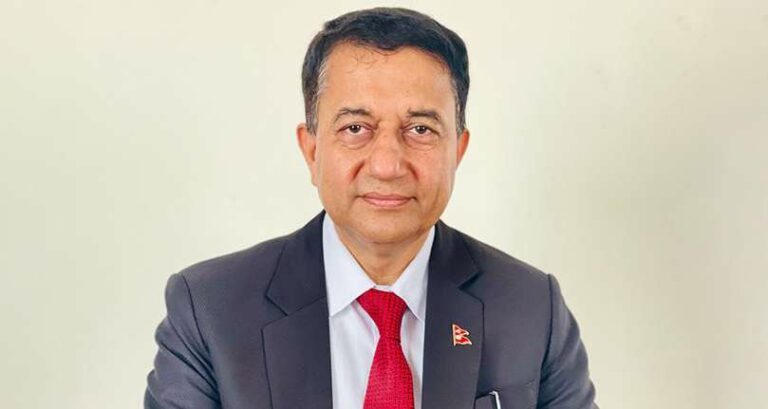
Sharma stressed that since major savings misappropriations were committed by operators and employees, their assets, location restrictions, and citizenship should be frozen to recover funds from their respective properties and the institution's assets. Although political parties have prioritized solving the cooperative problem in their manifestos, he noted that they need to be clear on how the source of funds will be managed.
'We must identify those who misappropriated funds and manage the sources. Misappropriation of depositors' money has been done by operators and employees. Some have also blackmailed by taking loans. Many innocent depositors have suffered because of them,' he told Ratopati on Friday. 'Fundamentally, the assets of those who have misbehaved must be frozen. The assets of all operators and employees must be frozen. Currently, those who have deposited one lakh or two lakhs are defined as small depositors. The money of small depositors can be returned by declaring the cooperative institution problematic.'
This specific news has been automatically translated by AI. As a result, there may be some inaccuracies or language errors.


-(2)_QJLjKxR87n.jpg)