Candidate Questions Nepal's Political Future Amidst Public Disillusionment


Standing on the cusp of elections, a profound question constantly troubles me when I engage with the public: Are we truly capable of determining our own future? Or are we perpetually destined to dance to the tune dictated by certain centers of power?
Lately, as I visit every village, neighborhood, and settlement in Lalitpur-1, I encounter a deep-seated despair on people's faces. This despair is certainly not just about poverty or scarcity. I find an even greater pain hidden there—the widespread disillusionment with our politics.
We struggled hard to gain a new constitution. We achieved federalism. After much struggle, the nation also attained a republic. But the questions before us have not ended. Have we achieved good governance? Have we achieved justice? Have our youth found employment opportunities at home? The answer is deeply saddening.
We have failed to see our aspirations translated into our own lives. Instead, we witnessed new forms of corruption, experienced the zenith of misgovernance, and saw the blood of youth demanding justice spilled on the streets. Consequently, our constitution is currently paralyzed, state bodies are crippled, and the general public is in distress.
On one hand, there are the aspirations of the people; on the other, the reign of poverty, corruption, and misgovernance. Millions of youth are forced to go abroad, national debt is rising, and the trade deficit is alarming. Political forces, instead of seeking solutions, are busy blaming each other.
We certainly cannot escape responsibility merely by blaming one another. At this juncture, every conscious youth cannot simply evade their duty by posing questions and expressing frustration. The very philosophy and method of running the state must change now. Nepal's politics has lost its way. It is necessary to make it just, participatory, transparent, and accountable to the public.
The participation and sentiment of the people must be incorporated into strategic campaigns such as nation-building, determining the structure of the state, and institutional development. There is no alternative to an effective, inclusive, and accountable governance system now.
We have nurtured a great illusion in the economic sector. The neoliberal policies touted to improve the country's political economy have only made the market all-powerful, while weakening the state. What was the result? The economy became centralized in the hands of a few capitalists, and the general public became even more destitute.
Our constitution envisions the balanced participation of a three-pillar economy: public, private, and cooperative sectors. This certainly does not mean the state should stand idly by. The state must have a proper presence in basic production and economic activities. Public enterprises must be made effective. It is necessary to end the opacity and dependency in policymaking and practice policy autonomy.
Lalitpur-1 is rich in geographical diversity and cultural heritage. Its southern part, despite being close to the capital, lags behind in terms of infrastructure. The villages of southern Lalitpur, carrying the pain of remoteness alongside great potential, appear disheartened and frustrated. We can develop this area under the concept of an 'attractive and productive rural-urban center near the capital.'
This task is certainly not easy. For this, the Lele-Chandanpur-Phaparbari road must be developed as a reliable alternative highway connecting to Eastern Nepal. The Middle Ring Road and the Kanti Highway need upgrading. This area can be connected through a 'Southern Lalitpur Ring Road.' The Tungun Khola, Thoshne Khola, Nakkhi-Bhardeu, and Lele-Tikabhairav corridors can be managed and developed as a model for transportation, embankment, and environmental balance.
The notion that development is solely about roads and infrastructure is inherently incomplete and incorrect. Infrastructure is only one aspect of societal progress and advancement. What is needed is production, employment, entrepreneurship, and a dynamic society. Trucks arriving full must return carrying local products of significant value.
Education and health must be the primary responsibilities of the state. Accessible and quality education can be ensured by enacting a Federal Education Act. The concept of 'One Ward, One Residential School' can be implemented in the hilly regions. Arrangements must be made for teacher capacity building and incentives. In the health sector, basic health services can be made free and mandatory for every citizen.
The health insurance program must be organized and made effective. Local level hospitals should be developed as health centers equipped with specialized services. Health issues other than complex diseases should be resolvable at the municipal hospitals.
In the age of information technology, communication infrastructure must be prioritized. Citizens in rural and urban areas must be connected to reliable telephone, mobile network, and internet services. The external monopoly over Nepal's internet network must be broken. Information technology and artificial intelligence should be incorporated into the curriculum starting from the school level. The IT sector must be developed as a crucial foundation for economic transformation.
Lalitpur-1 is culturally rich. The historic settlement of Pyangaun must be preserved. Religious and tourist sites such as Bajravarahi, Bishankhunarayan, Godavari Naudhara, Godavari Kunda, Lele Saraswati, Tikabhairav, Gupeshwor Cave, Kaleshwor Gumba, and Shankhu's Chorten must be conserved and promoted.
The language, culture, and script of Tamang, Magar, Newar, Pahari, Baram, Sunuwar, and others must be preserved and promoted. In sports, the concept of 'One Municipality, One Stadium, One Ward, One Covered Hall' can be advanced. The provision of sports teachers in secondary schools should be institutionalized through policy.
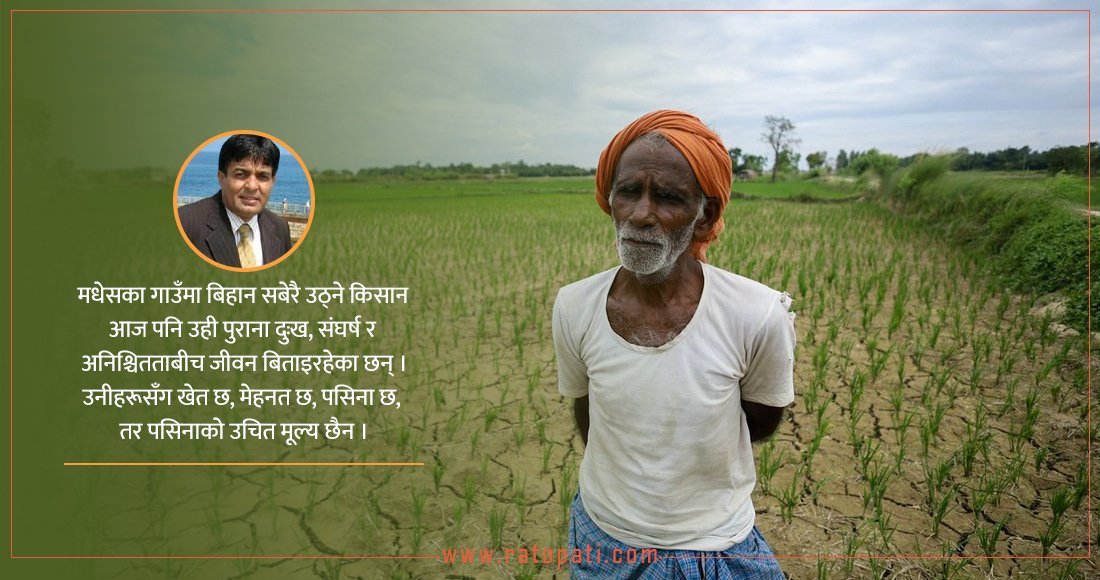
We must adopt a long-term vision regarding production and employment. The policy of cutting agricultural subsidies must be abolished. A policy of achieving self-sufficiency in basic foodstuffs must be adopted. The state must play a major role in agriculture and livestock, seeds, technology, irrigation, fertilizer, and market management. Insurance, respect, and pension schemes for farmers must be arranged.
Coffee production, processing, and marketing can be arranged in areas like Thulodurlung, Ashrang, Gimdi, Pyutar. Keeping in mind the demand of the capital, vegetable, fruit, livestock, and fishery farming should be encouraged in the lower Lalitpur region. Youth migration must be controlled by launching a 'Return to Homeland Campaign.' An environment must be created for investing remittances in productive sectors.
Social justice and systemic reforms are equally important. Initial practices for developing direct democracy must commence. Financial democracy must be established by ending the oligopoly in the financial sector. Caste discrimination and untouchability must be strictly prohibited.
Access, participation, and just representation of state-oppressed and excluded communities in the state must be ensured. The justice system must be made swift, accessible, and effective. A progressive tax system must be implemented. The state must be responsible for the security and care of children, the elderly, the helpless, and the disabled.
Implementing all these concepts requires not just political will, but a fundamental change in the philosophy and method of running the state. Our campaign is not merely about winning elections and gaining power, but about changing the very direction and pace of politics. While in power, these concepts can be implemented through policy, law, and budget.
When in opposition, we can create constructive pressure by raising a strong voice. And if neither of those situations arises, we can raise the voice for the people through programs of struggle. But one thing must be clear—we must never form an unprincipled alliance with anyone just for the sake of power.
Our path is the path of socialism. Our goal is the all-round development of people, a just system, and an equitable society. This is the dream not just of a specific party, but of every Nepali. To realize this dream, all of us must collectively change the thinking, method, behavior, and actions of state governance. We must change policy and politics through the strength of public unity.
The problems we see in Lalitpur-1 are not just those of this area; they represent the story of almost all of Nepali society. Therefore, the development model here can show the way for other regions as well. Southern Lalitpur must no longer remain remote. It must become an attractive and productive rural-urban center near the capital.
This is not just a slogan; it is a vision. It is a new way of thinking. We are ready for debate and dialogue regarding the concepts and ideas we present. We are clear—change is possible not only through elections but also through the exchange of ideas and thoughts and intensive interaction. Let us try to take the first step in the right direction.
(Tamang is a proportional representative candidate from the Progressive Democratic Party.)
This specific news has been automatically translated by AI. As a result, there may be some inaccuracies or language errors.