Former Armed Police DIG Ranjan Prasad Koirala Seeks Release Through Habeas Corpus Petition in Supreme Court

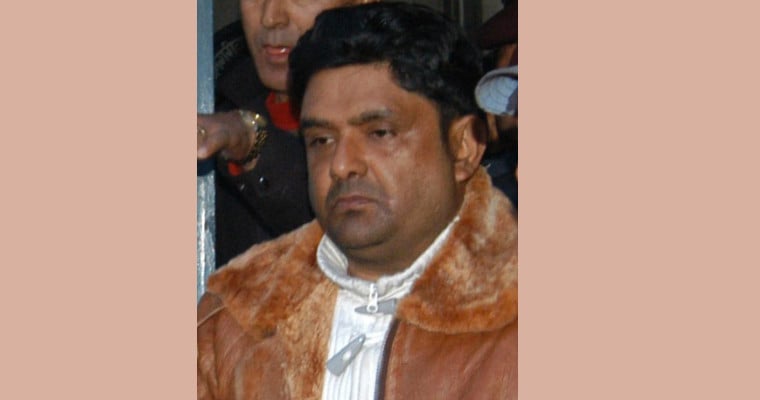
Kathmandu. A hearing date has been set for the habeas corpus petition filed by former Armed Police DIG Ranjan Prasad Koirala, seeking his release from custody. The hearing for Koirala's habeas corpus writ has been scheduled in the joint bench of Supreme Court Justices Mahesh Sharma Paudel and Balkrishna Dhakal.
Koirala, who is currently serving a life sentence in prison after being convicted of murdering his wife, Geeta Dhakal, has approached the Supreme Court demanding release, claiming he has already served 60 percent of his sentence. In his habeas corpus petition, he claims that 2,400 other inmates were granted release while he was not, and that he completed 59 percent of his sentence by Jestha 30, 2081 BS. He is demanding remission of his sentence citing his adherence to the law and good conduct.
Ranjan was arrested by police from Thankot while returning to Kathmandu from Narayanghat on Magh 8, 2068 BS, and subsequently faced legal proceedings. Following the life imprisonment sentence handed down by the District Court and Appellate Court for the murder case, the Supreme Court reduced his sentence to 8 years and 6 months on Ashar 15, 2077 BS, leading to his release from custody at that time.
The decision to reduce Ranjan's sentence was made by a joint bench of then Chief Justice Cholendra Shamsher JBR and Justice Tej Bahadur KC, citing that the situation was likely to affect the 'care, protection, and education of minor sons'. Chief Justice Rana and Justice KC reduced his sentence, believing that imposing a life sentence might be 'too harsh' for Koirala. Koirala was subsequently sent back to prison after the Supreme Court reviewed and overturned that decision.
The Kathmandu District Court had sentenced him to life imprisonment with confiscation of all property on Baisakh 7, 2071 BS. The then Appellate Court Patan upheld this decision on Mangsir 23, 2072 BS.
This specific news has been automatically translated by AI. As a result, there may be some inaccuracies or language errors.