Waterbird Count in Nepal Shows Declining Numbers Amid Habitat Threats

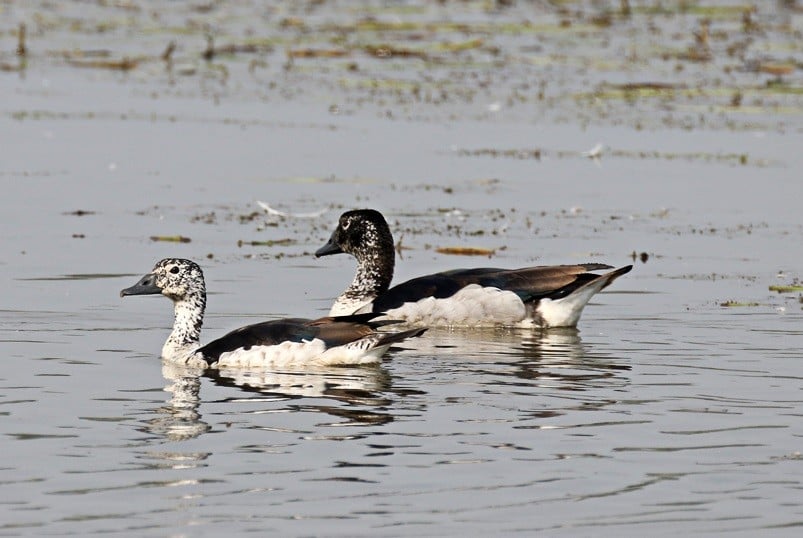
Every year, a census of waterbirds, their species, and habitats in wetlands, ponds, rivers, and marshes across the country is conducted starting from the first Saturday of January for 15 days.
According to the latest data, the species and number of waterbirds in Nepal appear to be decreasing annually. Data obtained from the waterbird census in 2025 recorded 96,565 waterbirds of 94 species in Nepal. The 2026 census recorded 90,688 waterbirds of 89 species. In censuses prior to that, more than one lakh species were recorded.
The Asia-level waterbird census in the Indian subcontinent began in 1987 in collaboration with Waterland International. Nepal has been continuously participating in the waterbird census since 1987 to support the count.
Waterbirds migrate to Nepal during this season from extremely cold regions like Russia, Northern China, Mongolia, and Siberia in search of favorable temperatures. Thousands of birds travel from cold regions to Rajasthan, India, seeking suitable environments and abundant food to escape the winter. They use the route through Pakistan and Afghanistan on their return journey.
The main objectives of the waterbird census are to ascertain the status of wetlands and the number of migratory and resident waterbirds during their non-breeding season through counting and monitoring, and to involve and inform the general public about the importance of waterbirds and wetlands, as well as their conservation and management.
Laxman Prasad Paudel, Executive Director of the Nepal Birdwatchers' Association, informed that this year the waterbird census was conducted in 18 major wetlands and 78 small areas under them across the country, under the leadership of the Department of National Parks and Wildlife Conservation and the coordination of the Nepal Birdwatchers' Association.
The data on resident and migratory water-dependent and water-adjacent birds was collected by 411 volunteer counters (staff, ornithologists, nature lovers, volunteers, citizen scientists) and was made public on World Wetlands Day (February 2).
Wetland Encroachment Leading to Reduced Waterbird Food Sources
Executive Director Paudel stated, "Waterbird numbers are decreasing globally, and in Nepal, increased human activities in wetlands, infrastructure development, invasive species covering lakes, and the increased use of chemical fertilizers and pesticides in agriculture might be reasons why waterbirds spend less time here."
Executive Director Paudel mentioned that this year, as in previous years, the waterbird census was conducted in areas including Koshi Tappu Wildlife Reserve and its surroundings, Chitwan, Banke, Bardia, Shuklaphanta, Rara National Parks and their surroundings, ponds and Kamala River in Dhanushadham, Hetauda, Kathmandu Valley, Pokhara Valley, Lumbini area, Bishazari Tal, Ghodaghodi Tal, Rara Lake, Jagadishpur Reservoir, etc. Various National Parks/Wildlife Reserves/Conservation Area Offices, Division Forest Offices, and organizations actively participated in the waterbird census.
Hari Bhadra Acharya, Information Officer of the National Parks Department, stated that the increasing human activities in rivers, ponds, and wetlands, along with rising pesticide use, have led to a reduction in food sources for waterbirds. "Waterbirds might be searching for new locations in search of safe habitats and food," he said.
According to senior ecologist Acharya, the area and quality of wetlands in Nepal are declining due to recent encroachment by human activities and the effects of climate change. Wetlands are vital habitats for millions of migratory birds, fish, amphibians, insects, and plants.
Bird conservationist Hiralal Dagaura stated that challenges such as haphazard development infrastructure in wetlands, increasing population near wetlands, rising pollution, and the practice of dumping waste directly into rivers and wetlands are adding pressure, leading to the destruction of waterbird habitats. "The excessive use of chemical fertilizers and pesticides in agricultural crops, as well as the use of poison for fishing, has reduced the food sources for waterbirds. Waterbirds may move elsewhere in search of food," he said.
Bird conservationist Dagaura further noted that in recent days, uncontrolled excavation of riverine materials in wetlands, operation of boats in ponds in the name of tourism promotion, construction of physical structures, and environmentally adverse activities like picnics have also increased.
According to ornithologists, these waterbirds rest in ponds along their route during migration. However, the Demoiselle Crane flies continuously for hundreds of kilometers unless the weather is adverse. The arrival of these birds in Nepal continues from mid-Bhadra to mid-Magh. By Chaitra, most birds return to their permanent habitats for breeding. Waterbirds that migrate to Nepal during winter include species like ducks, cranes, and the Ganga eagle.
This specific news has been automatically translated by AI. As a result, there may be some inaccuracies or language errors.