International Space Station's Planned 2030 Decommissioning Marks End of Era in Global Cooperation

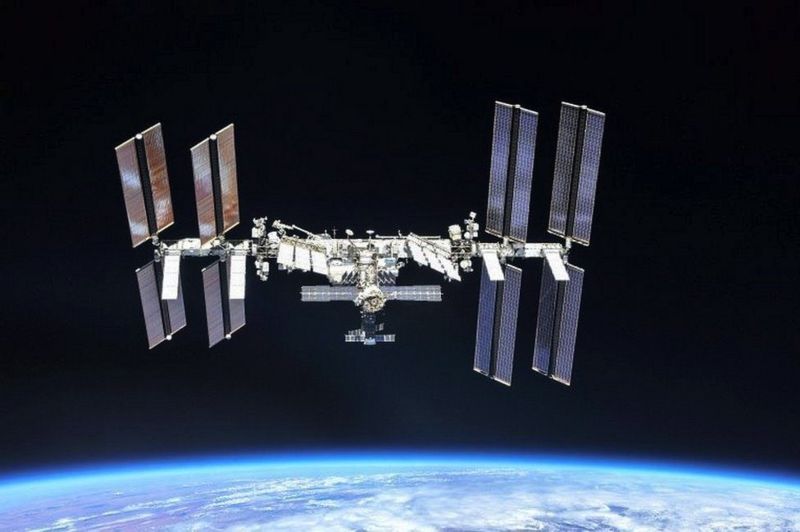
Kathmandu. The International Space Station (ISS), upon its return to Earth in 2030, will signal the end of nearly three decades of peaceful international collaboration. It will also mark the conclusion of a significant era where space was the center of human life and global cooperation.
Since November 2000, the station, a scientific laboratory the size of a football field, has been continuously inhabited. Orbiting around the Earth at approximately eight kilometers per second, the ISS has continuously advanced scientific research, technological development, and human collaboration.
As a new team of astronauts prepares to depart for the station next week, many individuals supporting the ISS from the ground appear emotional about its impending end. John Hornyak, former manager at NASA's Science and Mission Systems Office, stated that the ISS became a center for human support and cooperation, rising above borders, languages, and cultures.
He noted that having humans present in space 24 hours a day, year-round, for over 25 years is an extraordinary achievement in human history. According to him, the ISS has presented clear evidence of humanity's capacity to choose cooperation over conflict in problem-solving.
The proposal for the ISS was put forward, reflecting a new spirit of cooperation between Russia and the United States, old rivals in the space race following the Cold War. It is considered remarkable that cooperation on the space station has continued despite the cooling relations between Russia and the West due to Moscow's war in Ukraine.
Lionel Suchet of the French space agency CNES stated that human spaceflight history is the first and most important space race. He described the development of the ISS as a very interesting phase in terms of space exploration. Suchet also recalled his experience coordinating early ISS projects after witnessing the de-orbiting of the Mir space station in 2001.
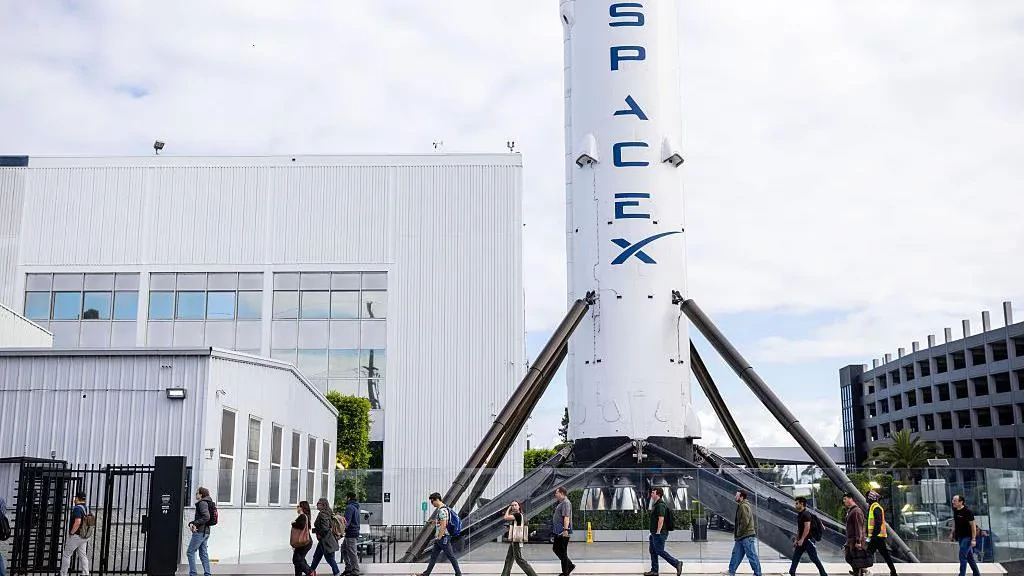
However, the ISS is becoming old with time, and many of its components are nearing their expiration dates. NASA announced last year that it had tasked Elon Musk's SpaceX with building a specialized vehicle capable of safely returning the ISS to Earth's atmosphere in 2030.
According to Hornyak, the ISS's speed will be reduced using powerful rocket engines, and it will be re-entered into a remote area of the Pacific Ocean, keeping it away from land, people, or any potential hazards. Previously, many spacecraft and telescopes, including Mir, were intentionally crashed into this same sea area known as Point Nemo.
After 2030, only China's Tiangong space station will remain in low Earth orbit. Looking toward the future, the United States is increasingly focusing its attention on space stations built and operated by private companies.
Hornyak stated that space stations, like rockets and satellites, are moving towards a commercial dimension. In this scenario, national space agencies will have to pay fees to private companies to send their astronauts.
Companies including Jeff Bezos's Blue Origin and Axiom Space are advancing plans to build the first commercial space stations. According to Suchet, the business model for such projects will still largely remain institutional, as countries will always be eager to send astronauts to low Earth orbit.
He noted that scientific research and exploration have become a shared goal for all of humanity. The question of whether the treaties regulating the behavior of nations in space will remain in effect after humans land on the Moon remains open. Both the US and China have put forward plans to build bases on the Moon.
For Hornyak, the end of the ISS is a very sad moment emotionally. He recalled the experience of watching the ISS fly overhead while his children grew up standing in their yard.
But according to him, the end of one era also signals the beginning of another. He believes humanity must move forward further towards improving social, economic, educational, and living standards through space travel capabilities, space exploration, and the utilization of space.
Quoting Jean-Jacques Dordain, former head of the European Space Agency, he said, "If you want to go fast, go alone. If you want to go far, go together."
This specific news has been automatically translated by AI. As a result, there may be some inaccuracies or language errors.