Private Sector Leaders Urge Political Parties for Stable Policies and Clear Economic Roadmaps Ahead of Elections

Kathmandu. The country is on the verge of the House of Representatives elections. As the elections draw nearer, candidates from various political parties have started reaching out to voters door-to-door. Concurrently, parties are busy drafting their respective election manifestos. As the manifestos are being prepared, the private sector, which contributes 81 percent to the economy, has begun offering various suggestions to the parties. They urge parties to incorporate the private sector's suggestions, as the manifesto is not just a tool for soliciting votes but also a guiding document for the political parties' actions in the upcoming term.
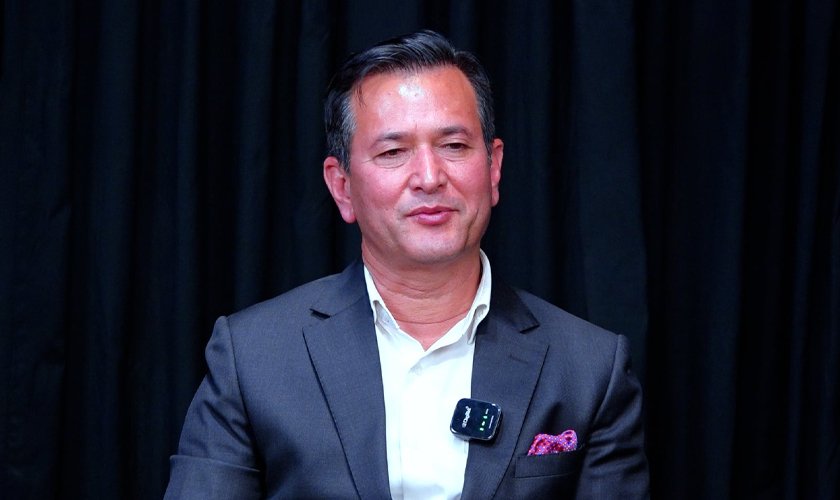
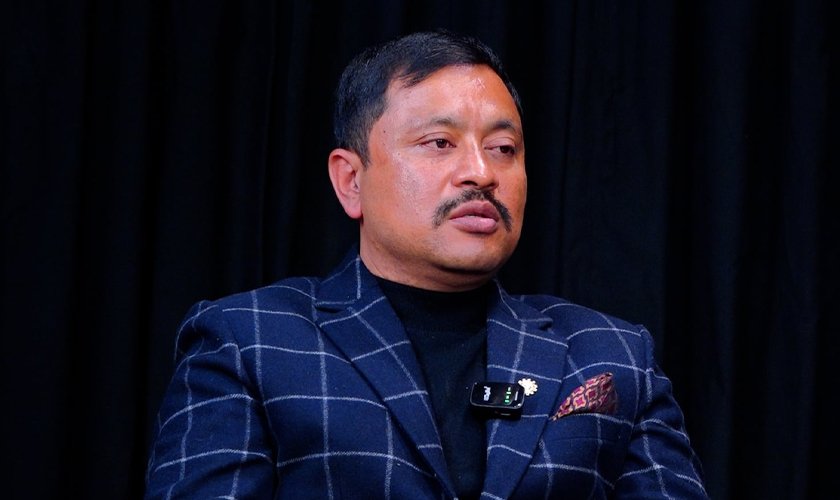
The election taking place amidst the changed circumstances following the 'Jyanji' movement holds particular significance. Ratopati held a 'Round Table' dialogue focusing on how parties should incorporate issues such as the future economic policy, energy sector development, and the demands of the private sector into their manifestos. Participating in this series are Ganesh Karki, President of the Independent Power Producers' Association, Nepal (IPPAN), and Deepak Shrestha, Vice President of the Nepal Chamber of Commerce. Presented here is the edited excerpt of the dialogue (the full video can be viewed below):
The election on Falgun 21 is approaching. The election is being held in the changing political landscape following the 'Jyanji' movement. Parties are also preparing their election manifestos. What does the private sector seek in the parties' manifestos?
Ganesh Karki: The most important thing we need is a stable government. At least one government should be allowed to complete its full term (5 years). In the past three years, almost all major parties have come to power. But the irony is that they did not implement the decisions made by their own cabinets while in power. The tendency to abuse each other immediately after leaving power has become dominant. The next manifesto should not just be a rhetoric of a prosperous Nepal, but it must have a clear blueprint. It must be clear which sector—agriculture, tourism, IT, energy—will drive the country forward.
Everyone must understand that energy is an indispensable prerequisite for all this development. The government has already signed an agreement with India to sell 10,000 megawatts of electricity over 10 years. The path to Bangladesh has also opened. But how much electricity do we need for domestic consumption? How will our industries run? Or will we only continue to import and remain content with trading? If production is to be increased domestically, a clear policy on energy consumption and production must be included in the manifesto. We have conveyed this to the parties.
Everyone should embrace the government's own target of producing 28,500 megawatts of electricity by 2035 BS. This requires an investment of 62 Kharba (trillion). The manifesto must guarantee the security of this investment and policy stability.
Deepak Shrestha: The Nepal Chamber of Commerce has been advocating for the private sector for 76 years. We say, 'The situation where the private sector has to be afraid with every political change must end. The private sector needs protection, not just facilities.' Parties must understand that the private sector comprises citizens of this country and are also a vote bank. The manifesto should not merely be a tool for seeking votes. The things written there should be the foundation upon which laws can be built tomorrow. Our primary demand is that the forthcoming acts, laws, and procedures must be time-bound.
The private sector has been crippled by the disease of policy changes accompanying every change in government. A guarantee should be given that once a policy is made, it will not change for at least 10 or 15 years. Industrial structures, assets, and business establishments of the private sector should be declared 'peace zones' or secure areas. Parties must commit that private property will not face vandalism or obstruction based on any political affiliation or lack thereof.
In the past, good manifestos have not been absent, but the implementation aspect has always been weak. Specifically in the energy and industry sectors, what are the procedural hassles faced by the private sector that parties must address?
Ganesh Karki: The problem lies in implementation. For example, the government has issued licenses; licenses for 36,000 megawatts are on hold, but Power Purchase Agreements (PPAs) have not been signed. Even for 11,600 megawatts under PPA, the generated electricity is going to waste because transmission lines have not been built.
Billions of investments by the private sector and the general public are at risk. We are not asking the government for money or tax exemptions. We are only asking for policy reforms. There is a compulsion to visit 16 different ministries to build one hydropower project. Visiting these 16 ministries takes 5 years. So when will the project be built? Projects whose EIA was passed in 2077 BS have not received permission to cut trees even today.
The process related to forests remains complex. Our demand is clear: implement a one-door system. Ensure the security of investment. If the government does not allow production, it should take back the license and return our investment.
Deepak Shrestha: The industry sector faces similar problems. The Environmental Impact Assessment (EIA) process is extremely impractical. To open a hotel in Kathmandu, one has to do EIA twice—once for the Department of Building Construction and another for the Department of Tourism. Why double standards for the same nature of work? There must be harmonization. Obstacles in processes ranging from local level recommendations to public hearings create a situation where one is forced to sell and leave rather than establish and operate an industry. A tendency has been observed where local governments push industries away instead of welcoming them. We want parties to write this in their manifestos.
What should be the role of the private sector and political parties in stopping youth migration and creating employment? Where is the current production policy leading the country?
Deepak Shrestha: This is the biggest irony. We talk about trade facilitation, but it is limited only to 'import facilitation.' It is as easy to bring goods from abroad as it is difficult to produce them here. Before parties talk about an 'Industrial Policy,' they must bring a clear 'Production Policy.' What is the production policy for everything from vegetables, rice, and flour to industrial goods?
Fifteen to sixteen years ago, the manufacturing sector's contribution to GDP was 15-16 percent; now it has fallen below 5 percent. The reason for this is our control-oriented laws. The provisions of the Labor Act, Industrial Act, and Social Security are too burdensome for small entrepreneurs to bear.
A self-employed person running a grill industry cannot provide all the facilities that large corporations do. The impact of youth migration is twofold: on one hand, there is a shortage of workforce (skilled and unskilled), and on the other, the consumers themselves have migrated abroad.
Ganesh Karki: Youth are disheartened because the government has not brought clarity to policy. Should apples be grown in Nepal or imported from China? Should electricity be generated in Nepal or bought from India? Currently, there is talk in the market about why we should produce electricity when cheap electricity comes from India during the day. The country cannot progress with such thinking. We must emphasize production.
We have provided data to the government showing that setting up an 11,500 MW project can create employment for 500,000 people. The private sector has extended roads by 3,700 kilometers to villages through hydropower development. Where roads reach, markets develop, shops open, and employment is created. The government must provide cheap and uninterrupted electricity to industries.
The private sector has always complained about tax rates and procedures. What should the tax policy of the upcoming government and parties be?
Deepak Shrestha: Nepal's revenue system is excessively dependent on customs duties. This needs to change, moving towards a tax system based on domestic production and income. However, tax rates in Nepal are expensive compared to South Asia. Corporate tax is 25 percent, banks pay 30 percent, and personal income tax reaches up to 39 percent.
What is our demand? The state must guarantee social security to taxpayers. If a businessperson pays taxes to the state during their energetic years (up to 60-65 years of age), they must be assured that the state will look after them in old age or if the business fails.
A policy should be included in the manifesto stating, 'You will receive a portion of the tax you paid or benefits back later.' Currently, running a family in Kathmandu requires 40-50 thousand, which is insufficient. In such a situation, taxes should not be piled up. New industries should be given tax exemptions for a few years to establish themselves. They should not be squeezed from the very beginning.
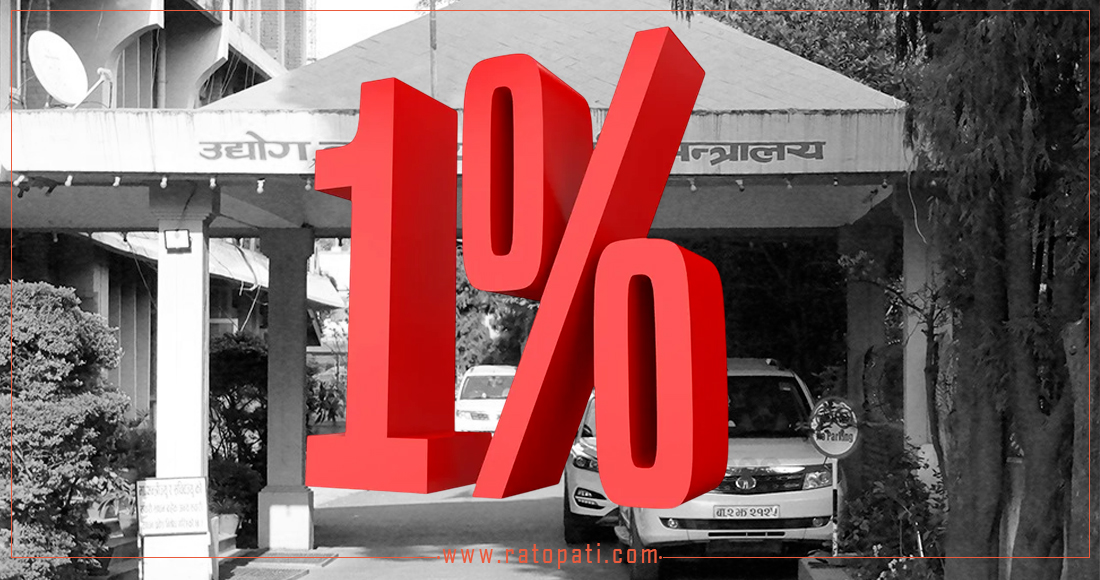
Ganesh Karki: In the energy sector, one thing is written in the Act, but the practice is different. Where the Act states 1 percent customs duty, procedures or budget speeches lead to paying up to 28 percent. There is a fear that the terms of a PPA made for 30 years might be changed midway. There must be a stable tax policy.
The constitution states an economy oriented towards socialism. How does the private sector view this? Is a constitutional amendment or a change in the economic model necessary now?
Deepak Shrestha: Socialism exists in many democratic countries worldwide. But in Nepal, it is being misinterpreted. Being oriented towards socialism does not mean pulling down the prosperous class to make everyone poor and equal. It should mean 'lifting the weaker class up to prosperity.' The private sector has capital. The notion that this capital must be stopped should be abandoned.
The state should collect taxes and employment by allowing the private sector to create opportunities. The private sector is a strong pillar in the three-pillar economy (government, cooperative, and private). The government and the private sector are partners, not competitors.
The Chamber does not comment on the political aspects of the constitution, but our stance on economic matters is clear: regardless of the ideology or constitution, Nepalis must be able to undertake enterprise freely in Nepal. Property must be secure. It must be established that making a profit after investing is not a crime.
Ganesh Karki: We are not concerned with ideologies; we want 'Development-ism.' More important than amending the constitution is the correct implementation of existing laws and stability. The private sector is not just a few capitalists. Today, 1.7 million Nepalis have invested in a single hydropower project. There are 8 million Demat account holders. This represents the investment of the people. Therefore, protecting the private sector means protecting the investment of the people.
Video/Photo: Manoj Khadka
This specific news has been automatically translated by AI. As a result, there may be some inaccuracies or language errors.

_OpOYENSORc.jpg)