Janata Samajbadi Party Chair Upendra Yadav Advocates for Directly Elected Executive President System for Stable Governance

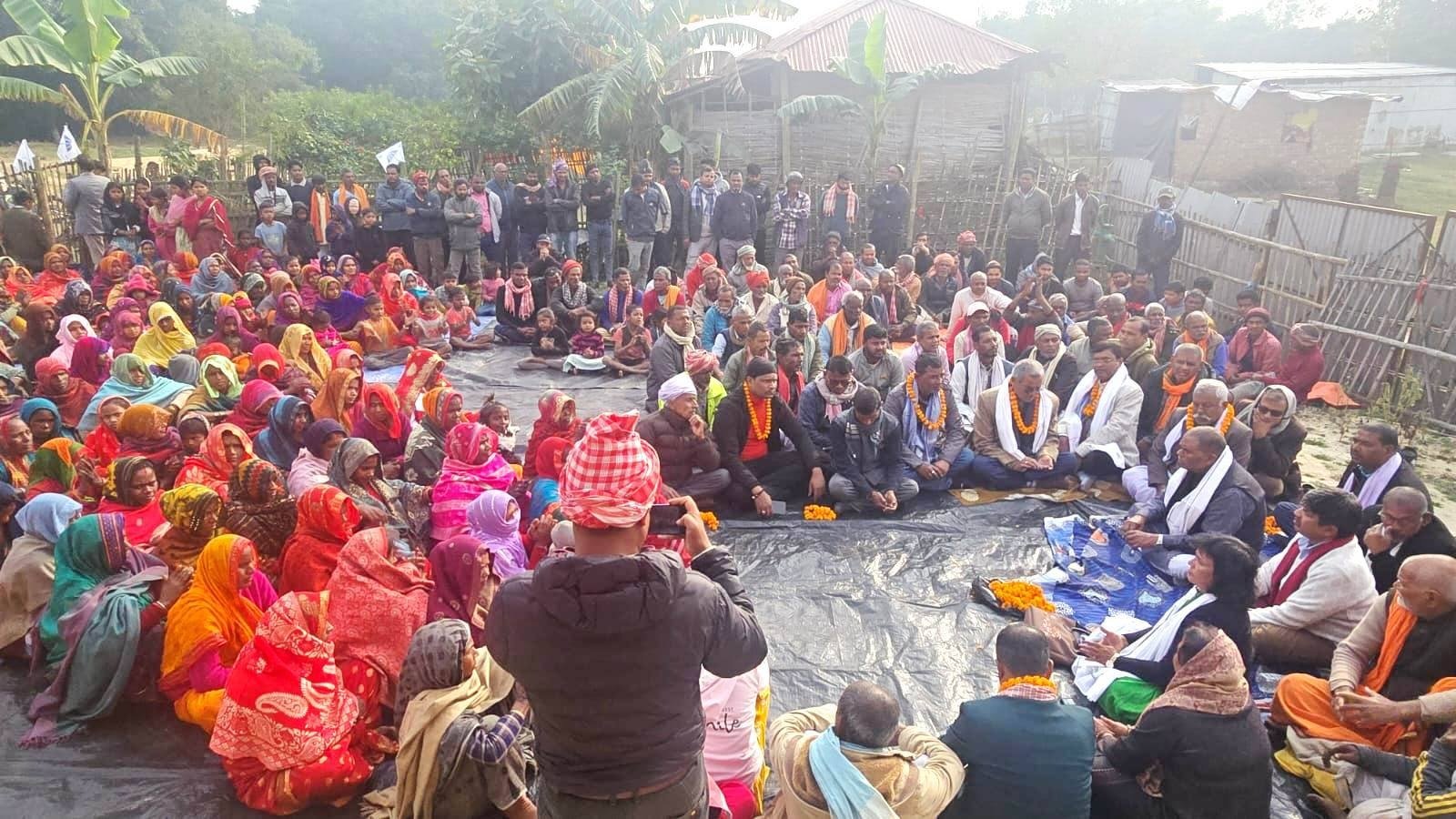
Saptari. Janata Samajbadi Party Nepal (JSPN) Chairman Upendra Yadav has claimed that only a directly elected executive president system can establish stable, strong, and accountable governance in the country.
Yadav, who is the Chairman of JSPN and also a candidate for the House of Representatives from Saptari Constituency No. 3, clarified on Sunday during an election campaign that JSPN remains steadfast in favor of a directly elected executive president system and a parliamentary structure based on proportional inclusive representation.
Chairman Yadav, who has been continuously engaged in election campaigning, stated, 'The situation where governments frequently change, ministers are replaced, and policies and plans are abandoned is no longer tolerable. The country needs a stable, accountable, and responsive governance system. For that, a directly elected executive president system by the people has become indispensable.'
The instability of coalition governments in parliamentary practice has seriously affected development, good governance, and economic reforms. He asserted that the deep frustration among the people has grown due to governments failing to complete their five-year terms, politics entangled in power calculations, and the lack of policy continuity.
He said, 'A directly elected president system will not only stabilize governance but also make it directly accountable to the people. Since the president will be directly elected by the people, the source of power will be the people, not the party. The primary accountability of a president elected by the people will be to the people, not to power-sharing agreements made to sustain the government.'
He expressed confidence that under the system proposed by JSPN, the parliament will be entirely based on proportional and inclusive representation, thereby ensuring fair representation for Madhesi, indigenous Janajati, Dalit, women, Tharu, Muslim, backward regions, and marginalized communities.
Recalling that dozens of governments have changed in the past due to flaws in the governance system, he said, 'There are many examples where many of those governments could not even complete one year. This has negatively impacted the economy, investment environment, and administrative stability. A policy was made, the government changed, and that same policy was abandoned. What have the people gained from this repeating cycle?'
Recalling that dozens of governments have changed in the past due to flaws in the governance system, he said, 'There are many examples where many of those governments could not even complete one year. This has negatively impacted the economy, investment environment, and administrative stability. A policy was made, the government changed, and that same policy was abandoned. What have the people gained from this repeating cycle?'
This specific news has been automatically translated by AI. As a result, there may be some inaccuracies or language errors.