Biratnagar Metropolitan City's Judicial Committee Resolves Complex Disputes

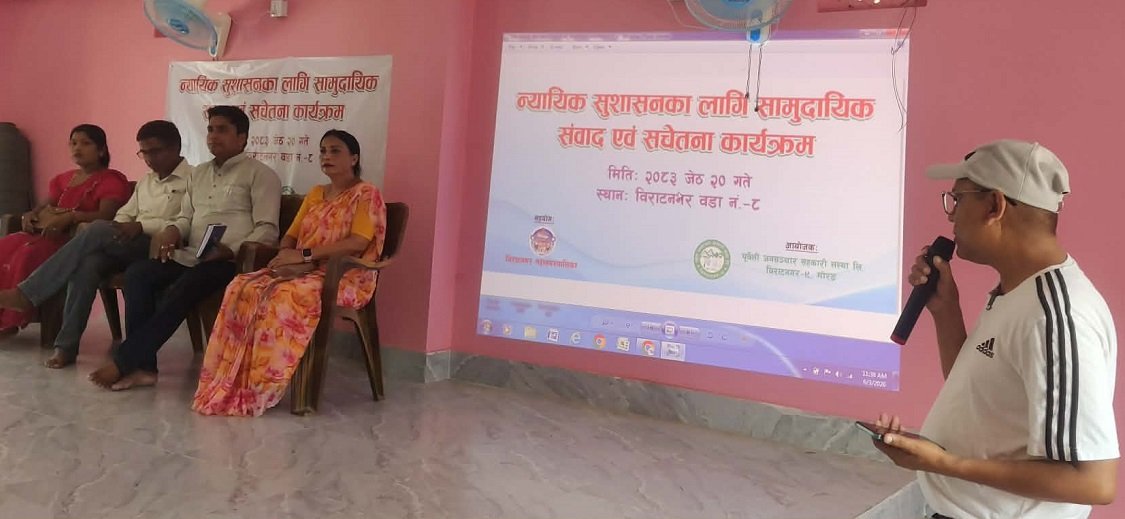
Biratnagar. There are many examples of the Judicial Committee of Biratnagar Metropolitan City resolving complex disputes. One of the best examples among them is the boundary dispute of Ward No. 3.
According to Sharda Thapaliya, head of the Metropolitan Municipality's Law Branch, a dispute between two neighbors over water eaves and boundaries had been ongoing for 7 years.
'In our Ward No. 3, two native neighbors had not spoken to each other for 7 years. The matter was escalating to physical altercations and court, but the Judicial Committee and the Ward Mediation Center brought them together for discussion,' she said.
Thapaliya stated that although the problem was small, it had grown due to ego, after bringing in technicians to measure. 'After the mediators explained, both parties showed some flexibility and the drainage was constructed by leaving 6 inches of land from both sides by mutual understanding,' she said. 'The resentment of 7 years ended in just 4 hours of dialogue. Today they are living together in harmony and thousands of rupees that would have gone to court have been saved.'
The Judicial Committee has also been instrumental in uniting couples on the verge of divorce, not just land disputes. 'A destitute couple came to the metropolitan city crying for divorce due to not being provided with food and drink and family discord. Instead of showing them the stick of the law, we gave them intensive counseling three times. As a result, the husband promised to quit his bad habits and respect his wife. Now they are living together, securing the future of their children,' Thapaliya said.
Similarly, the committee has skillfully resolved the rent dispute that arose between landlords and traders in Biratnagar's main market area due to COVID and economic recession. 'Biratnagar is a commercial city. Many disputes related to rent come here in the main road area. In one case, understanding the financial hardship of both parties, we arranged a written agreement for the landlord to give a 25 percent rent discount and for the businessman to pay the remaining amount in 6 installments,' Thapaliya said. 'This saved the business on one hand and the landlord received their rent on the other.'
The most common cases in the committee are related to not being provided with food and drink (75), public roads or obstructions (47), and financial transactions (45).
The local level's judicial authority envisioned by Article 217 of the Constitution of Nepal is proving to be a doorstep court for citizens. Looking at the progress and dispute resolution statistics of the Judicial Committee of Biratnagar Metropolitan City in the last eight years, significant progress has been observed.
This journey, which started with only 47 cases in the fiscal year 2074/75, has reached 418 by the fiscal year 2081/082. In the current fiscal year, fewer applications have been received compared to last year due to the Gen Z movement, according to Thapaliya.
Thapaliya says that the Judicial Committee is becoming the choice of the general public because it is hassle-free, less expensive, and provides quicker justice compared to district courts or police administration.
According to Shilpa Nirala Karki, Deputy Mayor and Coordinator of the Judicial Committee of Biratnagar Metropolitan City, the Judicial Committee does not just deliver verdicts but also works for lasting peace and strengthening relationships in society. 'We are dispensing justice within the purview of Section 47 of the Local Government Operation Act, 2074. Our main priority is to create a win-win situation. When going to court, one party wins and the other loses, which can permanently damage the relationship, but we try to reconnect neighbors through mediation,' she said.
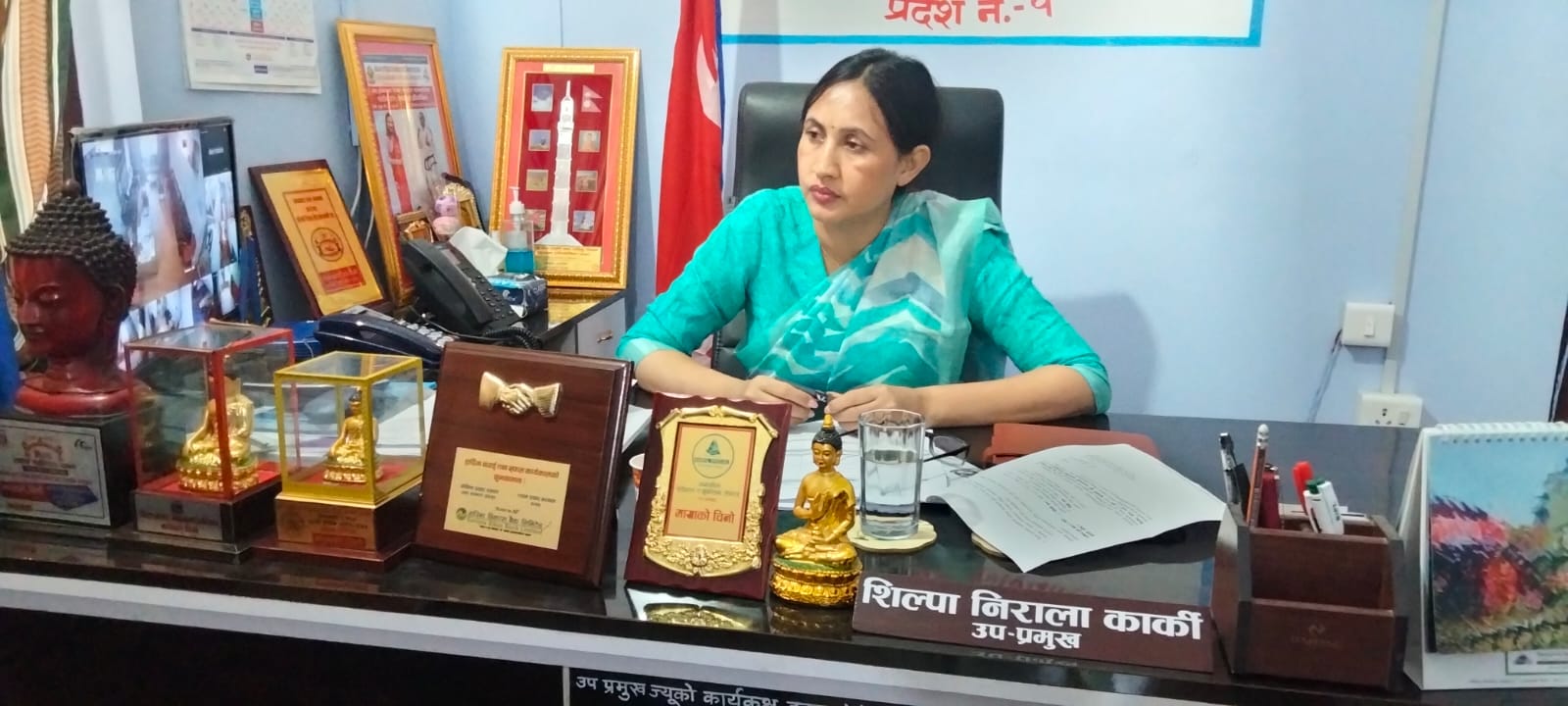
Karki claims that a resolution rate of over 88 percent confirms their efficiency and the trust of the citizens. According to her, mediation centers have been activated in all 19 wards of the metropolis, due to which minor disputes are resolved at the ward level.
According to the metropolis's data, 58.25 percent of those filing complaints with the Judicial Committee are women. This shows that the Judicial Committee has become a safe haven for women who have faced domestic violence and injustice.
The metropolis resolved 368 out of a total of 418 cases in the fiscal year 2081/082. This resolution rate of 88.03 percent is much higher than that of the courts.
'Fewer applications were received this fiscal year compared to last year. This is due to the Gen Z movement, but applications are still coming in. We are concluding cases within 60 days,' Thapaliya said.
The most common cases in the committee are related to not being provided with food and drink (75), public roads or obstructions (47), and financial transactions (45). However, there are also some challenges.
The access of the Dalit community being only 4.58 percent indicates the need to raise legal awareness among marginalized groups. Furthermore, disputes related to financial transactions and cooperatives are increasing significantly, according to the data.
'With the slogan
This specific news has been automatically translated by AI. As a result, there may be some inaccuracies or language errors.