Economist Urges Political Parties to Base Manifestos on Reality and Scientific Principles


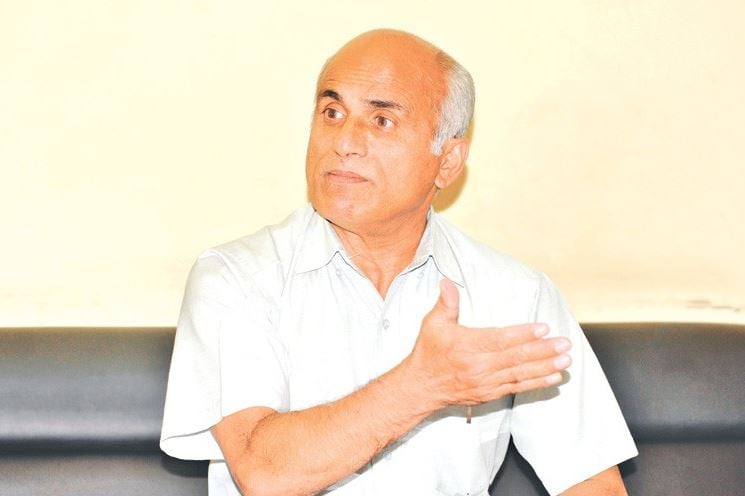
Kathmandu. Economist Professor Dr. Sanjay Acharya has stated that political parties' manifestos must be based on reality and scientific methods. Speaking at a program on 'Economic Agenda in Party Manifestos' organized by the Nepal Economic Journalists Association (NEFEJ) on Sunday, Economist Acharya suggested that political parties should formulate their manifestos based on five main areas. He offered suggestions that party manifestos should include structural changes and the systematic management of public expenditure.
‘Manifestos must be formulated in a way that manages the liquidity of banks,’ Acharya said. ‘It must focus on the lack of access to international trade.’ Acharya also stated that Nepal is failing in labor management and political parties must focus on this aspect while drafting their manifestos.
How can double-digit economic growth be achieved?
He said, ‘The party's agenda should be on how to get out of the Grey List.’ He emphasized that parties should discuss economic growth based on reality and scientific methods, rather than on guesswork, in their manifestos. Questioning the parties, he asked, ‘With a budget of 30 trillion rupees, how can double-digit economic growth be achieved in the current situation?’ He added, ‘There is no Public Procurement Act that can make the effectiveness of capital expenditure better. A new Act is needed to increase spending.’
Acharya argued that the legal provision of awarding contracts based on unrealistic 'low bids' is ineffective and this trend must be amended through laws. ‘The legal provision where it is easy to get a contract but difficult for the private company to recover the remaining costs must be removed. Leaders going to parliament must play a legislative role in this matter,’ he advised the parties.
Climate Change Issue is Significant
Professor Dr. Acharya stated that the issue of climate change must be effectively raised in the manifestos of political parties now. ‘We are currently a victim country. It is a situation where we are blamed for things we haven't done. It is necessary for parties to do homework on how to benefit from climate justice in their manifestos,’ he suggested.
Urging parties to be sensitive in their manifestos and avoid making policy programs cumbersome, he cited the example of the Nepali Congress's 2015 manifesto, stating that it should be short and precise.
This specific news has been automatically translated by AI. As a result, there may be some inaccuracies or language errors.