How Did Prachanda Get the Courage to Contest Elections Alone with CPN?


Kathmandu. The popular saying, "Even the river changes its course after 12 years," has come true this time for the Communist Party of Nepal (including the former Maoist Center), led by Pushpa Kamal Dahal, in the House of Representatives election.
CPN has made this saying come true by daring to contest the upcoming House of Representatives election alone on Falgun 21. Currently, within the CPN, formed by the merger of various factions, the majority of leaders belong to the former CPN Maoist Center.
After suffering a humiliating defeat in the second Constituent Assembly elections held in 2070 BS, the former Maoist Center did not dare to contest the subsequent two general elections alone.
CPN Chairman Prachanda, who faced criticism for weakening the party due to self-interest in power by aligning with Congress sometimes and UML sometimes, has adopted a policy of not forming any electoral alliance or coalition this time. It appears that the confidence to contest the election alone has come to Prachanda due to the unity and polarization among the leftists.
When the state machinery was in turmoil due to the J&J rebellion on Bhadra 23 and 24, Congress and UML seemed hesitant about going to elections. The J&J overthrew the then coalition government of the two major dissolved parliament parties, Congress-UML, in 28 hours. Then Prime Minister KP Oli was forced to flee Baluwatar by helicopter. Then Prime Minister Sher Bahadur Deuba, the 'Waiting Prime Minister', was beaten at his residence. The private residences of leaders, party offices, and all three organs of the state (Executive, Judiciary, Legislature) were devastated.
Following the J&J rebellion, the debate over leadership transition and party transformation escalated within all political parties. The ripple effects did not spare the Maoist Center. At that time, leaders like Narayan Kaji Shrestha, Janardan Sharma, Ram Karki, and Sudan Kirati pressured Prachanda to step down from leadership immediately. Due to this, Prachanda called a special meeting of the Central Committee in the second week of Ashoj and announced the general convention in Mangsir. However, without holding the general convention, he announced the formation of the Communist Party of Nepal on Kartik 19, uniting with ten leftist factions, including the Unified Socialist and Nepal Socialist Party.
With the party unification, the former Maoist Center and the Unified Socialist also split. Accordingly, Janardan Sharma of the then Maoist Center formed a new party, while from the Unified Socialist, leaders like Ghanashyam Bhusal took a different path.
_OywiJg0cEY.jpg)
Nevertheless, Prachanda claims to have united with 20 leftist factions in various phases. Against this backdrop, CPN has decided to field candidates independently in 164 constituencies, except for an alliance with the Rastriya Janamorcha in Baglung-1. Leaders claim that the party will be stronger this time compared to the past because they have fielded many new faces and young candidates, kept old leaders out of the proportional representation closed list, and fielded their candidates in all areas. Former Minister and CPN leader Prakash Jwala claims CPN will be the first party.
Jwala argued that UML has been discredited due to repression against J&J, and the internal conflict within Congress will benefit them.
"This time, since we are contesting the elections alone, the real ground of the parties will be known. In the current situation, we feel we will be the first party. We have done a good job in ticket distribution. The organization has also become strong," he told Ratopati. "RSP's organizational base is weak. UML has been discredited due to J&J. Congress is entangled in its own disputes. We will directly benefit from that."
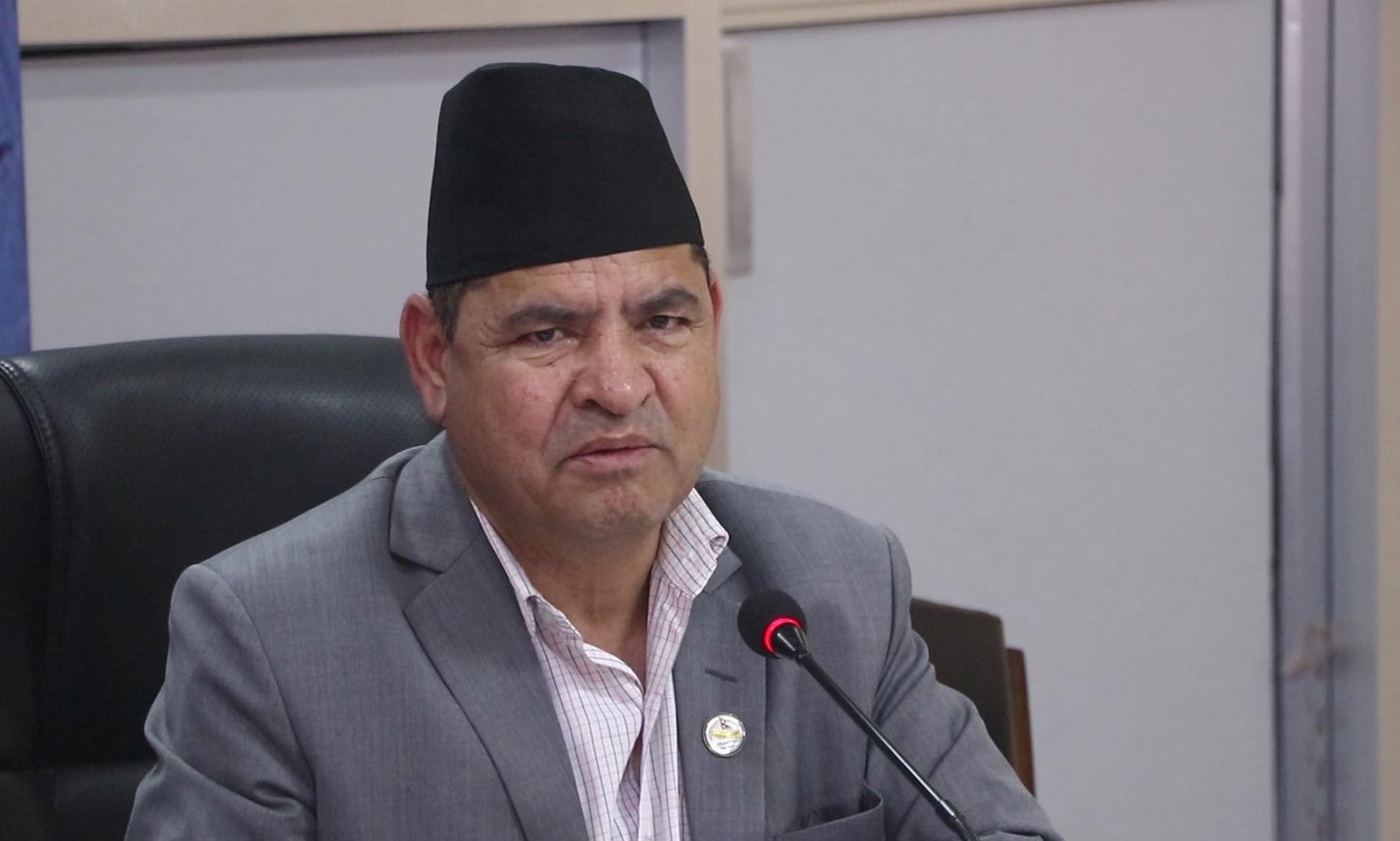
Professor and analyst Krishna Pokharel says there is no concrete basis for CPN to become the first party as claimed by the leaders. He suggests that this election will show the real standing of the parties since they are contesting alone this time. He believes this is an opportunity for CPN to know its real footing.
"What happens as the election approaches is a different matter. Tested parties will have to take credit or blame for the work they have done. They are in a somewhat defensive position. I think the new parties will come aggressively," he said. "UML is in a difficult position, having to answer for what happened on Bhadra 23. The new ones do not have to answer that. They can become a big party by showing the failure of the old mainstream parties by saying, 'You could not run it, we will run it.'"
Rather, he argues that RSP, connected to Balen Shah, has become a place for those dissatisfied with the old parties to lean on. However, Pokharel's analysis is that the J&J change has had little impact outside of some urban and Terai areas.
Pokharel suggested that it might not be possible for the currently considered major parties to form a government after the election, but there is a possibility of a government being formed through an alliance between RSP and CPN.
He said, "In the current situation, if RSP becomes the largest party, it can form a government with CPN. CPN is positive towards the new party and since it is not blamed for the J&J rebellion, forming a government seems easy. RSP had participated twice in the Prachanda-led government before."
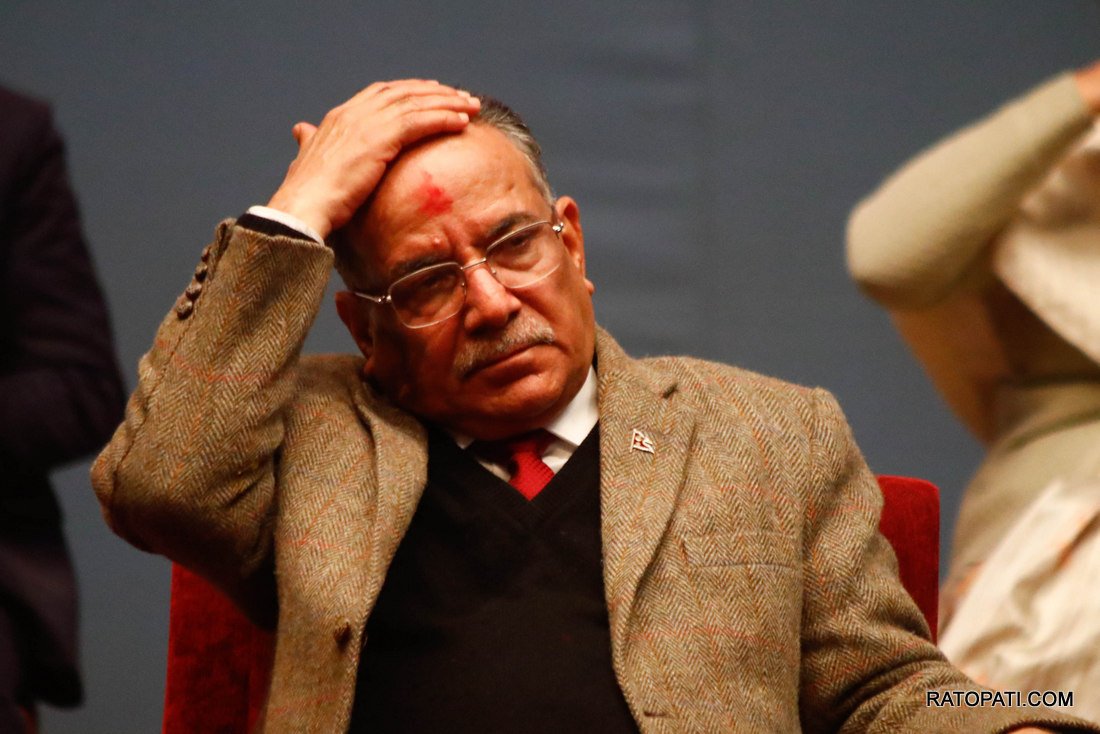
CPN Chairman Prachanda, while filing his candidacy in Rukum East on Magh 5, claimed that CPN could become the first or at least the second party. He asserted that there is a possibility that no candidate proposed by the opposition parties after the election can become the Prime Minister.
"Those who have proposed future Prime Ministerial candidates now are not in a position to become one. The Prime Minister is likely to emerge from those who were not proposed," he told journalists.
He also informed that he is in dialogue with leaders from Congress, UML, and RSP. Before filing the nomination for candidacy, Prachanda used to assert that he was not afraid of the unity between Ravi Lamichhane and Balen.
The Maoists, who launched an armed revolt against the then royal regime in 2052 BS, entered peaceful politics in 2062 BS through the 12-point agreement with the seven parliamentary parties. On the foundation of that 12-point agreement, the traditional monarchy was overthrown by the Jana Andolan (People's Movement) of 2062/063. In the first Constituent Assembly election of 2064 BS, the Maoists emerged as the largest political force. In 2065 BS, Prachanda became the first Prime Minister of the Federal Democratic Republic. However, he resigned due to the Chief of Army Staff Rukmangad Katuwal controversy.
After leaving the government, he struggled in parliament and on the streets but was unsuccessful. The desire of the common people for a constitution from the Constituent Assembly for decades was not fulfilled, and the Constituent Assembly was dissolved. Due to the two-line struggle within the party over whether to pursue peaceful politics or prepare for a people's revolution, the Maoist party split in Ashar 2069 BS.
The Maoists contested the second Constituent Assembly election in 2070 BS alone. After the party split, the Maoists who entered the election were badly defeated. After the constitution of the Federal Democratic Republic was promulgated in 2072 BS, the Maoists formed an electoral alliance with UML in the parliamentary elections held in 2074 BS. In this election, the leftist alliance received a massive mandate, forming a government with nearly a two-thirds majority. In Jestha 2075 BS, UML and Maoists merged to form the Nepal Communist Party. However, due to power struggles between Oli and Prachanda, the party split before completing three years.
The Maoists, who appeared organizationally very weak after the party split, formed an alliance with Congress in the three-tier elections of 2079 BS. However, the Maoists failed to achieve expected results in all three elections. The party faced accusations from within and outside for being engrossed in power politics by repeatedly maneuvering with Congress and UML, failing to secure a mandate to form a government.
After the last election, Prachanda formed a government in alliance with UML. Claiming the '32' seats obtained in the House of Representatives election as a 'magic number', he ran the government for 17 months by forming equations alternately with Congress and UML. The former Maoists claim that Prachanda's recent government has done positive work comparatively in favor of good governance, social justice, and prosperity.
In the 2079 election, the Maoists had 1,175,684 votes. The Unified Socialist, which joined the unity, received 298,391 votes. Similarly, the Nagarik Unmukti Party led by Ranjita Shrestha, which joined the unity on Poush 14, also had 271,722 votes. There were also some votes from other components.
However, many analysts suggest that due to upheavals within all political components that united after the J&J movement, and the formation of new parties and integration into various parties to form future electoral equations, the previous vote count is likely to fluctuate. In such a situation, the strength of CPN will have to wait until the election to be tested.
This specific news has been automatically translated by AI. As a result, there may be some inaccuracies or language errors.

_18aawmzmsd_sTzy83VQGv.jpg)