
Childish Debates in Maoist Circles: "They're All the Same!"

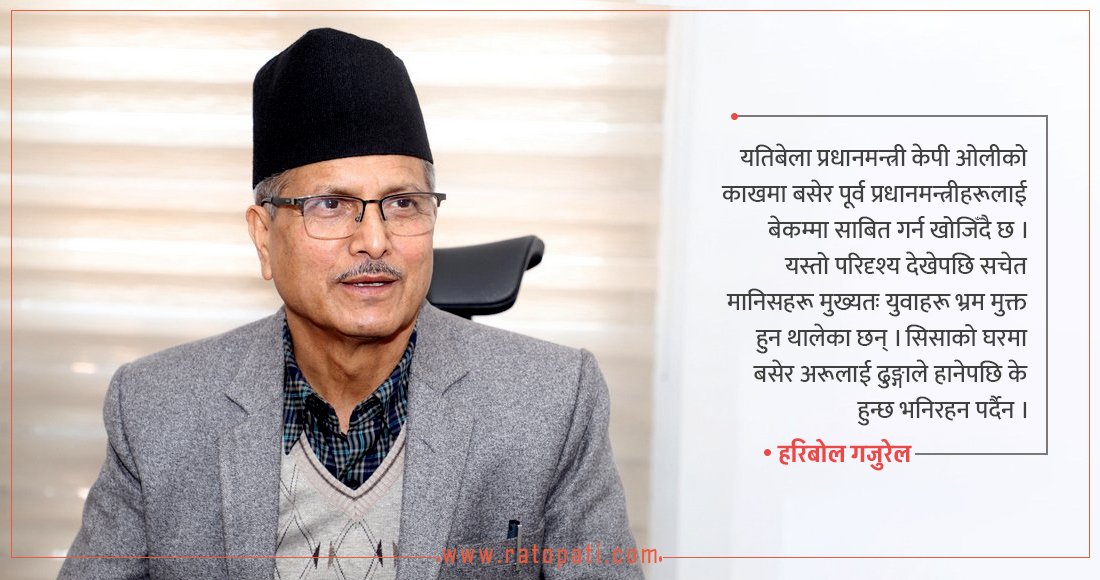
Empty Rhetoric Dominates Political Discourse
For several days now, public platforms have echoed with the baseless claim that "all communist prime ministers except Manmohan are corrupt." This sweeping generalization, met with applause from some youth, has emboldened speakers to deliver increasingly inflammatory speeches. Rather than judging leaders by their actions, the debate has devolved into generational finger-pointing, creating confusion rather than clarity. This strategy of trading in despair to position oneself as morally superior is ultimately unsustainable. We've heard similar fiery rhetoric before from figures like Durga Prasai, but when he later cozied up to former royals while disparaging all other leaders, even his youthful supporters abandoned him.
A Dangerous Political Tactic Emerges
The current pattern shows certain leaders attempting to discredit all former prime ministers while sitting comfortably in Prime Minister KP Oli's shadow. This transparent maneuver has awakened many citizens, particularly youth, to the emptiness of such rhetoric. There's undeniable irony in throwing stones at others while living in a glass house oneself. The repeated chant of "they're all criminals" serves specific purposes: shielding actual wrongdoers, diverting attention from real issues, and breeding public disillusionment.
Nuanced Reality Behind the Simplistic Slogans
While legitimate criticisms exist about communist former PMs failing to meet expectations, particularly regarding democratic governance within party and state institutions, the blanket condemnation ignores important distinctions. Some former prime ministers have engaged in sincere self-reflection publicly. We cannot ignore cases where competent leaders resigned on principle, like when Chairman Prachanda stepped down as PM to advance anti-corruption efforts, good governance, and social justice. Truth demands precision - we must call out specific failures rather than mixing valid criticism with baseless mudslinging.
The Pernicious Logic of Collective Guilt
When investigations target specific individuals or groups, some rush to declare "they're all the same" or "everyone's corrupt." While this may seem like cynical wisdom, it actually functions as a strategy to protect the guilty. By normalizing corruption, it increases societal tolerance for wrongdoing and weakens judicial processes. This tactic of universal accusation serves to shield specific offenders, divert scrutiny, and foster public apathy. In Nepal's context, whenever one leader's corruption surfaces, cries of "all politicians are the same" quickly follow, erasing crucial distinctions between right and wrong.
Justice Requires Discernment, Not Demagoguery
The dangerous trend of collective accusation protects criminals while killing justice. Not all people are equal in character, not all are corrupt, and not all commit wrongs. To weigh everyone on the same scale is to fear naming specific offenders. A functioning justice system depends on clearly distinguishing the innocent from the guilty. When we presume universal guilt, the innocent suffer injustice while the truly culpable disappear in the crowd. This represents a grave insult to the very principle of justice.
The Corrosive Impact on Nepali Politics
In Nepal's political landscape, when one leader's corruption is exposed, many quickly declare "all leaders are the same." This erases crucial distinctions between right and wrong. When specific crimes like embezzling public funds, selling policy decisions, or deceiving citizens get normalized as "standard practice," the guilty grow bold - after all, "everyone does it." Morality disappears from politics, administration and society. Civic consciousness weakens; protest becomes passive.
Conclusion: Rejecting False Equivalencies
Collective accusation solves nothing - it's a dangerous trend that protects criminals and kills justice. When someone commits a specific crime, that individual should bear responsibility - not everyone. Declaring "all are criminals" is simply a way to protect specific offenders. In our pursuit of accountability, we must have the courage to name names rather than hiding behind lazy generalizations that ultimately serve the interests of the corrupt.



_dqKuPDOCka.jpg)
_b6GEHTJHdR.jpg)