Cargo Rail Arrives at Biratnagar Customs Yard, Boosting Industrial Corridor

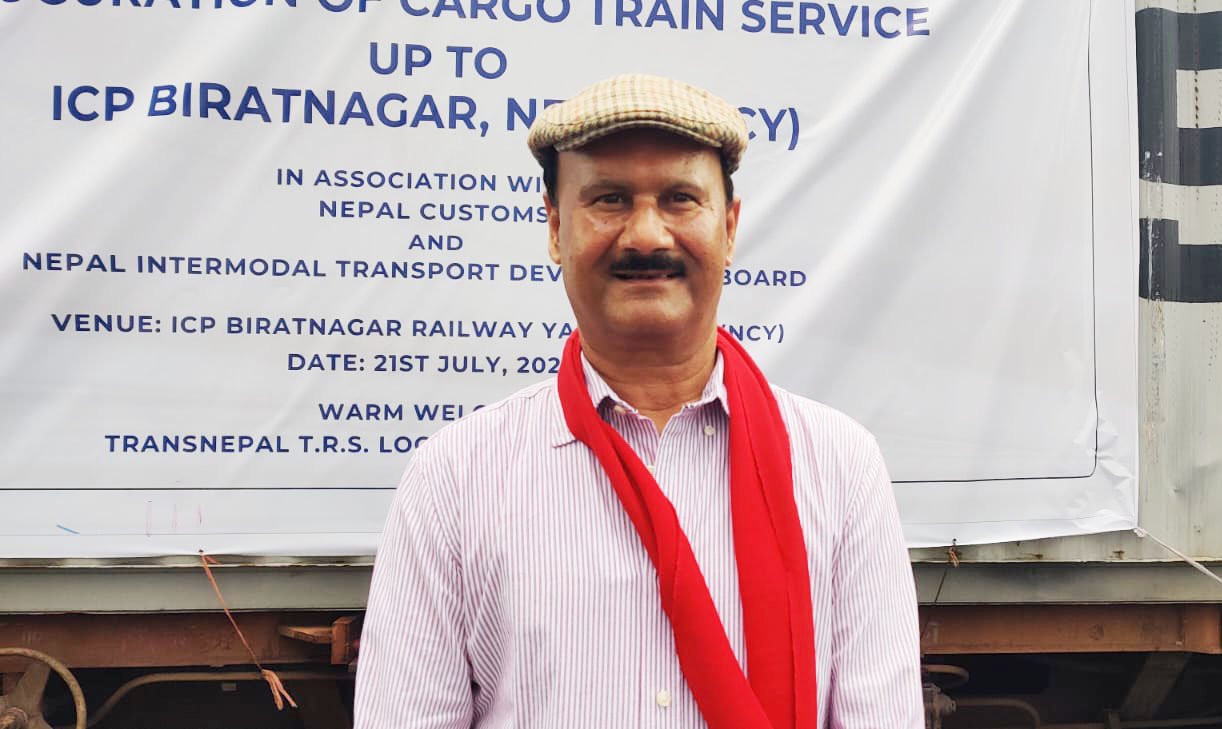
After a long period of policy uncertainty, legal complexities, and waiting for infrastructural preparation, a freight cargo train has finally arrived at the Nepal Customs Yard at Biratnagar's Integrated Customs Checkpoint (ICP). The arrival of the cargo train is a historic milestone for the Morang-Sunsari Industrial Corridor, considered the oldest and strategically most important in Nepal's history.
In the past, although the infrastructure was completed, the railway line could not be operational due to a lack of sufficient technical and legal coordination between the railway mechanisms of India and Nepal. Currently, with continuous initiatives from high government levels and concerned bodies of both countries, old procedural complexities have been resolved, and the railway line is moving towards commercial operation.
This historic start has brought new enthusiasm to Nepali industrialists and businessmen who have been forced to bear expensive road transport fares for years. However, merely starting this service is not enough; there is a need for some fundamental policy and practical reforms to make it sustainable and effective in the long term.
In the past, a comparative study conducted by the Industry Organization Morang showed that the handling and unloading charges at Nepal's customs yard were significantly higher than at India's customs yard. Although there have been some changes in the Indian side's rates over time, the service charges on the Nepal side are still comparatively expensive. To reduce the total cost of imported raw materials and make Nepali industries competitive, Trans Nepal, which operates the yard on the Nepal side, and the Nepal Intermodal Transport Development Committee need to make these rates more practical and scientific.
As long as the handling and unloading charges on the Nepal side are not made competitive compared to the Indian side, businessmen will not be able to utilize this yard to its full potential. Therefore, the rate-related issues seen in the initial phase must be immediately revised and improved.
The main objective of bringing the rail service is to reduce transportation costs, but there is a concern that due to the empty return problem, we may not be able to achieve the expected benefits.
When we discuss cargo rail, we often prioritize industrial raw materials coming from third countries, which constitute only a small portion of the total trade. In reality, more than 70 percent of Nepal's foreign trade is with neighboring India alone. Large quantities of raw materials and commercial goods are imported into Nepal from various industrial centers in India, such as Delhi, Punjab, Haryana, Mumbai, and Goa. Despite this large share of trade, Indian cargo is still brought only to the Jogbani station across the border and then transported to Nepal via the expensive road route. To end this situation, an environment must be created to bring Indian cargo directly from various Indian states to the Biratnagar yard. For this, it is necessary to adopt a policy of special discounts and facilitation in freight and handling charges for cargo coming from India, so that this railway line can become commercially self-reliant by covering 70 percent of the trade.
The biggest financial and operational challenge of the cargo rail service is one-way transportation. Currently, trains carrying 40 to 44 containers from Kolkata or other places in India to Nepal are forced to return empty after unloading the goods. According to railway operating rules, even if containers return empty, the railway company charges fares for both incoming and outgoing journeys. This means Nepali importers have to bear double the fare, not just for the arrival but also for the empty return of the containers, which unexpectedly increases the total import cost.
Although the main objective of bringing the rail service is to reduce transportation costs, there is a concern that due to the empty return problem, we may not be able to achieve the expected benefits. Therefore, to make this service economically sustainable and profitable, there is an urgent need to connect Nepal's exports to India and third countries with this same railway line.
If arrangements can be made to load goods exported from Nepal into containers and send them back, transportation costs can be reduced by nearly half. However, there is another practical complexity in this. No single industry in Nepal has enough goods for immediate export to fill an entire rake (40-50 containers) alone. To solve this problem, a cargo collection mechanism needs to be established in Nepal. Goods from various small and medium-sized exporting industries, collected in small quantities, should be consolidated to fill containers and sent on the returning empty trains.
In this task, the yard operating company, Trans Nepal, must play an active marketing and promotional role. If the company directly contacts industrialists, identifies exportable goods, and facilitates their collection, two-way utilization of the railway line will be possible, which will ultimately reduce the cost of both imports and exports.
To maintain this positive momentum, the state must play its leading role and intensify infrastructure and procedural improvement efforts in partnership with the private sector.
Along with economic and operational reforms, equal attention must be paid to transportation security and technology. To minimize security risks such as damage and theft during transit when importing goods by rail, a modern 'tracking system' has been installed. This system allows importers to monitor the location and condition of their goods in real-time.
This type of technical security has instilled great confidence in businessmen regarding transportation. According to information received so far, bookings for four to five rakes have already been made for the coming days on this route, which proves the high attraction and trust of businessmen towards this service.
To maintain this positive momentum, the state must play its leading role and intensify infrastructure and procedural improvement efforts in partnership with the private sector.
The start of the Bathnaha-Biratnagar cargo rail is an unprecedented opportunity for Nepal's industrial sector. However, if it is kept only as a means of import, it cannot be sustainable in the long run. To make this service sustainable, 70 percent of trade with India must be attracted to this railway line, unloading and handling charges must be revised in a timely manner, and most importantly, a mechanism for collecting goods for export from Nepal must be created to end the situation of empty returning trains.
If Trans Nepal and government agencies can view this as an excellent business opportunity rather than a problem and work with an integrated plan, only then can time and cost be saved, and Nepal's industrial corridor can truly achieve economic prosperity.
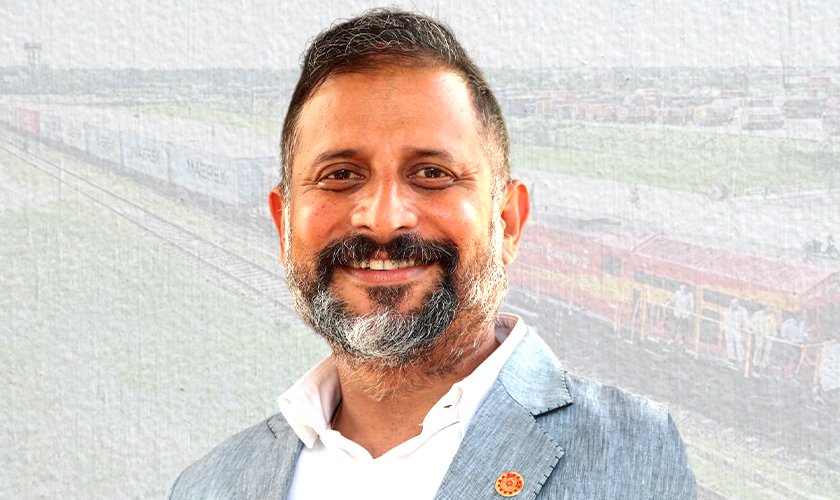
(Based on the statement of Rathi, Chairman of the Industry Organization Morang.)
This specific news has been automatically translated by AI. As a result, there may be some inaccuracies or language errors.