
Oli and Prachanda Realign Amidst Political Shifts

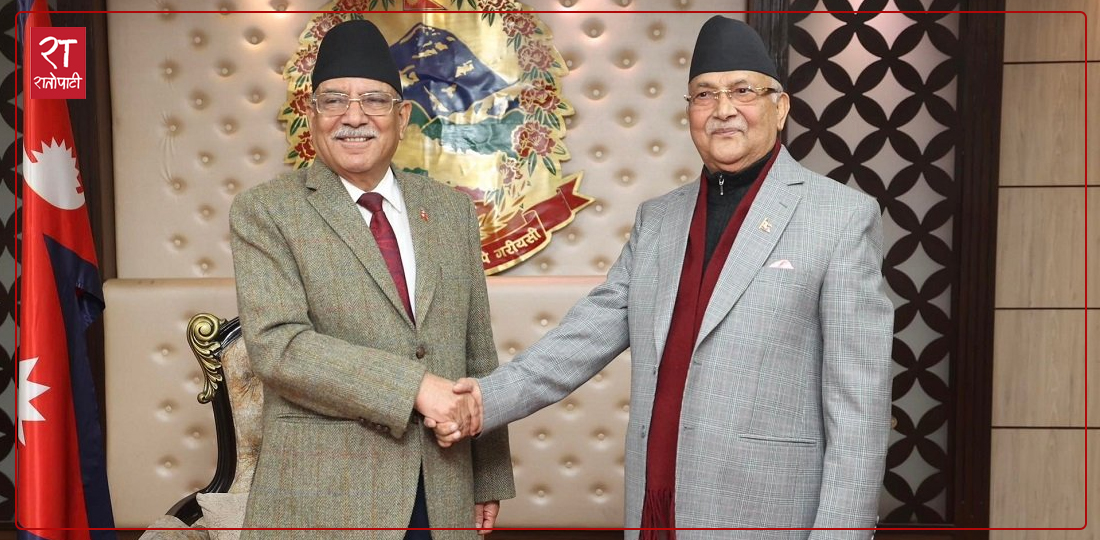
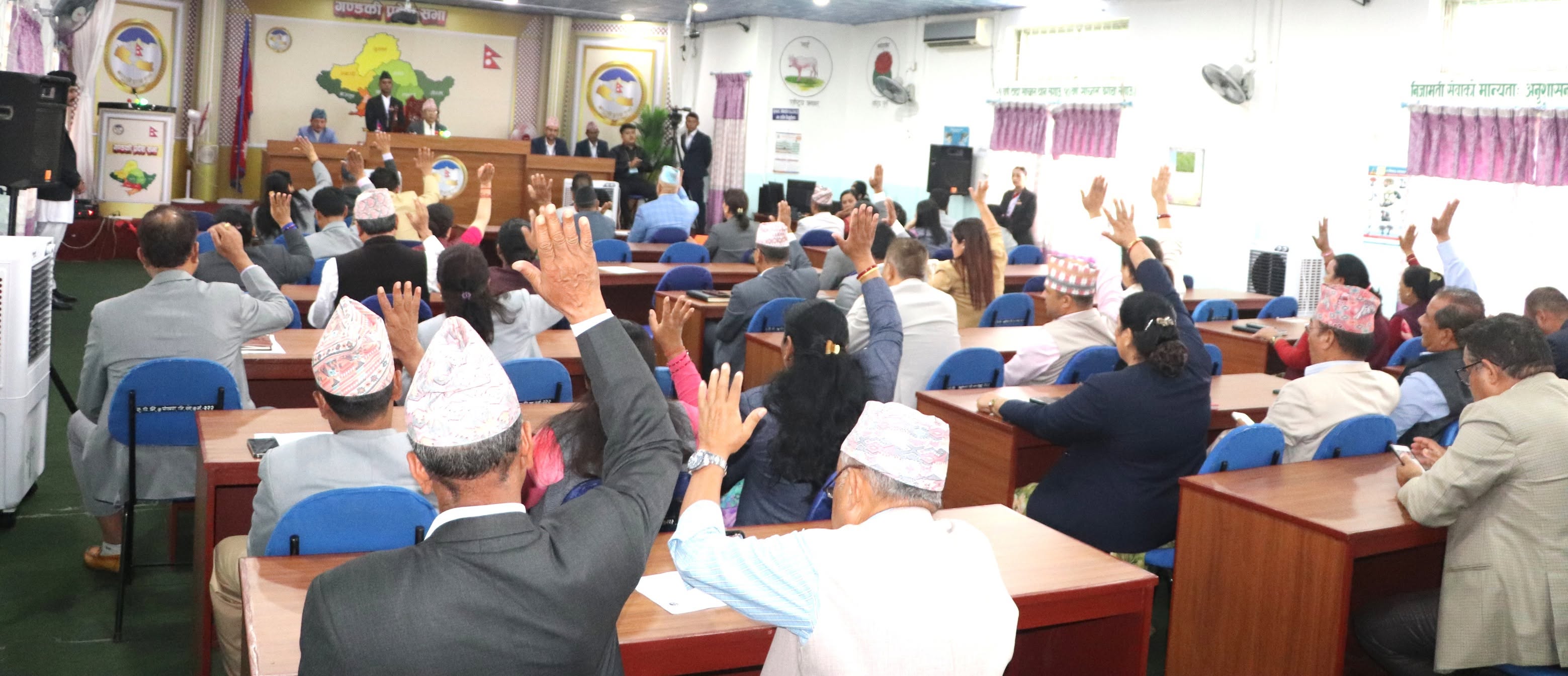
Kathmandu. Twenty-four months after the dissolution of the left-wing alliance, CPN-UML Chairman KP Sharma Oli and CPN (Maoist Centre) Coordinator Pushpa Kamal Dahal 'Prachanda' have come closer again. Oli and Prachanda have come closer at a time when the ruling alliance of Nepali Congress and UML in the provinces is in crisis.
Previously, despite repeated collaborations between these two leaders, they were not successful. To such an extent that even after forming the CPN by uniting UML and Maoist at the initiative of both leaders, that unity did not last long. Even after the 2079 parliamentary elections, there were two instances of power-sharing between UML and Maoist, but that too did not last long.
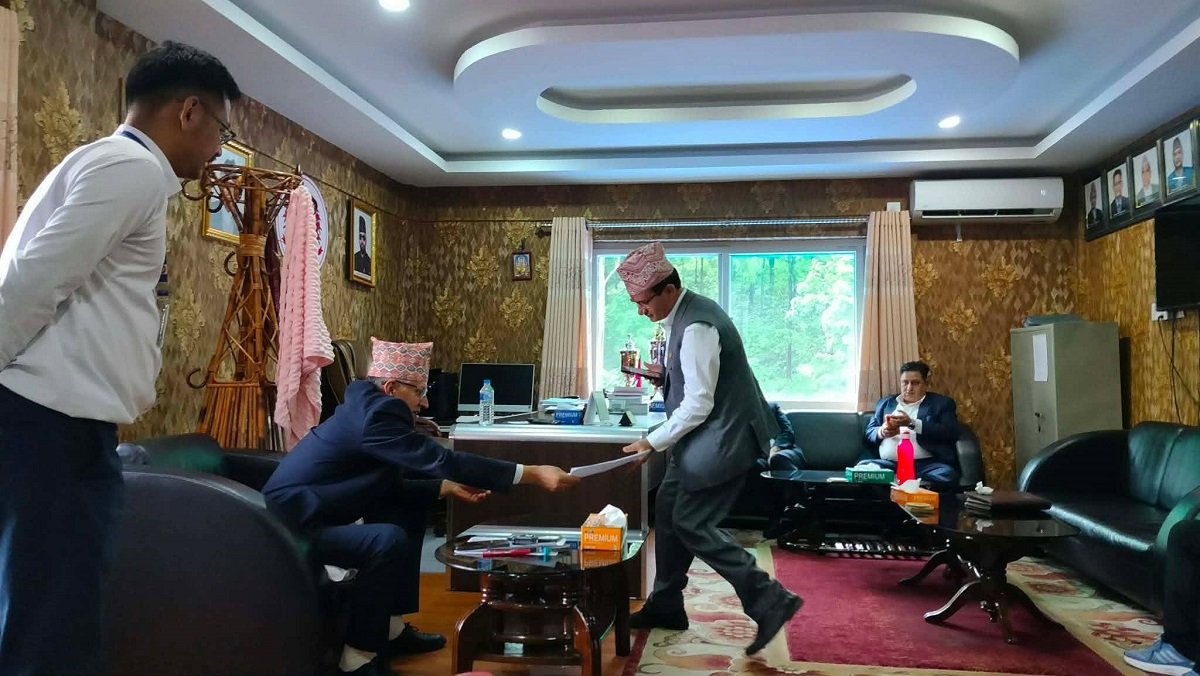
Discussions were held between Oli and Prachanda for two hours on Tuesday afternoon regarding forming a left-wing alliance again and power-sharing. Prachanda, who was about to go to Janakpur for a party program, met Oli and proposed forming an all-party government in the province.
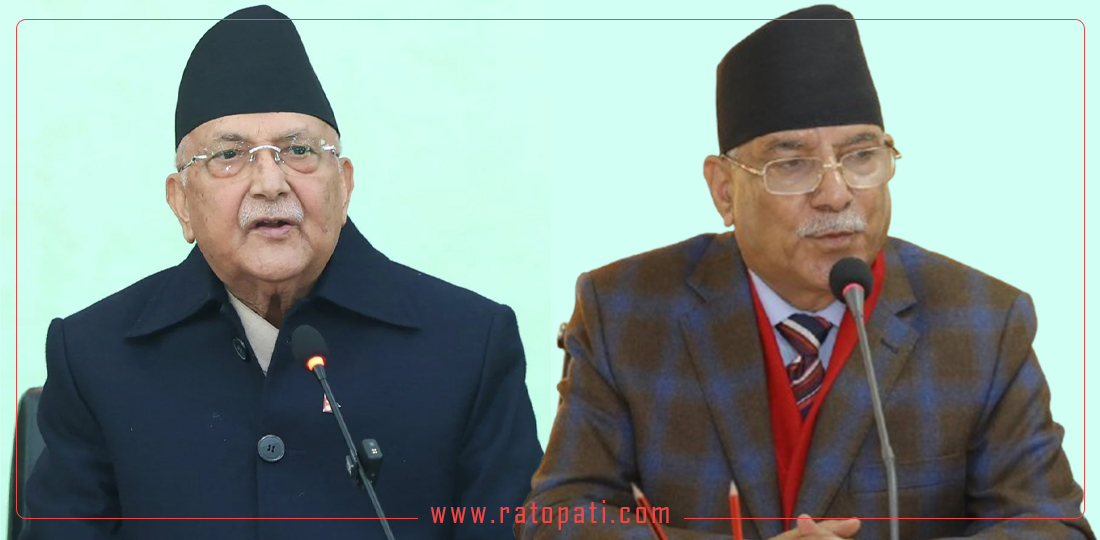
Although both sides claim that Oli was positive about Prachanda's proposal, no concrete decision was made. Prachanda, who returned to the country on Saturday after participating in the South Asian Regional Conference in Sri Lanka, has been making efforts to form an all-party alliance. CPN spokesperson Prakash Jwala informed that Prachanda proposed forming an all-party government in the province during his meeting with Oli.
'In the meeting with Oli, Coordinator Prachanda proposed forming an all-party alliance in collaboration with constitutional, republican, and patriotic forces. We were not interested in going to the provincial government, but the crisis in the Congress-UML alliance created an environment where we had to pay attention,' said Jwala. 'He (Prachanda) proposed forming an all-party government of the elected parties in the province. Oli ji is also positive about this proposal. He will also hold discussions with Congress leaders after returning from Madhesh. No decision has been made yet.'
After meeting with Oli, Prachanda, who reached Janakpur for a program of the Madhesh Province Committee, told reporters that an environment for cooperation between the left-wing forces has been created. He also informed that discussions are ongoing with the Congress.
'The recent political developments have created an environment for cooperation between the left-wing forces. However, discussions are ongoing with the Nepali Congress as well,' said Prachanda.
UML Secretary Mahesh Basnet, quoting Prachanda's statement, emphasized that this cooperation should not be limited to the formation of provincial governments but should be in the interest of the country, political stability, and cooperation among communist forces.
'May this cooperation be a positive step not only for the formation of provincial governments but also for the benefit of the country, political stability, and cooperation among communist forces. The cooperation between the left-wing forces is expected to move the country towards stability and prosperity,' Basnet wrote on social media Facebook.
However, the relationship between Oli and Prachanda has not been very good in the past. Due to the 'love and hate' relationship, the left-wing movement, which reached its peak, has deviated, and there is doubt whether these two leaders' meetings will lead to the formation of a strong communist party again.
Federal democratic republic was established in Nepal by the People's Movement of 2062/63. In the 18 years since the establishment of the republic, UML and CPN (former Maoist Centre), which are influential left-wing parties, have formed governments alternately. The Maoist party, which emerged from the legacy of the people's war, became the largest party in the 2064 Constituent Assembly elections. UML, established in national politics from the momentum of the Jhapa movement, became a powerful party from 2074 to the 2079 elections. In the 2074 elections, these two left-wing alliances won a two-thirds majority in 6 provinces except Madhesh Province, and a two-thirds majority in the federal parliament, i.e., 174 seats.
In 2075, UML and the former Maoist Centre merged to form the Communist Party of Nepal. However, due to the power struggle between Oli and Prachanda, the party unity reached the verge of disintegration. While Oli and Prachanda were focused on the game of power, the dissatisfaction growing in society erupted in the Gen Z movement on Bhadra 23 and 24 last year.
On Asar 31, 2081, Oli, breaking the Prachanda-led coalition government in which he himself participated, formed a government in alliance with the opposition Congress. Due to Oli's working style as the leader of a two-thirds government, extreme repression against opposition parties, political vendetta, misgovernance, and activities that fueled chaos, the Gen Z took to the streets.
After destructive incidents across the country, Oli resigned from the post of Prime Minister. After a state of statelessness for three days, an interim government was formed under the leadership of former Chief Justice Sushila Karki on Bhadra 27, with the initiative of the Nepali Army. Elections were announced for Fagun 21 by dissolving the previous parliament at the recommendation of Prime Minister Karki. In the elections, the new party Rastriya Swatantra Party (RSP) achieved unprecedented results, while the left-wing parties were reduced to just 42 seats. Overall, the left-wing secured only 21.50 percent of the votes. The vote share of the left-wing is the lowest since 2048.
While RSP formed a powerful government with a near two-thirds majority, the left-wing forces, which played a significant role in every political change in the country, have now been pushed to a defensive position. Not only the left-wing forces, but also the Congress, which led the movements of 2007, 2046, and 2062/63, has become the weakest in history.
According to former Prime Minister Jhalanath Khanal, the left-wing movement cannot move forward under the leadership of Oli and Prachanda again at a time when voices for leadership transfer, generational change, and party transformation are strongly rising within both CPN-UML and CPN (Maoist Centre). Senior leader of CPN, Khanal, stated that Oli, Prachanda, and Madhav Nepal should pave the way for the reorganization of the left-wing movement. He accused the leaders of clinging to their positions even after suffering a shameful defeat in the elections, calling it a feudal mentality.
'Morality is something that any leader must demonstrate themselves, but here, even when the cadres ask for morality, they do not seem ready to step down,' Khanal expressed his anger.

'How can the party and revolution progress with the feudal mindset of carrying 'proletarian leaders' on their heads?' he questioned. He also questioned when the mindset that has reduced the left-wing parties to a state where they cannot mobilize 100 people on the streets will be eradicated.
Khanal, concluding that the party cannot be run by Prachanda and Madhav, had submitted a 36-point dissatisfaction letter to the leadership in the first week of Asar. Not only Khanal but also leaders like Narayan Kaji Shrestha, Pampha Bhusal, and Shakti Basnet have expressed dissatisfaction regarding power-sharing in the province. Young leaders like Lekhnath Neupane, Ranjit Tamang, Madhav Sapkota, Yuvraj Dulal, Saral Sahayatri, and Ram Prasad Sapkota have raised their voices in favor of leadership transfer.
Not only in CPN (Maoist Centre) but also in UML, there has been a strong voice regarding leadership transfer recently. After the party suffered a shameful blow in the elections, even the vice-chairpersons from the Oli faction, including Bishnu Paudel, Prithvi Subba Gurung, and General Secretary Shankar Pokharel, have pressured the leadership to step down immediately. Young leaders of UML have even launched a signature campaign against Oli.
Their statement is that the 'left-wing cooperation' weapon used by Oli and Prachanda during times of internal party difficulty will not be effective.
Will Oli-Prachanda go to heaven or hell again?
On the night of Asar 17, 2081, when Oli made a 7-point agreement with then-Congress President Sher Bahadur Deuba, top leaders within the party were unaware. However, the then-Prime Minister Prachanda had heard rumors that the power equation was changing. To allay that suspicion, Prachanda had called Oli to Baluwatar on the same day the agreement was made.
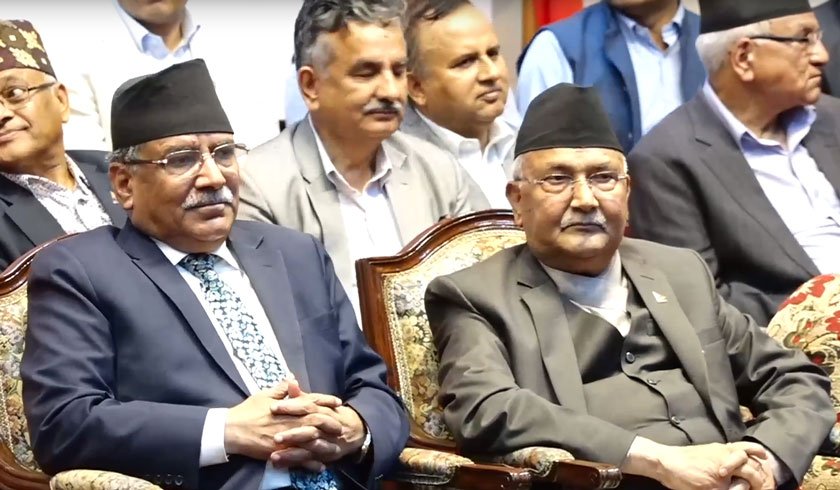
In response, Oli stated that there was no agreement on power-sharing with Congress and that the left-wing alliance would be taken forward together until the 2084 elections. To further convince Prachanda, he had said, 'Whether we go to heaven or hell, we will go together.'
Even when the Oli-Deuba 7-point agreement was made public through the media, Oli had lied to Prachanda. According to Narayan Kaji Shrestha, who was a witness at Baluwatar at that time, Prachanda reminded Oli of his words from the previous day, 'We will go to heaven together, and we will go to hell together.'
Currently, at a time when there is a negative perception towards the left-wing in general, there is no firm basis to believe that the dialogue between Oli and Prachanda will open new doors. However, UML spokesperson Lekhraj Bhatta asserted that discussions are ongoing between the top leaders of both parties to end the communication gap, as cooperation among left-wing parties is necessary. He clarified that past shortcomings would be reviewed.
'The left-wing forces, who have played a major role in the country's political transformation, need to cooperate. As we cooperate, we may reach unity in the future. Shortcomings need to be reviewed. At least, communication between the leaders has ended. A clear framework for cooperation may be formed by tomorrow. The journey is intended to be to heaven, but it is uncertain where we will end up,' Bhatta said.

From UML, Bhatta, along with Vice-Chairman Ram Bahadur Thapa and General Secretary Shankar Pokharel, have been making efforts to form a left-wing alliance. From CPN (Maoist Centre), Barshaman Pun and Prames Hamal have been making efforts. Just on Monday, Prachanda held discussions with Madhav Nepal of CPN (Maoist Centre) regarding cooperation with UML. Prachanda met Oli with Nepal's consent. Prachanda has already held discussions with Oli three times.
Prachanda is equally adept at deceptive politics
It is believed that not only Oli but also Prachanda is equally adept at deception. At that time, not only Oli but also Prachanda had staged a similar drama a year and a half ago.
In 2079, after forming an electoral alliance with Congress in all three tiers of elections, he proposed to Deuba to make himself Prime Minister in the first phase after the elections. In the previous election, the left-wing-democratic alliance led by Deuba had won 135 seats. Congress had become the largest party with 88 seats. Although emerging as the third largest party after the elections, Prachanda seemed confident of becoming a decisive force in the power balance, but Maoist was reduced to 32 seats.
As the parliamentary arithmetic was unfavorable for becoming Prime Minister in terms of power balance, Prachanda was in a hurry to become Prime Minister in the first phase. Oli, who had a good understanding of Prachanda's desire to become Prime Minister, had dialogues with Deuba and Prachanda alternately through Bishnu Paudel and Shankar Pokharel. On one hand, he assured Deuba of becoming Prime Minister, and on the other hand, he reassured Prachanda, Oli had convinced him.
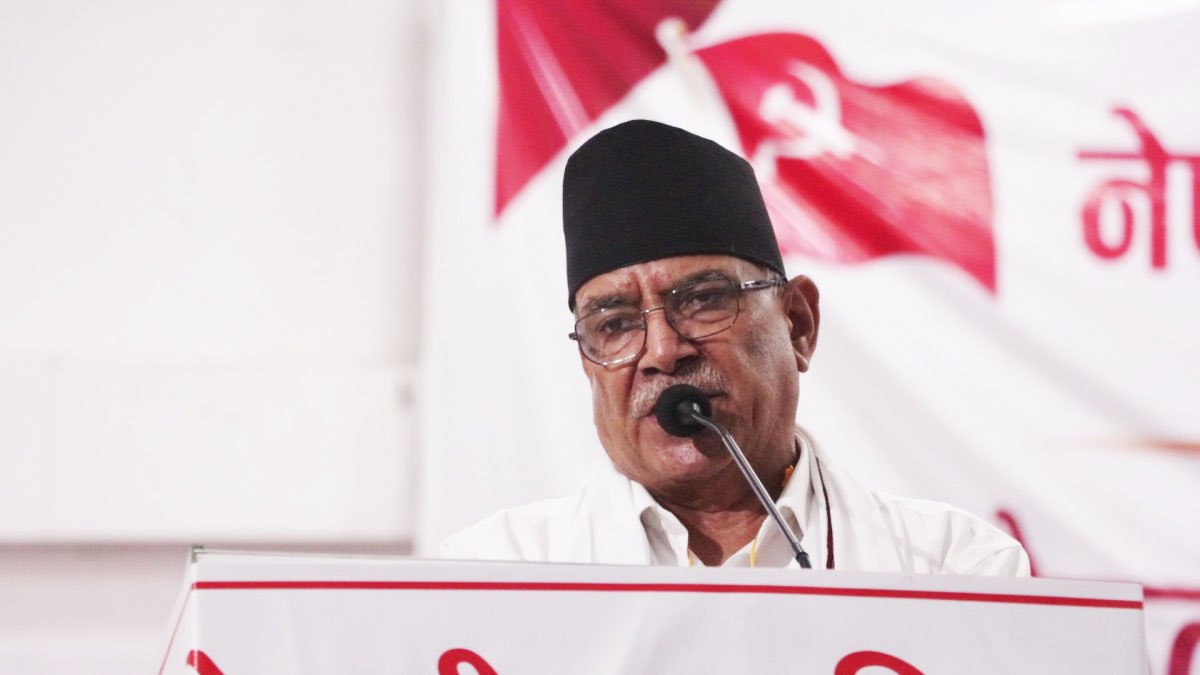
On Poush 10, Prachanda rejected Deuba's proposal to cooperate, stating that he was about to become Prime Minister as the largest party, and went directly from Baluwatar to meet Oli in Balkot. In Balkot, Prachanda went to the Office of the President, Shital Niwas, to become Prime Minister with the support of parties including UML, RSP, RPP, JSP Nepal, Janamat Party, and Naupa.
Within two months of becoming Prime Minister, Prachanda betrayed Oli and brought Congress back into the alliance. After cooperating with Congress for 11 months, Prachanda broke ties on Fagun 21, 2080, and went to cooperate with UML again. Oli and Deuba, who were suspicious as Prachanda started rotating Congress and UML alternately, citing the 32 seats won by Maoist Centre in the elections as a magic number, stood together. At that time, Oli took revenge for the humiliating ouster from power 16 months ago from Prachanda.
This specific news has been automatically translated by AI. As a result, there may be some inaccuracies or language errors.

_cvUCBlwFTZ.jpg)