China's Robotaxi Sector Poised for Global Leadership Amidst EV Success

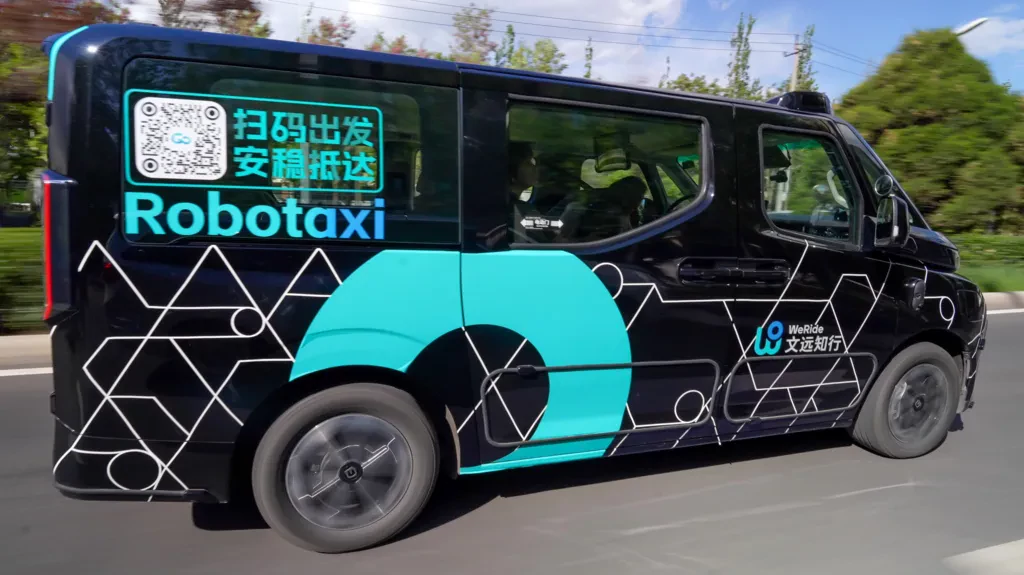
Driverless vehicles are now a common sight in Beijing's Yizhuang district. Robotaxis navigate smoothly alongside regular cars, while autonomous delivery vans collect parcels and deliver them to collection centers via inner lanes.
This district has become one of the key centers for testing autonomous driving technology in China. Companies like Baidu, WeRide, and Pony.ai are operating commercial robotaxi services in designated areas.
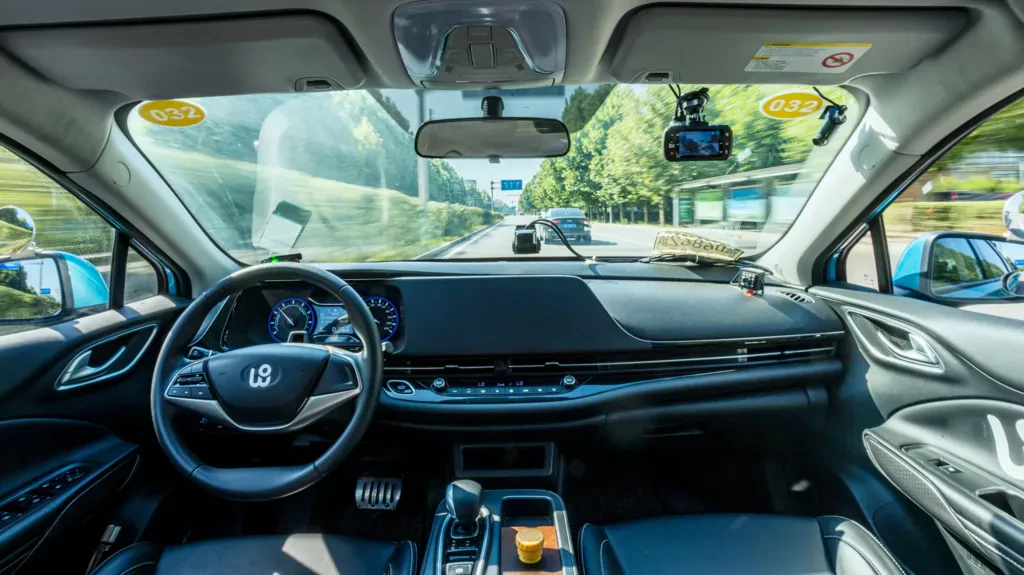
A robotaxi can be booked by simply opening an app. The driverless taxi arrives within minutes. Passengers set their destination via a 'touch screen,' after which the car merges into Beijing's busy traffic and proceeds smoothly, navigating between buses, bicycles, scooters, and pedestrians.
Although this technology is still in its development phase, a big question is already arising. Can China achieve global leadership in the robotaxi sector, just as it has in electric vehicles (EVs)?
The Strength of EV Success
China's autonomous driving companies have a significant competitive advantage. This is its industrial structure, which made China the world's largest market for electric vehicles.
While Tesla develops most of its technology in-house, China's autonomous vehicle industry is based on collaboration between various companies. Companies like BYD, Chery, Geely, and SAIC manufacture the vehicles, while other specialized companies develop the necessary software.
Autonomous vehicles use the same batteries, sensors, chips, and onboard computers as electric cars. Since these supply chains have already been developed on a massive scale, companies can develop new technologies at a lower cost and faster pace.
Kyle Chan, a foreign policy researcher at the Brookings Institution, says, 'The pace of innovation and adaptation seen in China's EV industry is not seen in any other country in the world right now.'
According to him, China's EV capabilities are not limited to that. It is also strengthening industries related to batteries, motors, AI, and other related technologies by connecting them.
Government Policy Support
The Chinese government has also played a significant role in this sector. Through pilot programs conducted in various cities, companies have been allowed to test autonomous vehicles on public roads.
Furthermore, China's complex road structures have also become a major opportunity for companies. During a trip in Beijing, an autonomous vehicle has to contend with buses, scooters, bicycles, pedestrians, and irregular traffic.
WeRide's Chief Marketing Officer, May Zhang, says, 'China's traffic environment is very complex.'
According to her, these diverse road conditions generate a large amount of data, which helps make the software more intelligent.
However, its foreign expansion is not that easy. According to Zhang, the Middle East experiences extreme heat, Southeast Asia has heavy rainfall, and Switzerland has extremely cold weather. Such extreme weather can reduce battery capacity, while rain, snow, and fog can affect the performance of cameras and sensors.
A Bigger Dream Than Robotaxis
Robotaxis are not China's ultimate goal. 'Qcraft' is using its autonomous software in private cars, buses, and even delivery vehicles. According to the company, its autonomous buses are operating in more than 20 cities in China and are also expanding internationally.
James Yu, the company's chairman and CEO, said, 'From a technological perspective, within the next five to seven years, at most ten years, this can become a part of everyone's daily life.'
Competition with Waymo
Chinese companies are rapidly expanding into the global market. Their biggest competitors are American companies. Waymo, owned by Alphabet, is currently considered a leader in commercial robotaxi services. It operates paid driverless services in various cities in the United States. Amazon's Zoox and Tesla are expanding cautiously. Meanwhile, Uber has shut down its autonomous vehicle development project after a fatal accident in 2018.
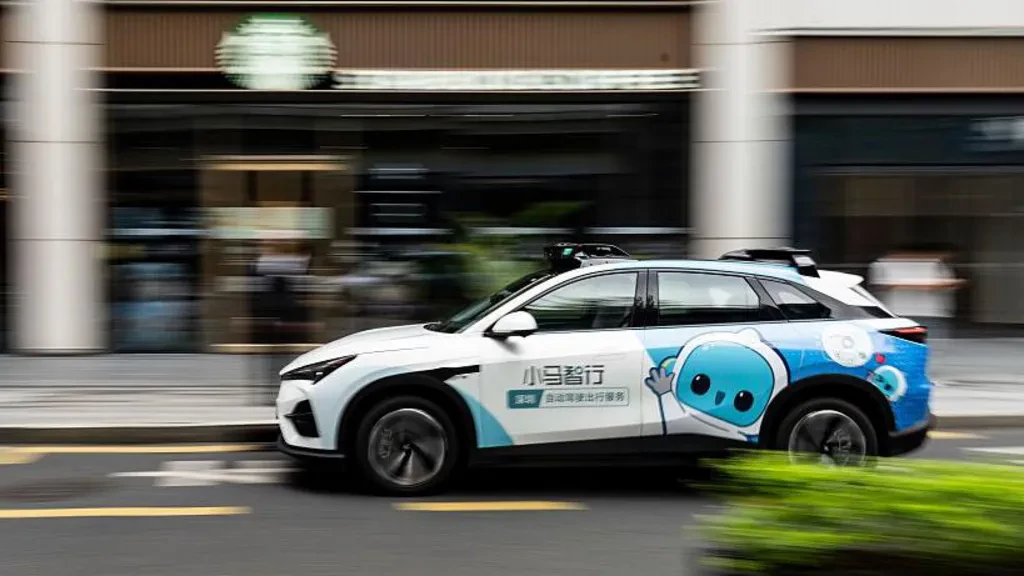
Currently, Uber and its competitor Lyft are partnering with Chinese companies. Tu, founder of Sino Auto Insights, said, 'Such partnerships mean they don't have to build new apps and get direct access to millions of customers.'
However, he admits that Waymo is still ahead in user experience. He said, 'After using Waymo, I feel its service experience is much better than other competitors. In California, Waymo is becoming a regular mode of transportation.'
Employment or Challenge?
In the United States, labor unions have warned that robotaxis could lead to job losses for taxi drivers, delivery drivers, and truck drivers. But in China, the government is presenting it as a solution to a declining workforce.
President Xi Jinping has made artificial intelligence (AI) and robotics a key pillar of China's strategy to develop 'new quality productive forces.' The government believes this will create jobs and accelerate economic growth.
Another claim from the industry is that robotaxis will make travel much easier for the elderly and physically disabled individuals.
Tu said, 'If the fare of robotaxis can be made equal to or even cheaper than regular Uber, it will provide convenient transportation opportunities for many people. It will be particularly useful for the elderly and people with disabilities.'
Safety Challenges
However, safety remains the biggest concern. Earlier this year, about 100 robotaxis were stranded mid-route in Wuhan after a software issue affected Baidu's Apollo Go service.
Some passengers reported being unable to exit the vehicle as the doors were automatically locked. The service was suspended for several weeks after this incident. However, Baidu has stated that its plan to launch services in the UK by the end of this year remains unchanged.
This incident showed how quickly public trust can be lost due to a small technical error.
A similar problem occurred in the United States. General Motors (GM) decided to close its Cruise robotaxi division and focus on autonomous technology for personal vehicles.
In 2023, California regulators suspended the company's permit after a robotaxi dragged a pedestrian it had hit by another vehicle for several meters. For this reason, some analysts believe that the international expansion of robotaxis will be much more difficult compared to electric vehicles.
Operating robotaxis requires overcoming many challenges, including regulatory approval, detailed digital maps, local operating teams, and public trust. Moreover, as robotaxis collect a large amount of map, camera, and location data, national security concerns may also arise abroad.
Optimistic About the Future
Despite all these challenges, WeRide's May Zhang says that regulators are gradually becoming more positive towards autonomous vehicles. 'We are seeing very positive policies and regulations coming not only from China but also from governments in other international markets.'
According to Brookings' Kyle Chan, robotaxis are not just a new transportation service. In his words, 'China wants to build an AI-driven, digitally interconnected, high-tech economy. The foundation for this is its strong hold on current battery, electric vehicle, motor, and related technologies.'
Suranjana Tiwari BBC Correspondent
This specific news has been automatically translated by AI. As a result, there may be some inaccuracies or language errors.






_KGLQG1Q14l.jpg)