CPN UML and CPN (Maoist Centre) Form Working Alliance Amidst Provincial Government Formation Discussions

Kathmandu. Recently, a working alliance has started between CPN UML and Communist Party of Nepal regarding the formation of provincial governments. This has sparked a new debate on leftist cooperation. On the other hand, the issue of party reorganization within UML is also gaining priority, while UML has been severely criticizing the current government's actions.
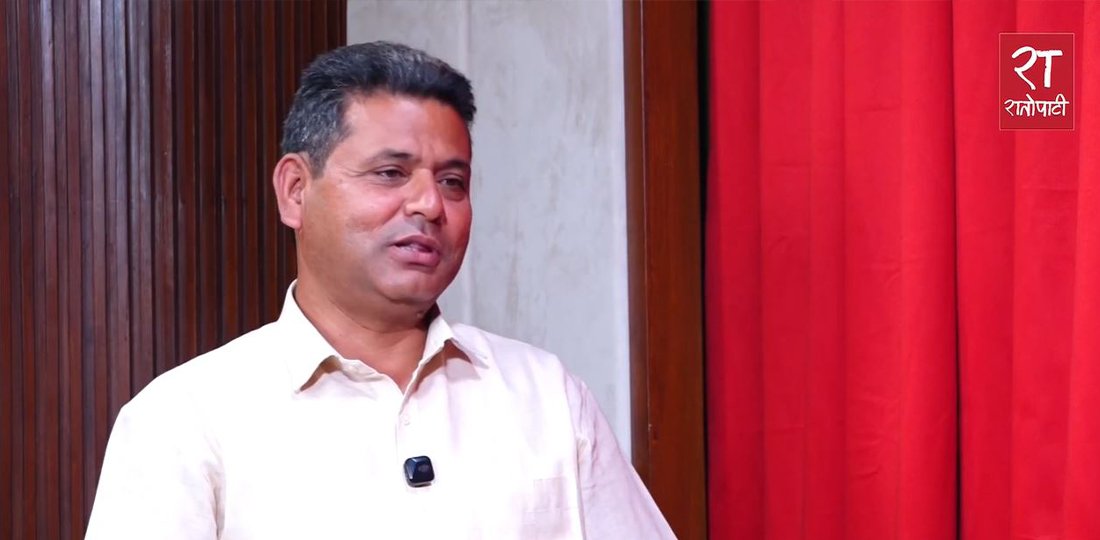
Here is an excerpt from the conversation Rohit Dahal of Ratopati had with Niraj Acharya, Publicity Department Chief of CPN UML, focusing on these contemporary political issues, the future of leftist cooperation, UML's internal life, and its perspective on the current government:
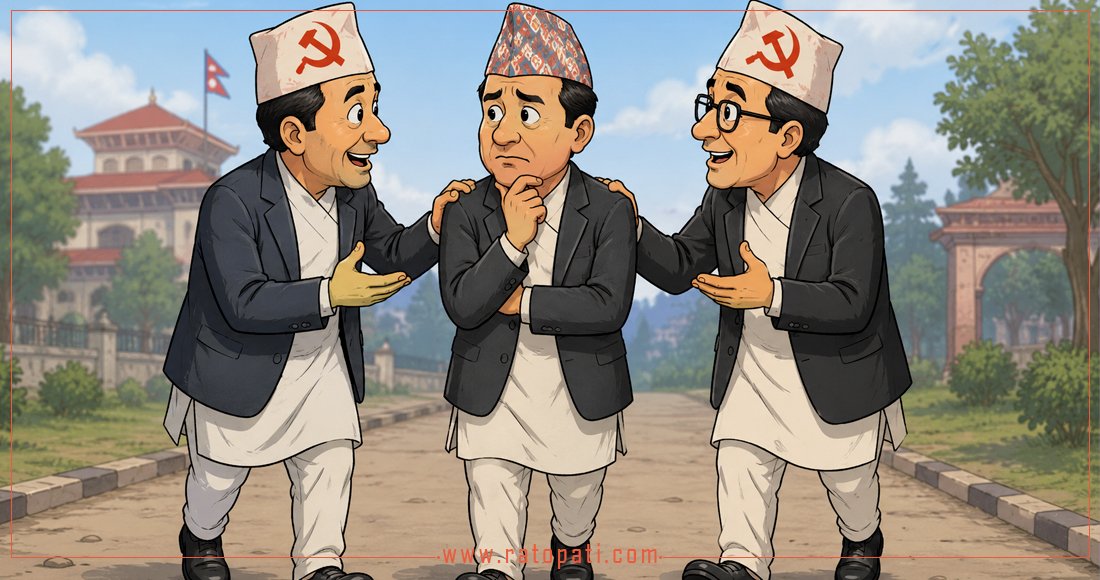
Currently, an agreement has been reached to form a working alliance between CPN UML and Communist Party of Nepal regarding the formation of provincial governments. How did this handshake happen between the Chairman of UML and the Chairman of Communist Party of Nepal?
This did not happen suddenly or accidentally; there are series of events. Discussions between the leadership continued after the results of the recent elections. Discussions were ongoing among the top leaders of all parties, including the Chairman of UML, the Chairman of Communist Party of Nepal, and the President of Nepali Congress.
During the discussions, we wanted that instead of just two parties in the provincial assembly, the opposition parties should unite and form the government. The situation in the provinces is that no single party has a clear majority.
We had a kind of compulsory public mandate to form the government by uniting two or more parties. In the past, provincial governments were also formed through power-sharing between Nepali Congress and CPN UML.
How did that alliance break? What is the reason for the breakdown of the alliance between UML and Congress?
This broke because of Congress. We did not want to break it. Rather, we believed that the Communist Party of Nepal should also be included and moved forward. Our party chairman has been saying that at a time when democracy is in crisis in the country, and when the constitution, the system, and constitutional bodies are being attacked one after another, parties that have struggled for the constitution and democracy must stand together. Fundamentally, we believed that leftist and democratic forces should stand together in the parliament and on the streets and face this situation.
The Communist Party of Nepal has also been saying the same thing. Initially, Congress was ready for this. However, in the later stage, Congress tried to create a new principle of 'the provincial parliament should not be without opposition' and did not want to be in this alliance.
After Congress showed no interest in the coalition, we have moved forward with forming provincial governments by creating a working alliance between CPN UML and the Communist Party of Nepal.
But some say that when the President of Nepali Congress, Gagan Thapa, and Vice President, Biswaprakash Sharma, met your party chairman, he did not even want to listen?
That is not true. They were in discussions before. In the later stage, they were in discussions with the Chairman of the Communist Party of Nepal (Prachanda). They were not interested in discussing with our chairman in the later stage. The claim that they went for discussions and UML chairman ignored them is not true.
What was discussed with the UML chairman was that the provincial governments should be formed for the remaining term by including the Communist Party of Nepal, and that leftist and democratic forces should stand together and move forward, a point he repeatedly made.
In Sudurpashchim, the Chief Minister is from Nepali Congress, you supported them, and were also in the government, but you caused the budget brought by your own government to fail. In Koshi Province, it is reported that the party chairman himself instructed to fail the budget brought by his own Chief Minister. Does this mean you are the ones who broke the alliance?
This is an extremely baseless and false statement. Such things are not possible in politics. The top leader of a responsible political party should play a parental role to ease the situation and strengthen the relationship between coalition partners. It is not true that the chairman himself did this from his own side.
The situation in Sudurpashchim is that the disagreement between the Chief Minister and the ministers has been ongoing for a long time. Ministers from UML in the government there had been continuously complaining to the party.
The Chief Minister did not involve the ministers in any process of budget preparation. Without informing the ministers, he brought budget programs that were unusually focused on his own constituency. This could not be accepted. We follow party directives, and we accept the matter of power-sharing, but our ministers strongly stated that the budget brought in a clandestine manner should be revised.
We repeatedly told the Chief Minister to resolve this with our party chairman and the leader of the party there, to reach an understanding and move forward. Only when he was not ready to do so was the amendment proposal registered; the budget itself did not fail.
Is the current handshake and working alliance between CPN and UML not due to the greed for the Chief Minister's post and power in the provincial government?
This is a kind of necessity for us and also a kind of compulsion. It is a combination of compulsion and necessity. We do not need to be greedy for the Chief Minister's post or power. In any case, three provincial governments were already being led by CPN UML. Even if Congress left, the government would be formed, and if they left, it would not make much difference. Becoming a Chief Minister in the province is not a new thing for UML; there was no need to be greedy for it.
The objective situation in the provinces was that a single party could not form the government. Two or more parties had to unite. There is little time left, and going for mid-term elections at this time would not be appropriate. Sending a message of governmentlessness in the provinces at this time would raise questions about federalism and the constitution itself. Therefore, a government had to be formed. When the coalition partner backed out, I do not see any need to interpret the matter of forming a government by uniting with other parties in the provincial parliament in a negative way.
...Rest of the video...
This specific news has been automatically translated by AI. As a result, there may be some inaccuracies or language errors.