Nagdhunga-Sisnekhola Tunnel Officially Inaugurated

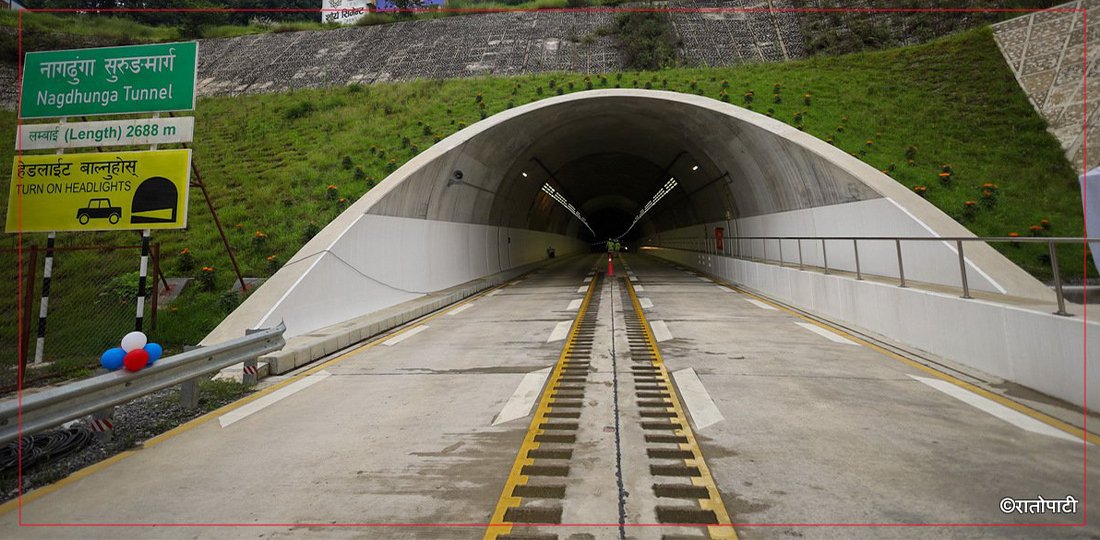
Kathmandu. Adding a new golden chapter to Nepal's infrastructure development history, the Nagdhunga–Sisnekhola tunnel has been formally inaugurated. This first modern road tunnel in the country, built with loan assistance from the Japan International Cooperation Agency (JICA) at a cost of approximately 290 million, has been completed. The operation of this tunnel will solve the long traffic jam problem at the main gateway to and from the capital Kathmandu.
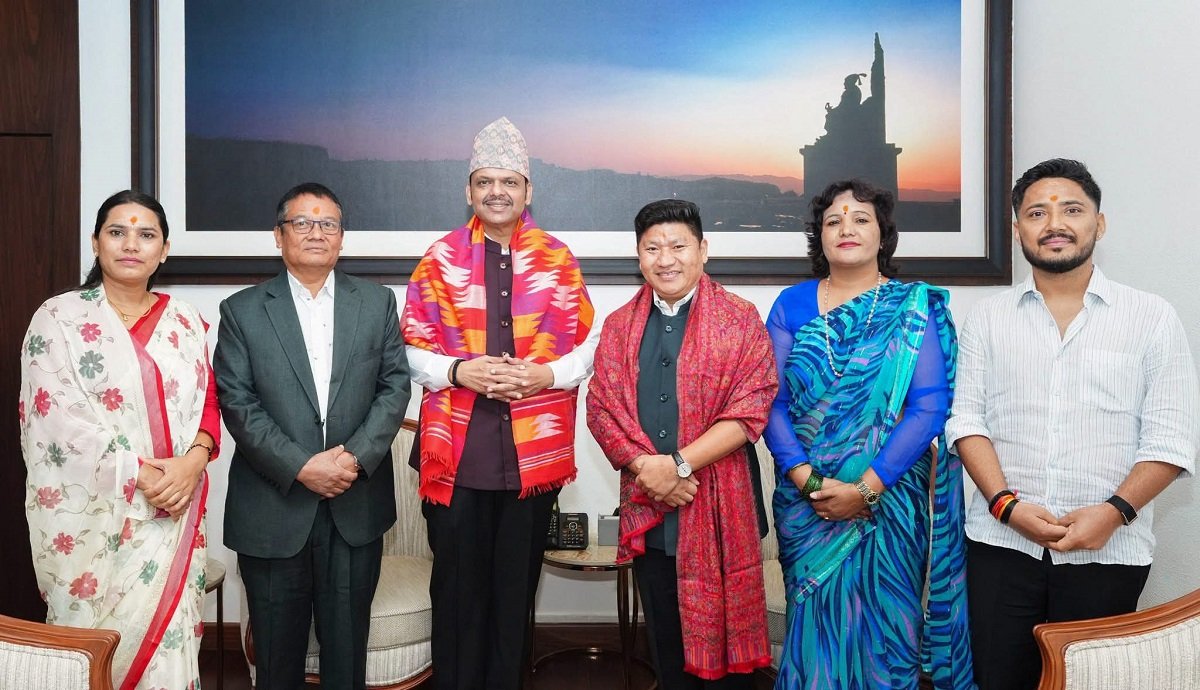
The inauguration ceremony was attended by JICA President Dr. Tanaka Akihiko, Japanese Ambassador to Nepal Maeda Toru, Minister of Physical Infrastructure and Transport Sunil Lamsal, Secretary of the Ministry Gopal Prasad Sigdel, high-ranking officials from various ministries and bodies, technicians, and local representatives.
What did everyone say at the inauguration ceremony?
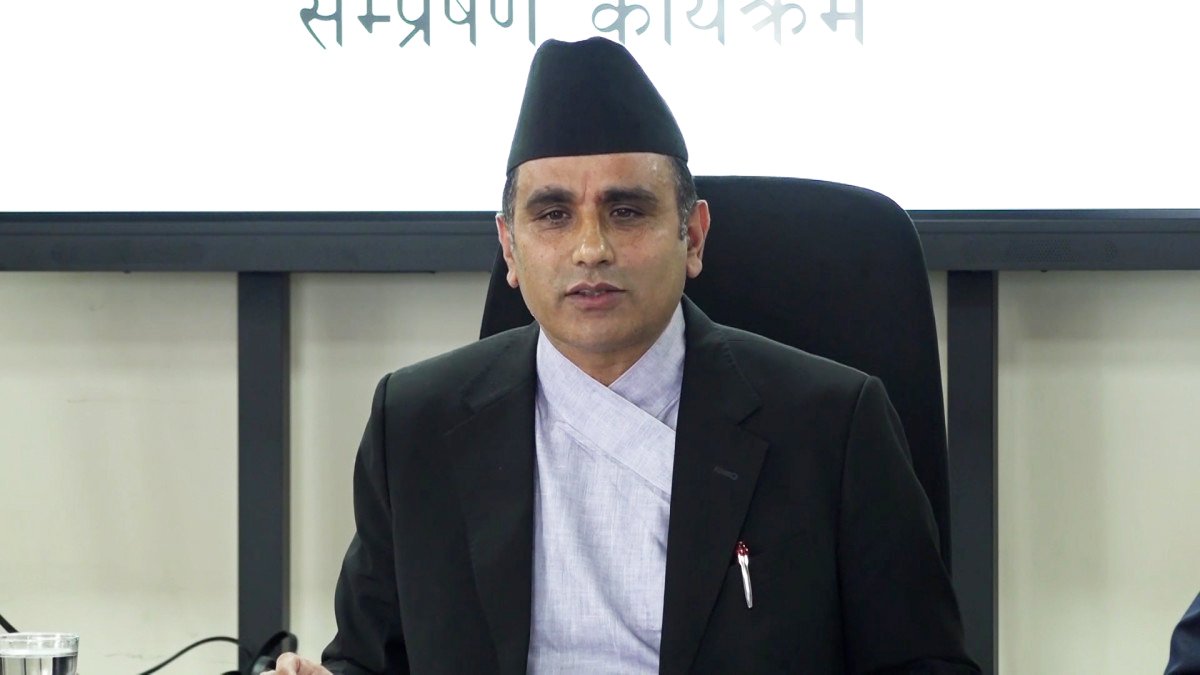
Addressing the ceremony, Secretary of the Ministry of Physical Infrastructure and Transport Gopal Prasad Sigdel said that with the construction of the Nagdhunga–Sisnekhola tunnel, a new era of modern infrastructure development has begun in Nepal. Mentioning that the suffering faced by passengers and vehicles on the uphill and downhill of Nagdhunga for decades has ended, he said, 'This section, which is the main western entrance to the Kathmandu Valley, was always risky and congested. Now the journey from Sisnekhola in Dhading to Balambu in Kathmandu will be completed in just a few minutes. This has provided permanent relief from dangerous turns and landslide risks.'
Secretary Sigdel said that this project has become another strong pillar in the relationship between Nepal and Japan. 'This project has proven that large infrastructure can be built even in complex and difficult terrains like Nepal's, with political will, technical partnership, and patience,' he added, 'This is Nepal's first road tunnel, but it is not the last.'
Similarly, Japanese Ambassador to Nepal Maeda Toru said that the completion of the Nagdhunga tunnel construction is a historic milestone in Nepal's infrastructure development history. He mentioned that the completion of this tunnel during the 70th anniversary of the establishment of diplomatic relations between Nepal and Japan has taken the seven-decade-long friendship and cooperation between the two countries to new heights.
Japan has provided concessional loan assistance of approximately 22.3 billion Japanese Yen (approximately 21.2 billion Nepali Rupees) under Japanese Official Development Assistance (ODA). Ambassador Toru recalled that the geographical challenges such as the sliding and active geology of the mountainous region and the severe landslide at the west portal due to heavy rainfall were overcome based on Japan's experience in constructing over 15,000 tunnels.
With the completion of the tunnel construction, the main responsibility for its long-term, sustainable, and independent operation and maintenance has now fallen on the shoulders of the Government of Nepal and the Ministry of Physical Infrastructure, Ambassador Toru emphasized the need for Nepal to develop its own internal capacity for this.
Furthermore, JICA President Dr. Tanaka Akihiko stated that the completion of the tunnel construction, overcoming the challenges of the complex geological structure and natural disasters of the mountainous region, is a great achievement.
Approximately 98 percent of the total manpower engaged in tunnel construction were Nepali engineers, technicians, and workers. He said that this project was successful due to the guidance of Japanese experts and the diligence of Nepali manpower. JICA President Dr. Tanaka informed that a new technical cooperation initiative will be launched between the governments of Japan and Nepal for the sustainable operation, maintenance, planning, and technical capacity enhancement of the tunnel.
_Haqbgxersl.jpg)
Full Operation Still 3 Months Away
Although the tunnel has been grandly inaugurated, general public vehicles will not be able to use the route immediately. According to the project, in the initial phase, prioritizing safety standards, only emergency vehicles such as ambulances, fire trucks, disaster management, and security forces will be allowed to enter the tunnel.
The Nagdhunga tunnel construction project has stated that the tunnel will be opened in phases as some procedures for vehicle testing are still pending. It is planned not to charge any fee during the trial period, which will last for about three months.
According to project engineer Sanjay Panthi, the Road Board is yet to make a formal decision on whether to charge fees from vehicles during the trial period. However, Minister Lamsal has already instructed not to charge any fees for the first three months.
Engineer Panthi said, 'For now, it has been decided to operate only for emergency vehicles for 15 days and not to charge any fee. For the remaining trial period, the decision process will proceed from the Road Board as per the Minister's instructions.'
With the completion of the tunnel construction and the commencement of trials, the public and transport entrepreneurs have been showing interest in the fees. The project has stated that it will conduct a detailed study of the safety and technical aspects during the trial period, and the Road Board will decide on concessions or full waivers in accordance with the minister's instructions.
Toll Fee Set? How to Pay?
The government has determined a transparent and scientific toll fee for vehicles using the Nagdhunga tunnel. The Council of Ministers meeting held on July 11, 2025, set different rates for entering and exiting Kathmandu via the tunnel:
Cars and Vans: Rs. 65 to enter Kathmandu / Rs. 60 to exit
Mini Buses and Mini Trucks: Rs. 115 to enter Kathmandu / Rs. 80 to exit
Buses and Trucks: Rs. 260 to enter Kathmandu / Rs. 200 to exit
Heavy Equipment: Rs. 600 to enter Kathmandu / Rs. 250 to exit
According to the project, this fee has been determined based on 30 percent of the economic savings when entering Kathmandu and 36 percent of the savings when exiting.
For fee collection, an 'N-Tag' based on RFID (Radio Frequency Identification) technology has been arranged in the tunnel. The fee will be automatically deducted directly from the bank account through this sticker attached to the vehicle. For vehicles without an N-Tag, a cash payment option will also be available.
The use of the tunnel will be optional. The project states that if 60 percent of the total vehicles use the tunnel, an annual revenue of 350 million rupees will be generated, and this amount will be used for the maintenance of the tunnel through the Road Board Nepal.
Travel Time Limited to 7 Minutes, Two/Three-Wheelers and Those Carrying Flammable Materials Prohibited
Once the tunnel is fully operational, passengers entering and exiting Kathmandu will be freed from the narrow and risky uphill and downhill of Nagdhunga. The journey from Sisnekhola in Dhading to Balambu in Kathmandu will now be completed in just 7 minutes.
The project states that using the tunnel instead of the current steep 10 to 13 percent incline will save at least 15 minutes for small vehicles and up to 35 minutes for large vehicles. This will save passengers' time and fuel, and significantly reduce vehicle operating costs.
_1iNpivV9Fc.jpg)
However, considering safety and accident risks inside the tunnel, motorcycles, scooters, and vehicles carrying flammable materials (fuel, gas, etc.) are completely prohibited from entering the tunnel.
High-Level Security, State-of-the-Art Technology, and 24-Hour Rescue Team
This tunnel, built with earthquake-resistant structures and 12-inch thick concrete lining, is equipped with high-level security technology. In case of any emergency in the main tunnel, a separate 'Rescue Tunnel' has been constructed parallel to it for rescue. It is connected to the main tunnel by 7 special doors located at every 375-meter interval.
Fifteen state-of-the-art jet fans for air circulation inside the tunnel, 15 CCTV cameras for 24-hour monitoring, emergency telephone booths at every 50-meter interval, and fire hydrants for fire control have been installed.
Network and Communication: Nepal Telecom's mobile network and FM radio can be clearly heard inside the tunnel. The operation, maintenance, traffic management, and access road care for the next 5 years of the tunnel have been awarded to Yusein-ART JV for 1.1 billion rupees. A dedicated workforce of 150 people, including a special rescue team of 64 members, will be deployed in three shifts 24 hours a day for security and rescue. Agreements have been made with the Armed Police Force Hospital for emergency treatment and with the Kathmandu Metropolitan City for fire control, and ambulances will be on standby 24 hours a day at both ends of the tunnel.
Should Have Been Completed in Four Years, Took Seven Years
This tunnel has been completed in 7 years since construction began. The construction of this project, which started on October 21, 2019, was initially estimated to cost 22 billion rupees. However, by the time of completion, the total cost had increased to approximately 29 billion rupees.
The project stated that the construction cost increased by 12 percent due to modifications in physical structures and design, and by 18 percent due to the increase in the US dollar exchange rate. In addition, more than 6 billion rupees were spent on landslide control and additional land acquisition on the Sisnekhola side.
According to the initial agreement, construction should have been completed by April 25, 2023, but the deadline was extended four times due to the COVID-19 pandemic, local disputes, and a severe landslide on the Sisnekhola side at the last moment, which damaged structures including the toll plaza.
This specific news has been automatically translated by AI. As a result, there may be some inaccuracies or language errors.