Nepal Inaugurates First Systematic Transport Tunnel: Nagdhunga Sisne Khola Tunnel

_JN9QYzGQ8z.jpg)
Kathmandu. The Nagdhunga Sisne Khola Tunnel will be formally inaugurated today. This is considered the country's first systematic transport tunnel.
The tunnel is about to be inaugurated in the presence of Minister for Physical Infrastructure and Transport Sunil Lamsal, Japanese Ambassador to Nepal Mayada Toru, Chairman of the Japan International Cooperation Agency (JICA), and other senior officials.
It is said that the construction company will hand over the tunnel to the Nepal government after the inauguration. The inauguration of the tunnel is scheduled for 10:25 AM today with the Minister for Physical Infrastructure and Transport as the chief guest.
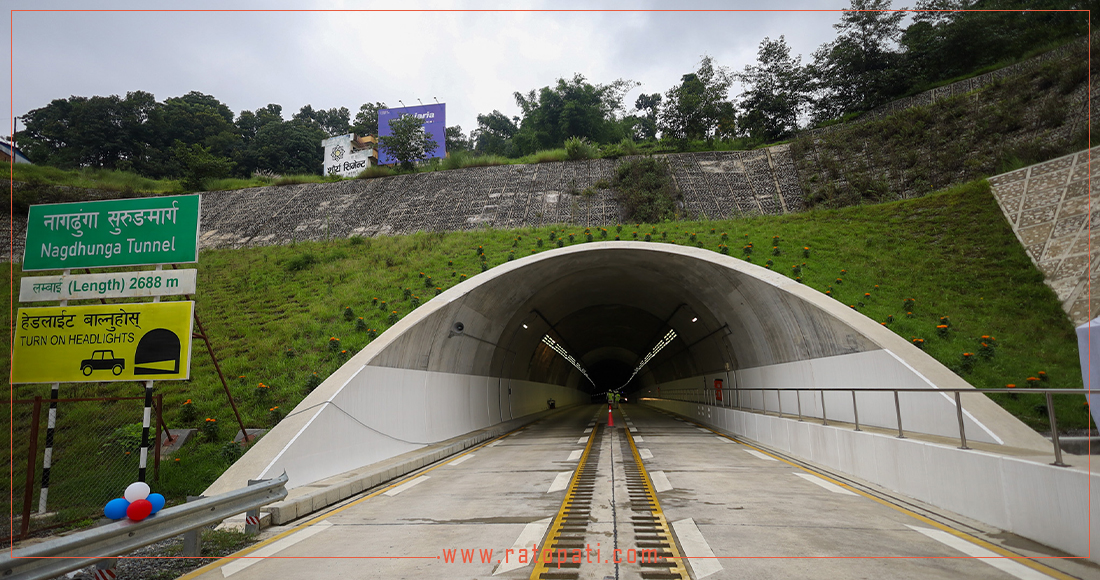
According to the program, Minister Lamsal, the Japanese Ambassador, and the JICA Chairman will inaugurate the vehicle movement by driving cars inside the tunnel. Ambulances, vehicles of security agencies, and other essential vehicles will be allowed entry in the first phase.
After testing the tunnel for a few days, all types of vehicles will be allowed to operate. Other vehicles will be allowed to operate after testing the security situation and traffic management. No fee will be charged for vehicles operating through the tunnel during the testing period.
Vehicles operating through the tunnel, which is a total of 2,688 meters long, will have to pay a certain fee. According to the Department of Roads, cars and vans will have to pay a fee of Rs 65 when entering Kathmandu and Rs 60 when exiting. Minibuses, trucks, and tippers will have to pay a fee of Rs 115 when coming towards Kathmandu and Rs 80 when exiting. Similarly, buses and trucks will have to pay a fee of Rs 260 when coming to Kathmandu and Rs 200 when exiting.
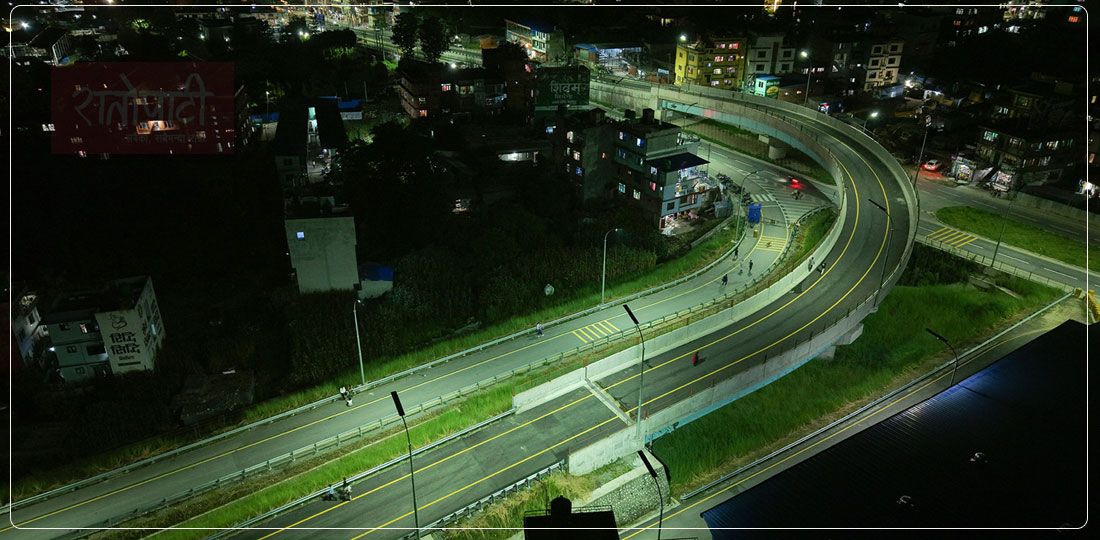
Likewise, pedestrians, two-wheelers, and three-wheelers will not be allowed to enter the tunnel. Vehicles carrying flammable substances such as diesel, petrol, and gas, and vehicles carrying explosives are prohibited from entering.
The project has two tunnels: a main tunnel and a rescue tunnel. Vehicles will operate in the main tunnel, while the rescue tunnel will be used for rescue operations. The tunnel was constructed by Japan's Hazma Ando Corporation.
According to Ramesh Prasad Koirala, an engineer from the consulting firm Nippon Koei, the tunnel is equipped with fire engines, emergency rescue, CCTV cameras, communication, and security systems for safety, smooth traffic, and human security.
Similarly, continuous oxygen flow and other essential services have been provided. The tunnel starts from Totipakha in Dahachok of Chandragiri Municipality-1, Kathmandu, and ends at Sisne Khola in Dhunibeshi Municipality, Dhading, to the west. It is expected to save about an hour of time for fuel and road users considering the traffic jams, uphill, and winding roads on the currently operating highway.
The tunnel construction involved a soft loan of approximately Rs 21 billion from the Japanese government and an investment of approximately Rs 6 billion from the Nepal government. A concessionaire has been selected and deployed for the operation and management of the tunnel. Security personnel and other technical staff are conducting regular monitoring and inspection.
Arrangements have been made for vehicles operating through the tunnel to make payments through electronic means. Although the target was to complete the construction in 42 months, the project timeline was extended due to the COVID-19 pandemic and some other complexities.
This specific news has been automatically translated by AI. As a result, there may be some inaccuracies or language errors.