Federal Government Curbs Subsidized Agricultural Programs

Biratnagar. The federal government has put a curb on the subsidized grant programs provided by local levels to promote commercial agriculture and increase agricultural production.
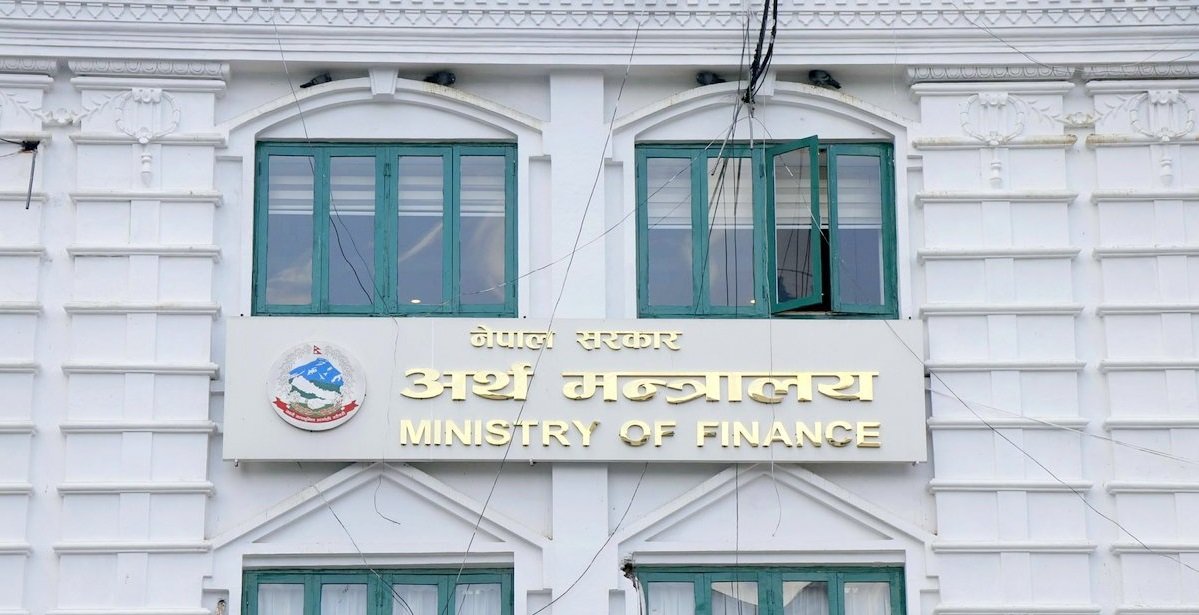
The Ministry of Finance, by sending a special directive to the local levels, has stopped spending budget on titles like electricity tariff, causing farmers across the country to be directly affected.
Due to the federal government's policy, Ratuwamai Municipality in Morang, as well as neighboring municipalities like Sunbarsi and Rangeli, have completely stopped the irrigation electricity tariff subsidy facility they were providing to farmers. As a result, farmers in rural areas, who were receiving even a small relief from the local level, are now forced to bear the entire electricity tariff for irrigation themselves.
The federal government's Ministry of Finance has clearly banned distribution-oriented programs operated by local levels in point number (8) sub-point (ङ) of the directive and circular issued to local levels.
The directive, signed by Ministry of Finance Secretary Ghanashyam Upadhyay, has been sent for information to the Office of the Auditor General, the Office of the Prime Minister and Council of Ministers, the National Planning Commission, and the Office of the Controller General of Accounts. 'Distribution-oriented programs such as gas, bicycles, health insurance premiums, electricity tariff payments, hand pumps, and saree distribution are not to be operated,' the directive states.
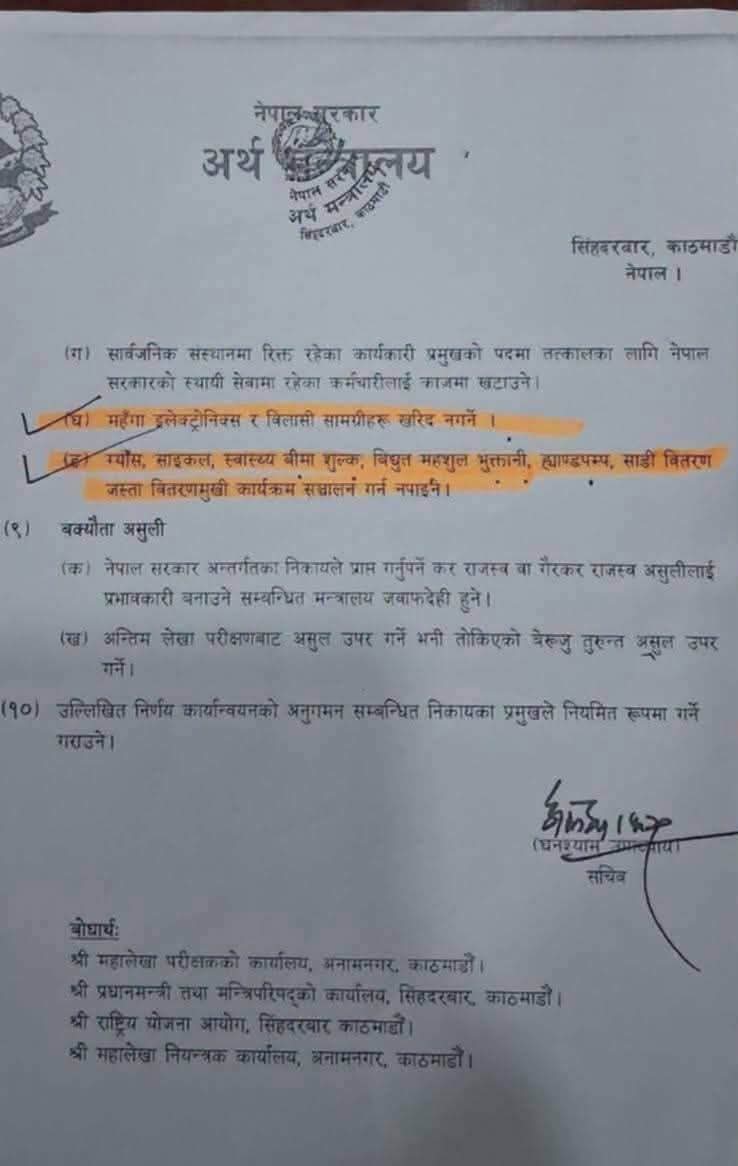
The Ministry of Finance has directed to stop payments by placing such grants and relief programs in the category of distribution-oriented programs in the name of cutting expenditure and maintaining financial discipline.
Using the Ministry of Finance's directive as a basis, Ratuwamai Municipality in Morang, the Municipal Executive Office Sijuwa, issued a public notice on 2083/04/06 stating that the payment of electricity tariff for agricultural irrigation and health insurance premiums for impoverished citizens has been stopped. 'As per the notice published by the Government of Nepal, Ministry of Finance, on 2082/06/07, as per the decision of the Government of Nepal, Council of Ministers, on 2082/06/05, it is clearly stated that distribution-oriented programs such as gas, bicycles, health insurance premiums, electricity tariff payments, hand pumps, and saree distribution are not to be operated, and we have received instructions to implement the same arrangement,' stated the notice signed by the Chief Administrative Officer of the municipality, Damaruballabh Baral.
Based on the same directive, the Ratuwamai Municipality Municipal Executive meeting held on 2083/04/04 decided to completely stop the arrangement of Ratuwamai Municipality paying for agricultural irrigation meter electricity tariff, effective from Shrawan 1.
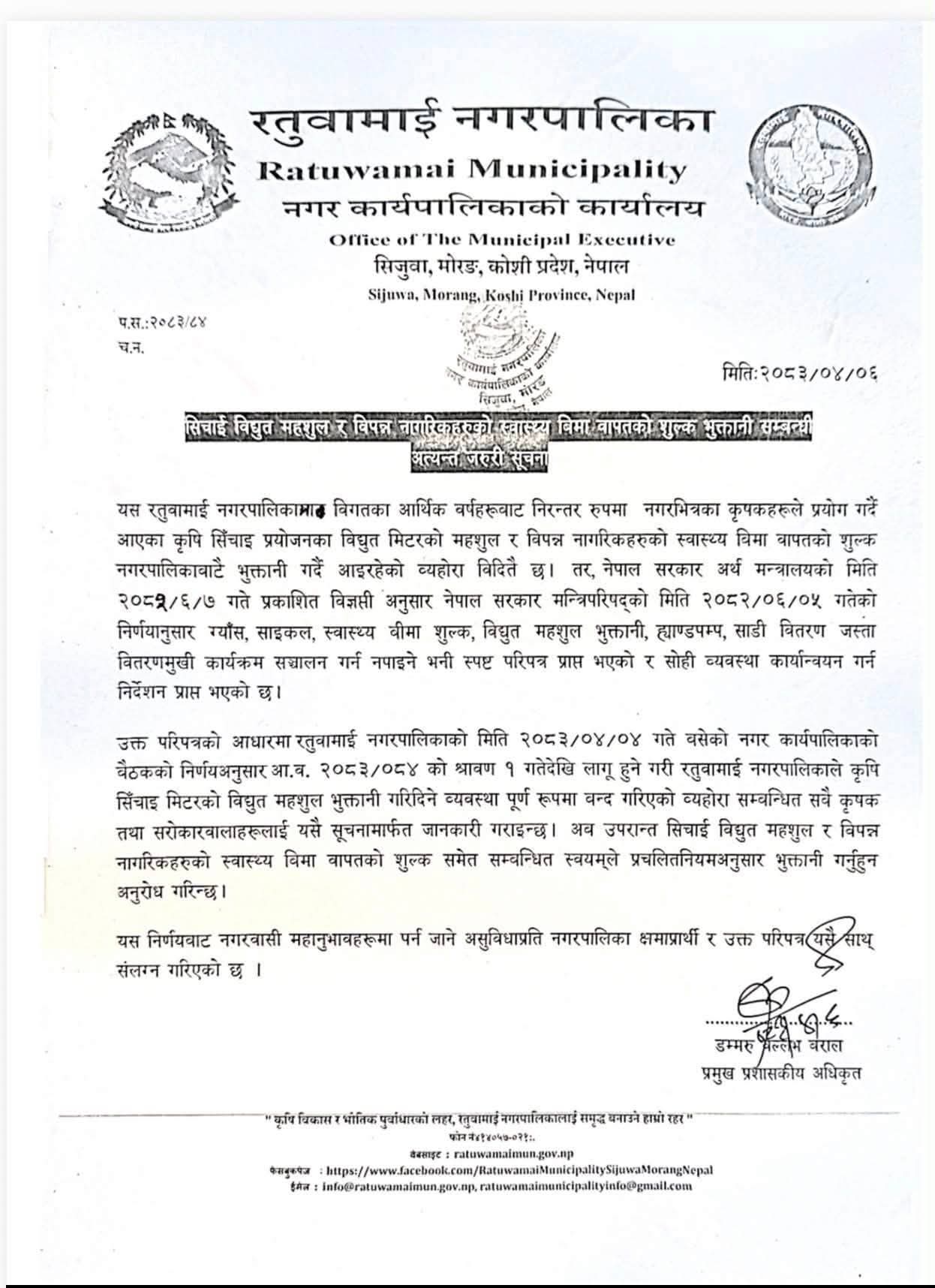
'Henceforth, it is requested that the electricity tariff for irrigation and premiums for health insurance for impoverished citizens be paid by the concerned individuals themselves according to prevailing rules,' the municipality's notice states.
Ratuwamai Municipality Chief Administrative Officer Damaruballabh Baral states that it is their legal and administrative responsibility to implement the central government's decision. The municipality used to spend more than 5 million rupees annually on agricultural irrigation tariff alone.
'We used to pay up to 6,000 rupees per farmer annually for the tariff. However, when municipalities with no internal resources spent such amounts from federal financial equalization grants, the Office of the Auditor General started identifying discrepancies. With the Ministry of Finance's latest directive making it impossible to spend such amounts, we have stopped this facility effective from Shrawan 1,' said Chief Administrative Officer Baral.
According to Baral, the central government stopped the facility for health insurance for impoverished citizens citing double benefits, due to which that facility had been affected since the past, and now the electricity tariff subsidy has been completely stopped.
Local representatives and farmer representatives have objected to this move by the central government. Koshi Province Assembly member and fish farmer Ganesh Upreti has termed the government's decision as unconstitutional and anti-farmer. He alleges that the center has interfered with the rights and autonomy granted to local levels by the constitution of Nepal.
'It is not good for a government that cannot provide timely fertilizer to snatch away the little relief that farmers were receiving. This will only reduce agricultural production, increase the price of consumer goods in the market, and ultimately break the backs of the farmers,' Upreti said.
According to him, the central government stopping the relief grants provided by local levels to local farmers from their own policies, programs, and budgets is a direct encroachment on the jurisdiction of local governments.
The electricity subsidy provided by the municipality was a great support for the farmers of Ratuwamai, Sunbarsi, and Rangeli, who are forced to cultivate relying on rainwater. By irrigating through underground water resources (borings), farmers here have been producing two crops of paddy, as well as maize and pulses.
With the municipality bearing the electricity tariff, the irrigation cost was almost zero, which encouraged farmers towards winter cultivation. However, with the entire burden of electricity tariff now falling on the farmers themselves, the production cost will increase significantly. This has increased the risk of small and medium-scale farmers being alienated from agriculture itself.
This specific news has been automatically translated by AI. As a result, there may be some inaccuracies or language errors.