India Govt. Holds Talks with Youth Leaders Over NEET Paper Leak

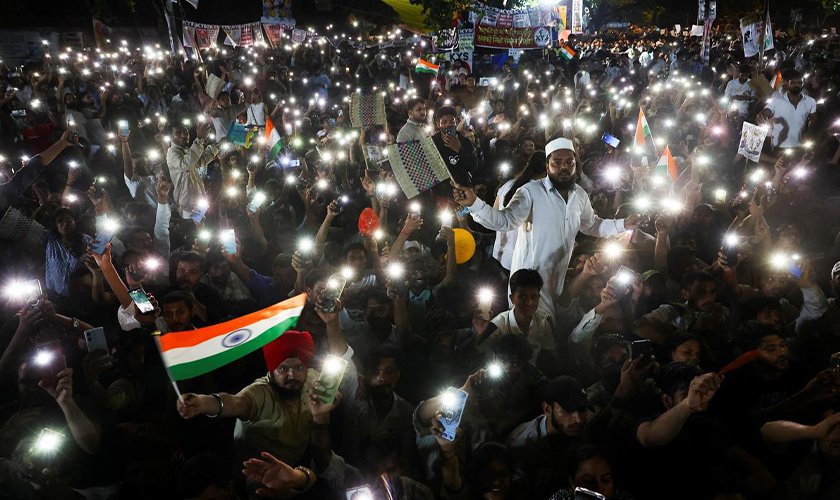
New Delhi. Formal talks were held on Friday between the Indian government and the youth-led 'Cocoroch Janata Party' (CJP) to resolve the ongoing protest over the NEET paper leak case. However, the protesters have made it clear that nationwide demonstrations will continue until their demands are met.
The talks held in New Delhi on Friday were attended by two senior ministers from the Indian government and two top leaders from CJP. This meeting took place just a few hours after social activist Sonam Wangchuk ended his 26-day-long hunger strike.
This dialogue has raised hopes for an end to the political stalemate created by student protests that have spread across India in recent weeks. Millions of students and youths have taken to the streets demanding that Education Minister Dharmendra Pradhan resign, taking moral responsibility for the paper leak scandal.
After the talks, CJP leaders informed that detailed discussions were held with the government regarding their demands and the government has been given time until Saturday afternoon to publicly state its position on the Education Minister's resignation.
Earlier, CJP spokesperson Saurabh Das had stated that their demands would be presented more clearly to the government and that the government was expected to listen to the protesters' voices.
A senior minister from the Indian government had also said that the government is always ready for dialogue and can provide as much time as necessary for a solution.
Three Main Demands
The pressure group CJP, leading the student protest, has stated that the protest will not stop until its three main demands are met. These demands include the resignation of Education Minister Dharmendra Pradhan, a government guarantee that no criminal cases will be filed against the protesters, and compensation of approximately 105,000 US dollars to the families of students who committed suicide after the paper leak and cancellation of the exam.
Huge Pressure on Modi Government
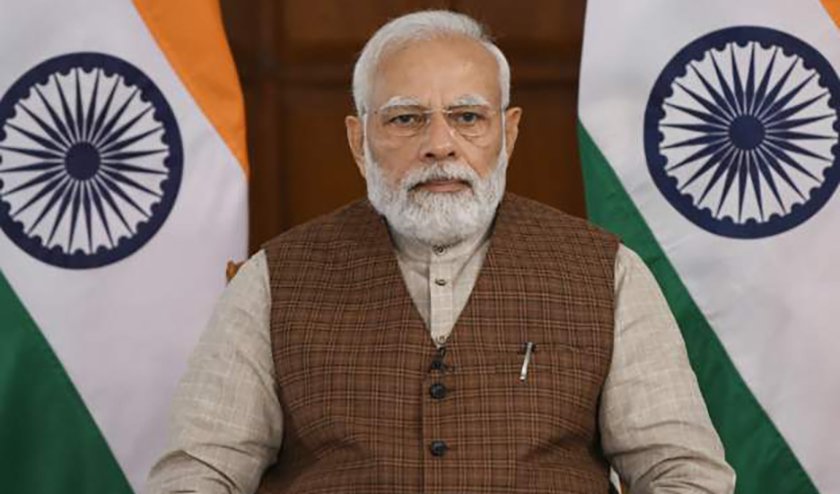
This is considered one of the biggest public protests faced by Prime Minister Narendra Modi's government since it came to power in 2014. Opposition parties have also supported the protesters' demands and are disrupting the monsoon session of Parliament over this issue.
Meanwhile, India's federal cabinet is preparing to discuss a draft of a legal amendment to provide strict punishment to those involved in paper leaks. Prime Minister Modi has stated that there is a plan to get the bill passed by Parliament as soon as possible.
However, protesters argue that merely strengthening the law is not enough and that there must be a guarantee of comprehensive reforms in the examination system to prevent future paper leaks.
Protest Spreads Across the Country
Since last week, thousands of students and youths have taken to the streets in cities like New Delhi, Mumbai, Bengaluru, and Patna. They have warned that the protest will not stop until the Education Minister resigns.
Protester Advocate Yadav stated that even though his hand was broken during police intervention, he would continue the protest. According to him, young people from across the country are participating in the movement because this is the first time an opportunity has arisen to speak out in favor of students.
Another protester, Sudesh Singh, also said that the protest would not stop until Dharmendra Pradhan is removed from office. According to him, if the protest stops now, the future of future generations will be compromised.
Started with Satire, Transformed into National Movement
The Cocoroch Janata Party initially began as a satirical campaign on social media. This campaign, initially limited to a few hundred youths, spread widely after the National Medical Entrance Exam paper leak in May led to the cancellation of the exam. Approximately 2 million students were affected by this incident.
Since then, the movement has garnered millions of supporters and has become a symbol of student discontent across India.
Police Intervention and Internet Service Shutdown
India's security forces have also intensified efforts to control the protests. On Monday, police used tear gas and lathi-charged protesters marching towards Parliament. Clashes occurred again on Wednesday night after more than 10,000 people gathered.
The Delhi administration has closed many metro stations in protest-affected areas and blocked mobile internet services. Business activities in the central part of the capital have also been restricted. Delhi Metro Rail Corporation announced that 17 metro stations would remain closed on Friday until further notice. These measures to control the protest have also had a significant impact on the daily life of the capital.
This specific news has been automatically translated by AI. As a result, there may be some inaccuracies or language errors.