Government's 'Express Way' Vehicle Faces Braking Amidst Internal Strife
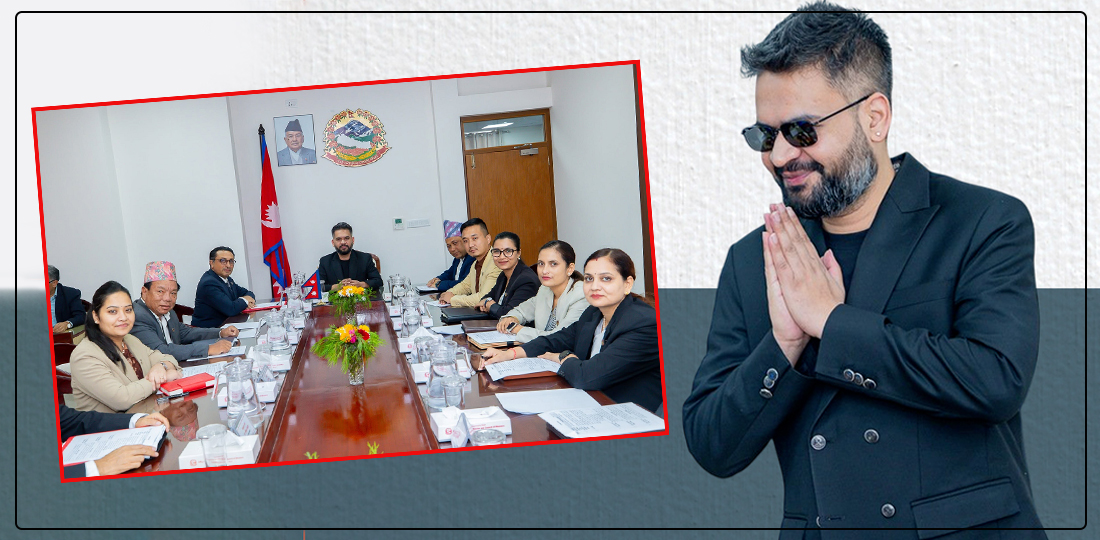
Kathmandu. A month ago, on Asar 7, Prime Minister Balen Shah compared his government to a vehicle on an 'expressway', stating it would not stop until it reached its destination.< /p>
'A government is like a vehicle. A vehicle has not only an accelerator but also brakes. It is natural to worry about needing to brake. When driving on local roads, many concerns come from the right and left,' Prime Minister Balen had said, 'But our vehicle is not driving on a local road, it is driving on an expressway. The brakes will only be applied upon reaching the destination.'< /p>
Balen, who speaks very little in public, responded to the suggestions, concerns, and interests given to the government by other parties and leaders while addressing the inaugural session of the Rastriya Swatantra Party's (RSP) first general convention. Less than a month after his remarks, discussions have begun about the 'expressway' vehicle hitting the brakes.< /p>
_QYlviv1G40.jpg)
The government has faced a situation of having to make hasty decisions and regret them later in various cases. The discussion that Balen's 'expressway' vehicle has started to brake has intensified as the government's actions and decisions have had to be changed.< /p>
The government had imposed a 3 percent equity tax on private educational institutions and private hospitals through the budget. There was widespread criticism of that tax. Ultimately, the government was forced to withdraw the decision.< /p>
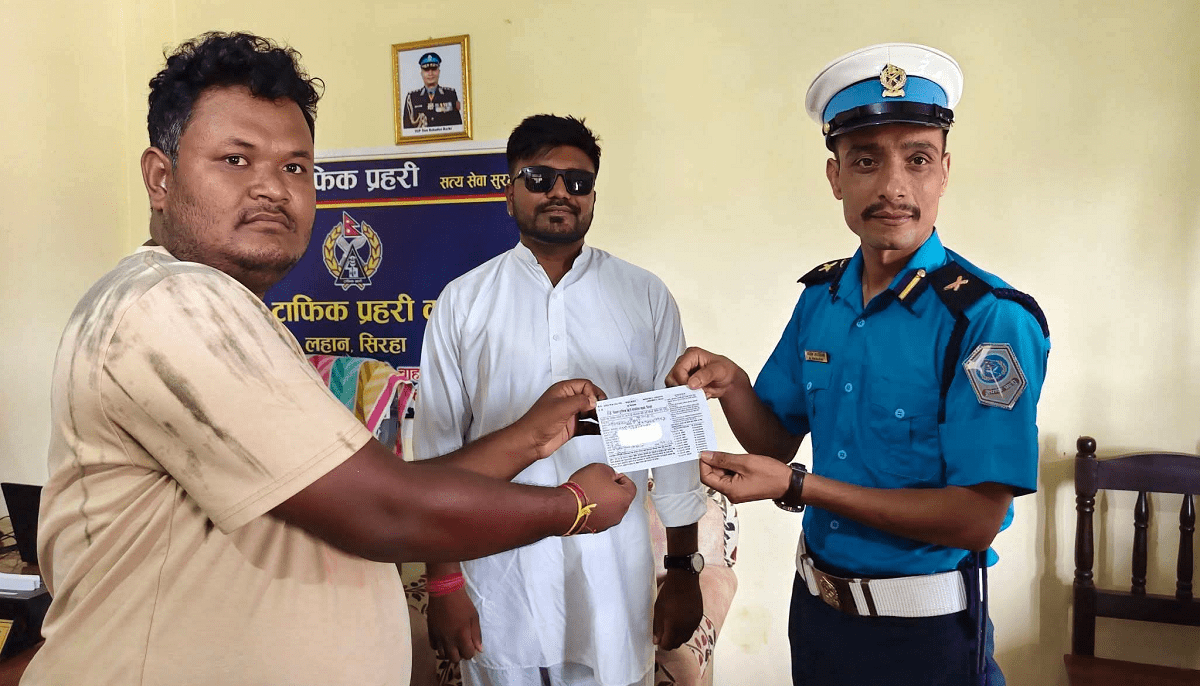
Meanwhile, the government, which files cases against leaders and businessmen of other parties without sufficient evidence, has seen some individuals released by court order due to its inability to gather necessary evidence. The government's handling of the self-immolation case of Ganesh BK of Mugu was criticized as being flawed.< /p>
Similarly, critics of the government are saying that the government's speed and direction have been braked due to its rebellious nature, such as placing suspicious vehicles at the gates of media houses. Not only that, but the issue of the government failing to properly manage the unorganized squatters of the Kathmandu Valley for months after removing them from their settlements without any preparation has been interpreted by some MPs from the ruling party and critics as immature actions of the Balen government.< /p>
It has not been long since the public entrusted the reins of Singha Durbar to the Rastriya Swatantra Party (RSP) with hope and trust in alternative politics. The RSP, which came to power with a comfortable majority, sounding the 'bell of change', is now feeling that the sound of that bell is fading within a short period.< /p>
As the government backs down from one decision after another, news has been continuously surfacing about a lack of coordination between the government and the party, and friction between the party chairman, prime minister, and ministers. Although the government and the RSP appear strong from the outside, internal party conflicts have become a topic of discussion both on the streets and in parliament.< /p>
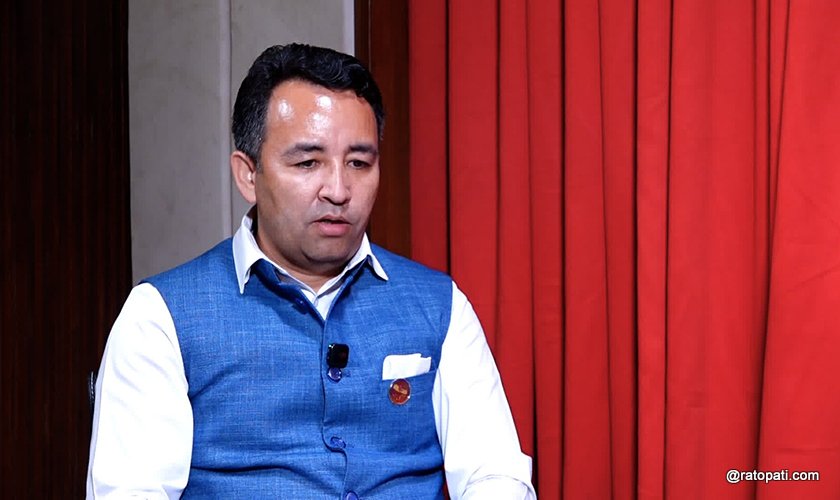
Specifically, the ideological and stylistic clash between Prime Minister and senior party leader Balen Shah and senior vice-president Dr. Swarnim Wagle regarding the government's operating methods and priorities has raised many questions about the government's lifespan and credibility.< /p>
Amidst this, informal conversations between Chairman Rabi Lamichhane and Prime Minister Balen Shah, who is also a senior leader, and resort dialogues between Chairman and Vice-Chairman Dr. Swarnim Wagle, have further fueled suspicions that a major earthquake might be about to hit the RSP.< /p>
Just 'Exaggerated Rumors'?
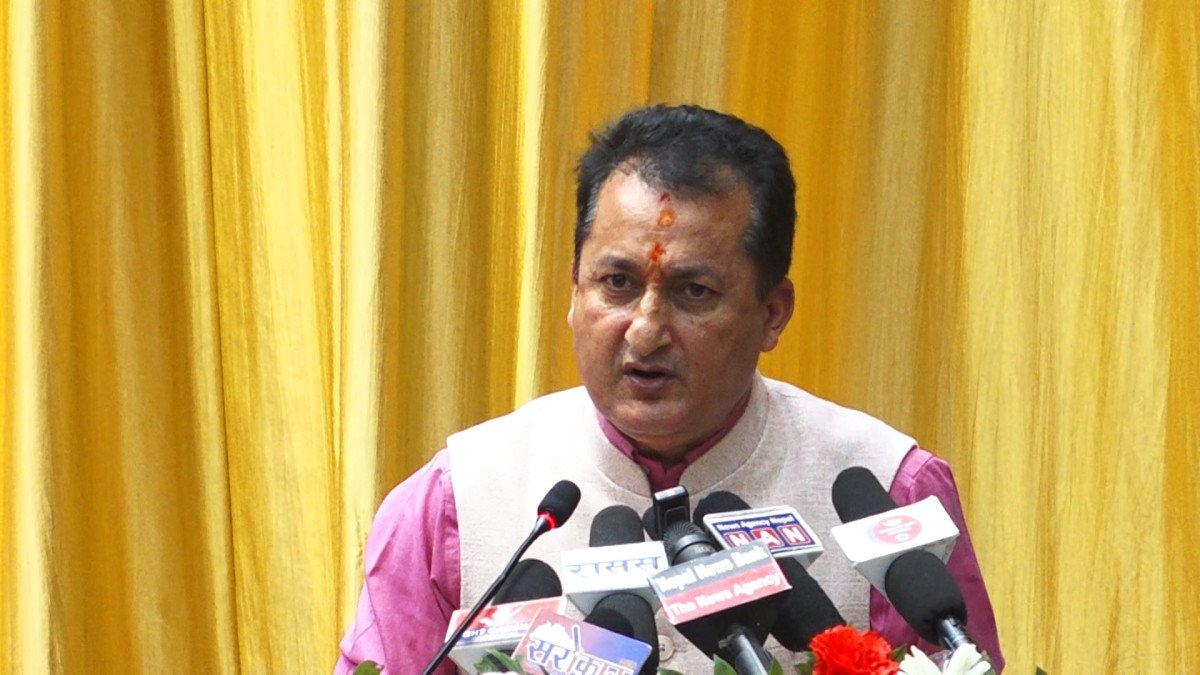
While discussions about internal conflicts regarding the government's performance are ongoing, RSP leaders say that most of the issues reported in the public media should be understood as exaggerated rumors. Ganesh Parajuli, Deputy Leader of the RSP Parliamentary Party, expresses confidence that while some aspects of the government's working style may be questioned, they will move forward by correcting them.< /p>
'Decisions must be mature. After making hasty decisions, one must think about the mistakes that arise from them,' Parajuli said, hinting at the issues publicly linked to the government and the party, 'When we make mistakes, the public watches and evaluates. It is not appropriate to give them such space.'< /p>
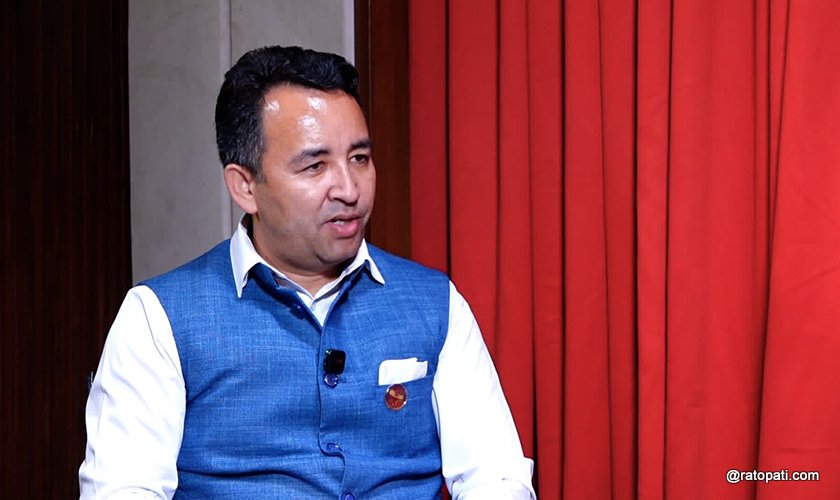
However, he claimed that there is no conflict between the party and the government. Arguing that conflict within a party is natural, he clarified that conclusions cannot be reached without conflict and discussion. Rather, he said, such conflicts should be understood as positive and working towards positive outcomes.< /p>
Parajuli claimed that such conflicts are not for disintegration but for constructive and creative purposes, involving and having always involved dialogue.< /p>
Party leader Lima Adhikari also calls the rumors circulating about the government and the party 'exaggerated'. 'Recently, there have been reports in the media and social media about major friction between the party and the government, and the Prime Minister wanting to change ministers. Those discussions are just scaremongering,' Adhikari said, 'There has been no formal discussion about changing ministers in the party's official mechanism so far.'< /p>
She disagreed with the criticism regarding the government's performance in its first 100 days. She stated that the government led by Balen should be understood as having received historic public mandate since 2015. 'It is not possible to completely reform a system of administration that has been in disarray for years and whose foundation has been shaken within just 100 days,' Adhikari said, 'We understand the public's eagerness and expectations for delivery, but radical change cannot happen overnight.'< /p>

However, Adhikari mentioned that the Prime Minister has the constitutional right to change ministers if their performance is unsatisfactory, and this should be seen as a normal political process.< /p>
Adhikari also dismissed the suspicions raised particularly regarding the relationship between the Prime Minister and the Finance Minister. She interpreted the Prime Minister meeting businessmen without the Finance Minister as a facet of the Prime Minister's working style and proactiveness, rather than mutual distrust. 'The Prime Minister and the Finance Minister have excellent tuning and dialogue. The Prime Minister's own proactiveness in listening to problems from various sectors, in line with the expectations of the new generation and the current political change, should be viewed positively,' Adhikari said.< /p>
Weakness or Responsibility Towards Citizens?
Regarding the withdrawal of some government decisions (e.g., the tax issue and other administrative decisions), leader Adhikari claimed that this should be understood not as a weakness of the government but as its responsibility towards the citizens.< /p>
While acknowledging that some mistakes can occur during the process of work, she said that understanding the wishes and needs of the citizens and correcting mistakes is a beautiful aspect of a democratic government. She believes that as the RSP is a party that came with the mandate of the new generation and the eagerness of 'Gen Z', its working style will be different from that of traditional leadership and will be people-oriented.< /p>
Asserting that all members of the party are committed to the party's rules, regulations, and election manifesto, she claimed that there is no misunderstanding within the party regarding power and government, and everyone is united in solving the problems of the citizens.< /p>
Despite the claims by Parajuli and Adhikari, another central committee member of the RSP admitted that the public's satisfaction with the government's performance cannot be denied. 'There have been some weaknesses in the work. There have also been good things. Both aspects must be considered,' the central committee member said, 'Whether it is about changing ministers or doing anything to put the Balen government in difficulty, the entire leadership is united.'< /p>
While saying this, the leader added that if some ministers are incapable of working within the first 100 days, the Prime Minister has the right to change or remove them, and the party will not interfere much in that regard.< /p>
'If someone cannot work, it is natural to change one or two ministers,' he said, 'But political appointments, including ambassadorial appointments, must be transparent. Suggestions from the perspective of managing squatters cannot be ignored.'< /p>
According to him, the party is preparing to create a guideline soon to bring uniformity to the government's working style. 'A guideline will be created, and work will be done to move forward in a clear direction,' he said, 'A clear guideline will be formed to seriously review the government's path and the citizens' frustrations and address them, as well as for long-term strategies.'< /p>
Political analyst Bhim Bhurtel claims that the Rastriya Swatantra Party is not a political party at all. 'It can be understood as a train station, where a train arrived and passengers with different destinations boarded it. Some of those boarding have nearby destinations, and some have destinations far away. This is not a force driven by a specific political ideology, a concrete program, a political philosophy, or an economic philosophy,' he said.< /p>
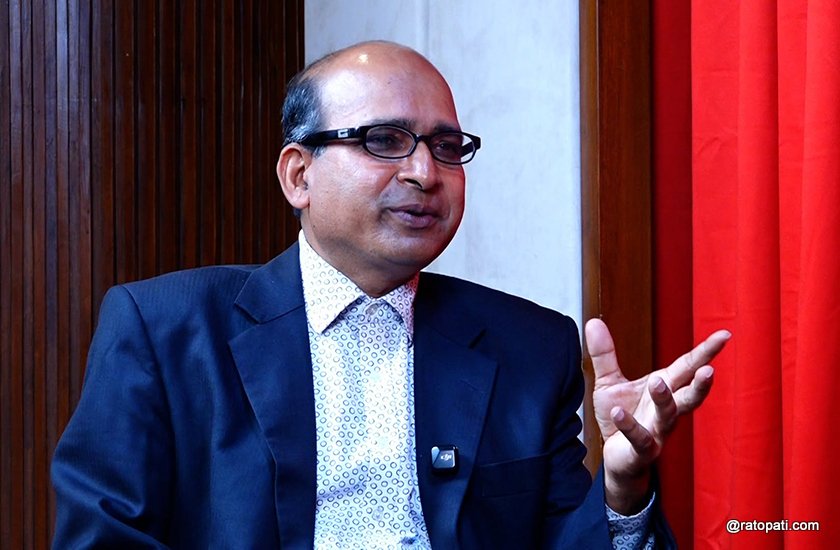
He argues that although the RSP went to the elections as a party, gained public mandate, and formed a government with a single majority, its internal structure is very complex. 'There is a mixture of people with far-leftist ideologies like the Maoists and far-rightist ideologies like Swarnim Wagle here,' he said, 'Initially, when the water was muddy, everyone mixed together, but after coming to power, as the situation began to clear, it became apparent who was where and with what interests.'< /p>
Conflict of 'Action' vs. 'Vision'
In informal conversations with about half a dozen RSP leaders, Ratopati found that the main crux of the current conflict within the RSP lies in the working style. Balen Shah, who made a leap from being the Mayor of Kathmandu to national politics, is someone who seeks immediate results. He advocates for breaking the old style of bureaucracy and going directly into 'action'.< /p>
According to them, some of Balen Shah's aggressive decisions are met with disagreement from some within the party (supporters of Chairman Lamichhane), who consider them 'immature and likely to create legal complications'. For this reason, critics interpret that there has been a lack of coordination between Prime Minister Shah and Finance Minister Wagle on important issues, or that the Prime Minister has bypassed the Finance Minister.< /p>
There is a large group of Balen Shah's supporters within the party, who see him as a 'crisis solver'. On the other hand, Chairman Lamichhane and Finance Minister Dr. Wagle are considered leaders who understand politics better than Shah. This faction has a strong hold within the party.< /p>
Due to the two factions within the party, even ministers seem to be confused about whose advice to prioritize during government operations. Some ministers want to follow Balen's 'populist' path, while others seem to advocate for the 'system' reform path of Chairman and Finance Minister Wagle. This naturally leads to a perceived lack of coordination between ministries.< /p>
Political analyst Bhurtel says that the 'whisper sniper' tendency is dominant in current politics. 'This is a style of running a government with inexperienced, new people but with excessive confidence,' he said, 'This style, which is prevalent within the RSP, has not been able to grasp the correct way of governance. This is also the reason for the growing dissatisfaction within the party.'< /p>
Many RSP leaders admit that the gap between the promises made by the RSP in the elections and the current government performance has not been bridged. 'We were looking for an alternative to the old parties, but seeing the same old factionalism and struggle for positions in the new one, shouldn't we be disappointed?' questioned an RSP worker, 'Despite having a comfortable majority, isn't it detrimental not only to the RSP but also to the alternative politics of the new generation that the government has become defensive due to its own internal conflicts?'< /p>
This specific news has been automatically translated by AI. As a result, there may be some inaccuracies or language errors.