
Supreme Court Justice Calls for Dedicated Structure for Elderly Care

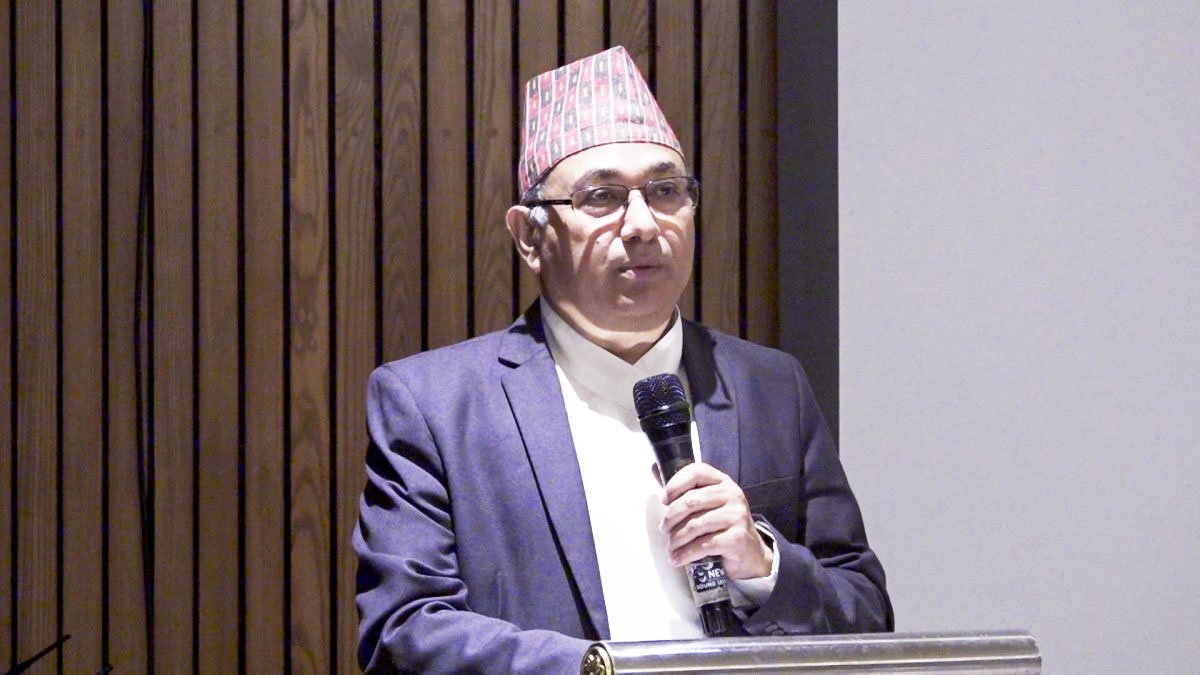
Kathmandu. Supreme Court Justice Hari Phuyal has pointed out the need for the government to create a separate structure for the care and rights of senior citizens.
Addressing a conference on senior citizens in Kathmandu, he stated that legal and constitutional provisions alone are not sufficient. He emphasized the necessity of establishing a concrete structural arrangement with a clear government policy and program, budget, manpower, and monitoring.
He stressed that the state needs to transform its traditional care system into a modern and integrated one, considering the rapid demographic changes occurring in Nepal. Presenting data showing that the proportion of senior citizens, which was 5.7 percent of the total population in 2048 BS, increased to 10.21 percent in the 2078 BS census, Justice Phuyal noted that as the number of senior citizens grows with the changing nature of society, the state's responsibilities and policies must also evolve.
Citing examples of global arrangements for senior citizens, he clarified that there is no reason to be dissatisfied with the constitutional and legal provisions made by Nepal. He stressed the need to ensure a separate responsible body and budget for the effective implementation of existing legal provisions. He stated that everyone's attention should be focused on making rights visible in practice, not just on paper.
At the program, Justice Phuyal said that our society only has traditional ways of caring for senior citizens. 'A more systematic, world-class care system has not yet been developed through collective government efforts,' he said. 'Economic, social, and cultural rights are not enough just by being written in law; they require budget, manpower, effective implementation, and a monitoring body to be realized.'
He argued that people should not always have to go to the Supreme Court or higher courts for the implementation of rights, and there should be an accessible grievance hearing mechanism at the local level. 'Just as there are special policies and arrangements for children and women, it is necessary to look at the growing elderly population from the same perspective when creating new policies or amending laws,' he said. 'Senior citizens are not a burden to society; they are living history, a treasure.'
Emphasizing that they should have a safe place in a democratic society, he added, 'Their contribution to society must be respected not only by the family but also by the state. Senior citizens are not all the same.' He stated that different protection systems should be created according to the needs of sexual and gender minorities, single individuals, widows, or those abandoned by their families.
He mentioned that although we are constitutionally and legally aware, structural policy development is necessary. 'We are gradually moving towards a semi-industrial society where people are busy with work,' he said. 'This affects both rural and urban areas. This impact is also on the elderly population.' He mentioned the need to build shelters with health facilities and care in specific locations and expressed confidence that the United Nations would make necessary arrangements in the convention after studying all these matters.
He noted that the Supreme Court has established through various judgments that senior citizens are not a burden to society but living assets carrying history and knowledge. As urbanization, migration, and foreign employment are pushing Nepali society towards semi-industrialization, senior citizens are forced to face loneliness and lack of care, hence the state must provide special health facilities, caregivers, and shelters for them, he emphasized.
Furthermore, he stated that targeted protection systems and national policies should be formulated to address the different needs of senior citizens who are sexual and gender minorities, single, widowed, abandoned by family, or helpless.
Nepal's Constitution, Article 41, guarantees the rights of senior citizens as fundamental rights. The Social Security Act 2075, the Senior Citizens Act 2063, and the Local Level Operation Act also provide for the care, security, and rights of senior citizens.
As the United Nations is in the process of creating a separate convention on the rights of senior citizens, the UN Office of the High Commissioner for Human Rights, in collaboration with the National Network of Elderly Women in Nepal 'Vidushi' and Maya Ko Pahichan, organized a conference with various stakeholders to gather suggestions on issues of senior citizens that should not be missed in the convention. Representatives from various organizations working in the field of senior citizens and human rights activists participated in the three-day conference.
This specific news has been automatically translated by AI. As a result, there may be some inaccuracies or language errors.
_Op5LNdEvfb.jpg)



_dnA2Mt3ayJ.jpg)