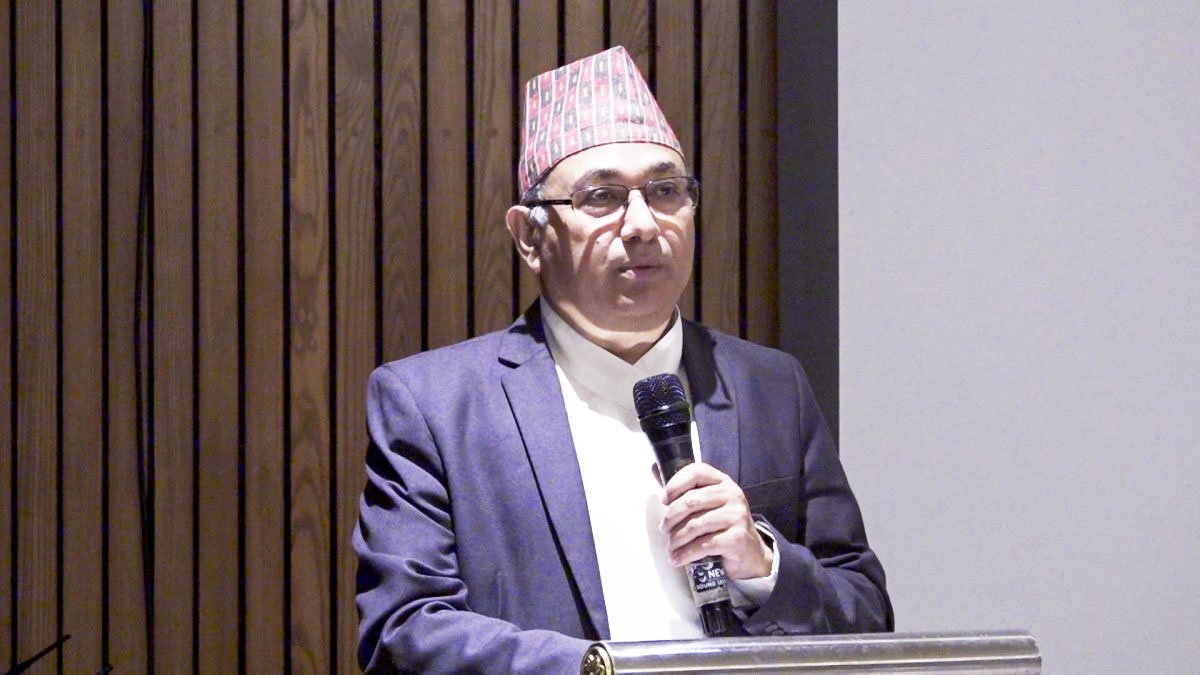
Nepali Congress Faces Critical Juncture Amidst Internal Strife

_dnA2Mt3ayJ.jpg)
Kathmandu. The Nepali Congress, standing on the ideological and organizational foundation of BP Koirala and Girija Prasad Koirala since the 2007 revolution up to the 2062/63 People's Movement, has reached a critical juncture in its history.
Although a decision has been made to hold the 15th General Convention in Mangsir, the internal conflict that escalated after the special convention has not been resolved even after six months. The distance between President Gagan Kumar Thapa, who came to leadership after the second special convention, and the establishment-leaning faction (Khadka/Koirala group) is widening, creating a perception that the party is heading towards formal division.
After the establishment-leaning faction approached the Supreme Court and the Election Commission following the special convention, their demands have not been realized, and they are now strategizing towards the option of forming a new party through a national gathering. The dissenting faction believes that despite continuous efforts and flexibility for party unity, the establishment side has not made any meaningful initiative. According to political analysts, this period before the 15th General Convention has become a major test for President Thapa, who came to leadership with the mandate of the special convention and the slogan of transformation, to demonstrate political maturity and guardianship.
The core of the dispute lies in the working style of the leadership after the special convention, the update process, and the direction of the 15th General Convention. The establishment-leaning faction has accused President Thapa of trying to run the party unilaterally, sidelining senior party leaders. Party worker Mahendrakumari Limbu states that President Thapa has sidelined leaders carrying BP's principles and history and is only following the Gen-Z generation.
Limbu, the daughter of a warrior who left the British Army in 2007 and joined the movement with BP, commented that Congress is neither anyone's property nor private asset. She questioned, "Is it acceptable to sideline senior leaders just because you have strength?" Adding, "Leaders should have been respected at the special convention." She further said, "We have asked both sides to reconcile, but the main responsibility to reconcile lies with party President Gagan Thapa, who emerged from the special convention. It is his job to unite the workers who paid 700 for the 15th General Convention and to take the leaders along with respect."
According to former General Convention representative Balram Khatiwada, the establishment-leaning faction has been extremely flexible for unity, but the current leadership has avoided dialogue. He alleges that top leaders, including founding leaders Sher Bahadur Deuba, Shekhar Koirala, and Shashank Koirala, are in favor of keeping the party united, but President Gagan Thapa and Vice President Bishwaprakash Sharma have ignored this.
"We, the people who favor regular conventions, have repeatedly urged for dialogue, saying the party must unite. The responsibility to unite lies with the leadership," Khatiwada accused, adding, "They are running away from dialogue and are taking the party towards division unilaterally. It has not split yet, but if it splits, the President must take full responsibility."
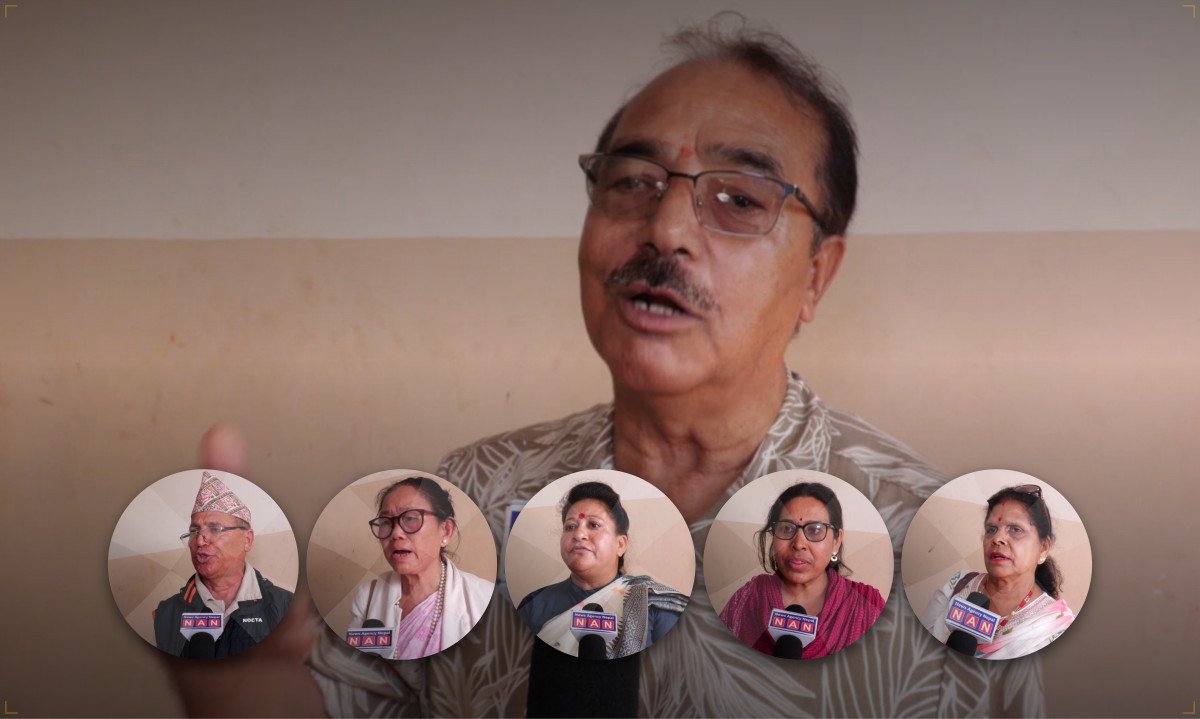
After the special convention, ideological distance has also increased between the younger and older generations within Congress. Bagmati Province member Kalpana Khadka argues that the party cannot be run solely by the excitement, anger, and impulse of the youth. "Yesterday, we all voted for Gagan Thapa to make him General Secretary and President. But it is not acceptable to sideline the older generation in the name of youth," she said. "Nepal's population does not consist only of youth; Congress is an inclusive form of the youth's enthusiasm and the older generation's experience."
Another leader and former Kathmandu District President, Bhimsen Das Pradhan, believes that if Gagan Thapa takes the initiative to unite the party, he will become the universally accepted leader. He analyzes that although there is a possibility of becoming the leading party in the upcoming local elections, division will cause great damage.
"The party must be united through Gaganji's initiative. Gagan Thapa will benefit the most if the party unites," Pradhan said. "He will be everyone's leader, otherwise, he will only be the leader of the special convention. If we do not go united, the condition of the Nepali Congress will be like India's Congress."
Party workers Yamuna Khadka Bishwakarma and Bindadevi Aryal say that if the Congress splits, political instability will arise in the country. Mentioning the instance of Girija Prasad Koirala, at the age of 80, bringing the 2052 to 2062/63 movement to a conclusion, Aryal stated that leadership capability and ideology are more important than age. She said, "Age does not hinder work. Only if both sides go united in the 15th General Convention will good results be achieved and Congress be formed."
Observing the increasing polarization within the party and the dissatisfaction spread to the grassroots level, the Nepali Congress appears to be at the most difficult juncture in its history. On one hand, there is the challenge of giving new momentum to the party through the 15th General Convention, and on the other hand, there is the responsibility of saving the historically inherited party from disintegration.
This specific news has been automatically translated by AI. As a result, there may be some inaccuracies or language errors.
_Op5LNdEvfb.jpg)