US Faces New Military Challenge as Houthis Threaten Red Sea Blockade
Washington. The US faces a new military challenge as Yemen-based Iran-backed Houthi rebels have warned of a naval blockade against Saudi Arabia in the Red Sea.
According to US officials, if the Houthis implement their warning, it will further spread the US-Iran war and put great pressure on US military resources. Houthi rebels announced on Monday that they will not allow any ship to load or unload oil at Saudi Arabian ports.
It is analyzed that if such a situation arises, Saudi Arabia's oil exports will be affected and about seven percent of the world's additional oil supply could be disrupted.
Saudi Arabia has not formally sought military assistance from the US so far. However, US President Donald Trump has indicated that the US is ready to intervene if the Houthis block international waterways in the Red Sea.
Speaking to reporters on Tuesday, Trump said, 'If this happens, we will deal with it. We have dealt with the Houthis like this before.' However, according to US defense and security experts, the real situation is not as easy as Trump says.
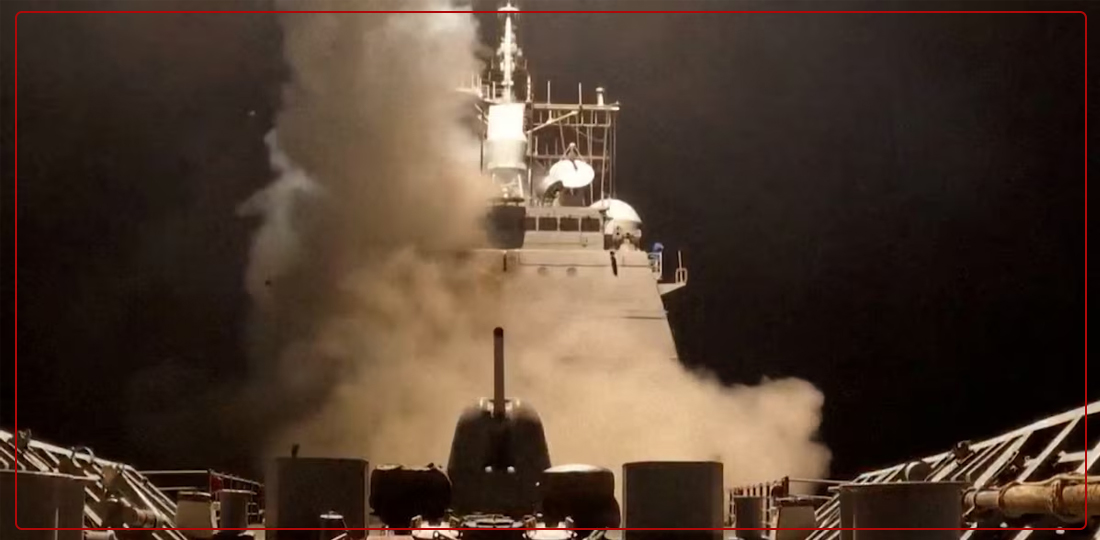
Currently, the US military is active in the military campaign against Iran on one hand, and on the other hand, it is maintaining a blockade on Iranian ports in the Persian Gulf region. If a direct military confrontation with the Houthis also begins, the US will have to operate on two active war fronts simultaneously. According to Jason Campbell, a former senior official at the US Department of Defense (Pentagon), this will divide America's military capability.
'Although the US has sufficient military resources, operating on two active war fronts simultaneously is very challenging,' he said. According to Campbell, to take action against the Houthis in the Red Sea region, the US may have to move its warships deployed in the Persian Gulf closer to Yemen. If that happens, the campaign against Iran could also be affected.
Why are the Houthis challenging?
Houthi rebels have been at war with the Saudi-led coalition for the past decade. Despite extensive airstrikes for a long time, they have not been defeated. According to former US Deputy Assistant Secretary of Defense Michael Mulroy, the Houthis have repeatedly demonstrated their ability to disrupt the movement of ships in the Red Sea and Bab al-Mandeb Strait in the past.
'The Houthis not only have the capability to disrupt maritime traffic, but also the will to do so,' he said.
During the Joe Biden administration, the US conducted airstrikes on Houthi targets to ensure the security of commercial ships in the Red Sea. Subsequently, the Trump administration also launched a more extensive bombing campaign after the Houthis began attacking US warships and commercial vessels. However, according to security experts, none of these campaigns were able to completely destroy the Houthis' military capability.
Last year, the US campaign, which lasted for two months, involved two aircraft carriers, other warships, fighter jets, and B-2 strategic bombers. This resulted in a significant expenditure of US military power.
According to security experts, although the US has the world's largest defense budget, the continuous wars have put pressure on the stock of some important weapons and air defense systems.
If the US Navy and Air Force have to use a large number of missiles again to stop Houthi drones and missiles, it could also affect the supply of weapons needed for the war with Iran. The Pentagon has not given any official reaction on this matter.
According to a US official, the US military is currently extremely busy. Some warships have been forced to remain deployed at sea for much longer periods than usual. Warships have to be returned to port for maintenance from time to time. Officials said that the mental and physical condition of the soldiers is also affected by staying at sea for a long time. Currently, more than 20 US warships and hundreds of military aircraft are deployed in the Middle East region. Due to the war with Iran, more troops and military equipment are also being sent to the region.
However, according to some analysts, if the war continues for a long time, the Houthi rebels will also face great challenges. According to Mark Cancian, a defense analyst and retired US Marine officer at the Center for Strategic and International Studies (CSIS), due to the US blockade on Iran, it will be difficult for the Houthis to regularly supply weapons and other military materials.
He said that even if the US blockade is not completely successful, it is sufficiently effective. Therefore, it may be difficult for the Houthis to conduct continuous military operations for a long time.
If the Houthis stop Saudi oil transport in the Red Sea, it will have a major impact on the global energy market. The Bab al-Mandeb Strait is one of the world's most important maritime trade routes. Experts have warned that if disruptions occur here, while the Strait of Hormuz is almost completely blocked due to the war with Iran, oil transportation will be delayed, shipping costs will increase, and the risk of crude oil and fuel prices rising further in the international market.
This specific news has been automatically translated by AI. As a result, there may be some inaccuracies or language errors.

_4uZ7aCRYrO.webp)