Ministry of Finance Shifts Focus from Micro-management to Policy and Fiscal Discipline

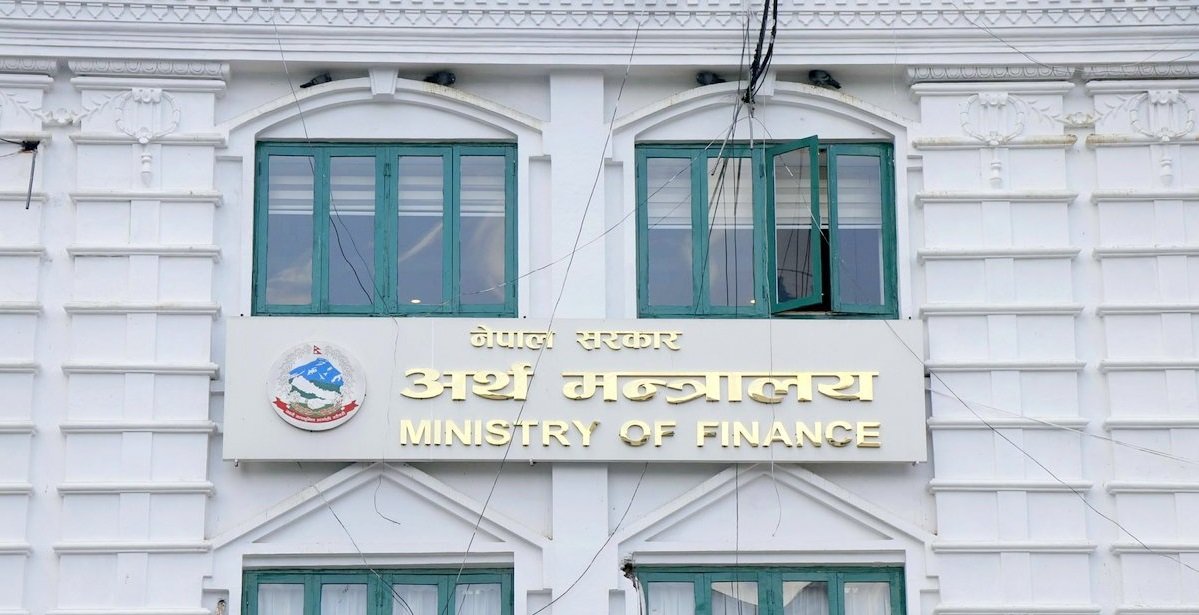
Kathmandu. The Ministry of Finance has stepped back from the practice of micro-management it was doing as a super-regulatory body in other bodies. The Ministry of Finance has made a significant change in its past working style in the context of the implementation of the federal government's budget.
A comparative study of the guidelines for the implementation of the budgets for fiscal years 2082/83 and 2083/84 clearly shows that the Ministry of Finance is trying to focus only on policy and overall fiscal discipline by abandoning intervention in retail and minor issues.
In the past, even after the budget was allocated, the Ministry of Finance used to impose strict controls on expenditure authority, reallocation, program revision, and even general administrative expenses. As a result, capital expenditure was affected, development construction work was delayed, and ministries could not work effectively, leading to the blame being placed on the Ministry of Finance.
However, through the budget implementation guideline for the current fiscal year 2083/84, the Ministry of Finance has opened the way for other ministries, departments, and project chiefs to fully exercise the authority granted by the Financial Procedures and Fiscal Responsibility Act.
Size of Guidelines Reduced, Authority of Ministries Increased
To understand how much micro-management the Ministry of Finance used to do, one only needs to look at the size of the budget implementation guideline for the previous fiscal year 2082/83. The ministry had issued a very detailed and controlling guideline this year, spanning 18 pages and covering 95 different points.
The Ministry of Finance has stipulated that budget can only be cut and reallocated for 12 mandatory liability headings such as employee salaries, official salaries, uniforms, food, medical treatment, dearness allowance, pension, and social security.
In that guideline, the Ministry of Finance had placed strict conditions on minor issues ranging from fuel, stationery, seminars, furniture purchases to paying office rent. However, within a year, the Ministry of Finance has changed its strategy.
The guideline issued for fiscal year 2083/84 is contained in just 7 pages, and the number of points has been reduced from 95 to just 37.
This means that the Ministry of Finance has delegated the authority for minor budget management and reallocation to the accounting responsible officers and departmental heads of the concerned ministries, allowing them to do so within the purview of the prevailing laws.
Looser Policy on Reallocation and Program Revision
The biggest problems in budget implementation have always been with reallocation and program revision. The guideline for fiscal year 2082/83 had made reallocation very strict and cumbersome.
Strict conditions for reallocation were placed in points 52 to 64 of the previous year's guideline. Not only that, but the consent of the Ministry of Finance was made mandatory for reallocating more than 28 expenditure headings such as fuel, vehicle maintenance, machinery tools, stationery, books, seminars, travel, and miscellaneous expenses.
This created a situation where an office had to knock on the door of the Ministry of Finance in Singha Durbar even to make minor adjustments to its internal needs with a small amount of money.
However, in the guideline for the current fiscal year, the Ministry of Finance has relaxed this control. In point number 17 of the new guideline, the authority to reallocate between expenditure headings has been given to the accounting responsible officers of the concerned ministry.
The Ministry of Finance has stipulated that budget can only be cut and reallocated for 12 mandatory liability headings such as employee salaries, official salaries, uniforms, food, medical treatment, dearness allowance, pension, and social security.
Apart from these, ministries will be able to reallocate and revise programs for development construction, capital expenditure, and other administrative expenses based on their needs and justification.
Emphasis on Policy Discipline and Risk Management
The previous year's guideline had given long directives on the use of domestic goods in public bodies, organization and management surveys, management of surplus employees, settlement of audit irregularities, building construction standards, and land acquisition.
These matters are themselves clear in the prevailing laws, the Procurement Act, and other directives. In 2082/83, the Ministry of Finance had tried to position itself as a supervisor of all bodies by repeating all these matters in the budget guideline.
The ministry has set a goal to qualitatively improve capital expenditure by developing a system for assessing risks in large infrastructure construction.
In this year's guideline, those unnecessary and repetitive directives have been removed. The Ministry of Finance has further strengthened the system where the Treasury and Comptroller Office directly releases the budget based on the programs entered into the budget information system, considering them as final.
The current guideline prioritizes the assessment and mitigation of overall economic risks rather than retail control.
Point number 36 of the guideline clearly states that measures should be adopted to minimize financial risks that may arise during the implementation of projects and programs.
Similarly, the ministry has set a goal to qualitatively improve capital expenditure by developing a system for assessing risks in large infrastructure construction.
Strategy to Increase Capital Expenditure and Reduce Hassle
The biggest problem in Nepal's budget system is the failure to spend capital expenditure on time. The cumbersome approval process of the Ministry of Finance has also been considered a major factor behind the tendency to spend only at the end of the fiscal year.
Ministries used to have to wait for months to get approval for multi-year contracts, ensure sources, and manage counterpart funds for foreign-aided projects.
Keeping this in mind, in the new guideline, the authority to reallocate funds allocated under the capital expenditure heading within the same grant code has been given to the accounting responsible officer of the concerned body.
Similarly, although the budget will be withheld until the foreign loan or grant agreement becomes effective, in the case of a pre-effective financial agreement, direct payment can be made with the consent of the Ministry of Finance.
By stipulating that additional releases cannot be requested during the first quarter, except in cases of disaster, ministries are compelled to work within the initially allocated budget, which will reduce unnecessary pressure during the middle of the fiscal year.
Full Reliance on the Fiscal Responsibility Act
Another important message conveyed by the Ministry of Finance through the 2083/84 guideline is the full adherence to the rule of law. The Appropriation Act, 2083, and the Financial Procedures and Fiscal Responsibility Act, 2076, and its regulations, 2077, have clarified the responsibilities and authorities of each body in the context of budget implementation.
In previous years, the Ministry of Finance used to try to keep the provisions of the Act under its own discretion in a roundabout way. However, at the beginning of the current guideline, it has been made concise by requesting compliance with prevailing laws and regulations for budget release, expenditure, and control, including fiscal responsibility for overall fiscal discipline.
Now, ministries will only need to obtain prior approval from the Ministry of Finance when proposing any new programs or undertaking work that creates additional financial liabilities. For regular activities and work included in the approved annual program for which budget has been allocated, there is no need to go to the Ministry of Finance to create procedures, directives, or standards.
This specific news has been automatically translated by AI. As a result, there may be some inaccuracies or language errors.



_mKzzIyOWNL.jpg)
_kE6hmvuewe.jpg)