Iran Faces Internal Power Struggle Amidst Ceasefire Pressure
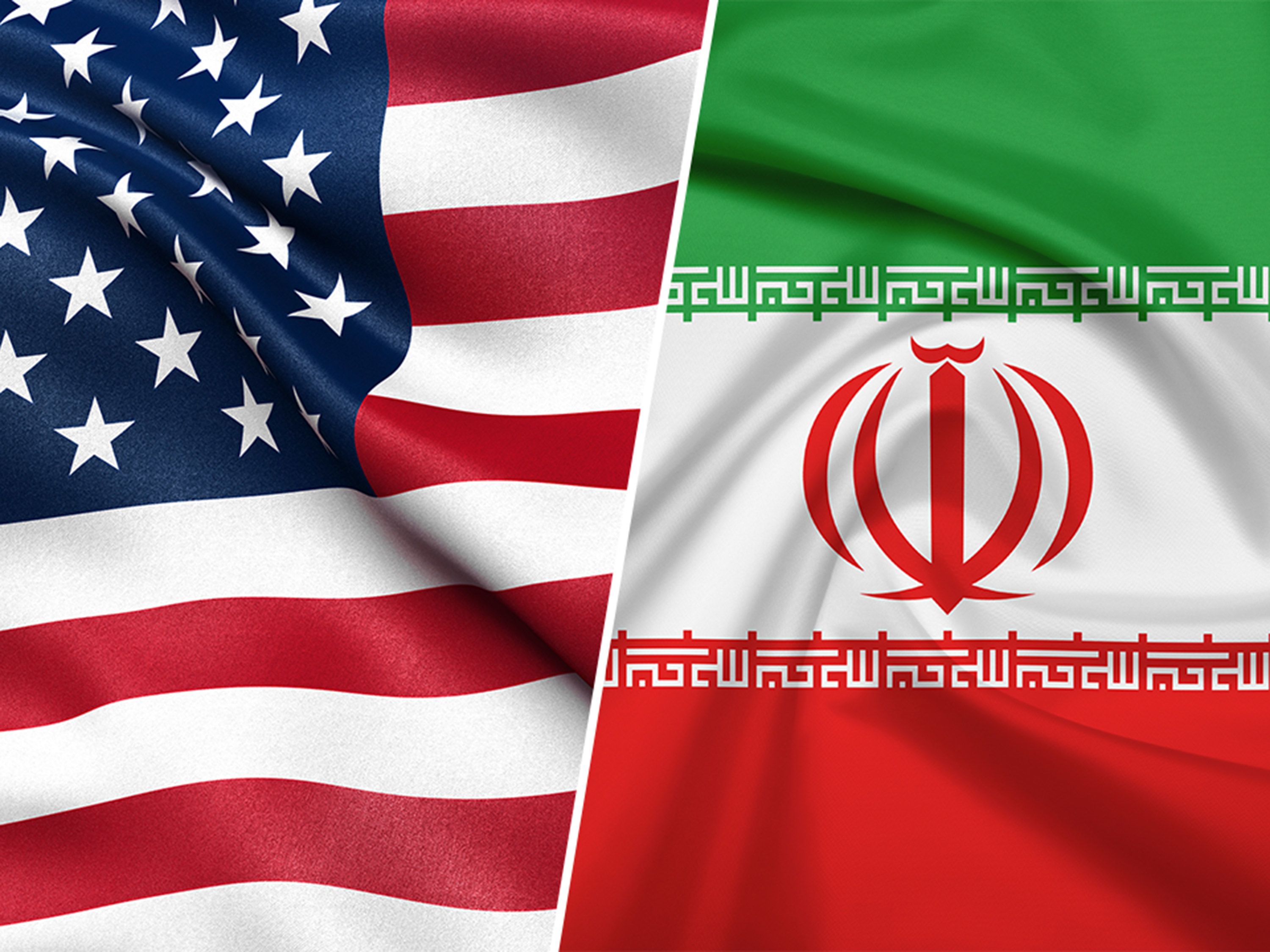
Tehran. As the ceasefire between America and Iran is under pressure, the political power struggle within Iran is intensifying.
Following the death of Supreme Leader Ali Khamenei, the differences between the hardline faction and the government over the country's leadership and foreign policy have openly surfaced. Hardliners accuse President Masoud Pezeshkian, influential parliamentary leader Mohammad Bagher Ghalibaf, and Foreign Minister Abbas Araghchi of attempting a 'soft coup' by abandoning the core principles of the Islamic Republic.
These disputes were publicly visible during the funeral of Ali Khamenei held in Tehran last week. While President Pezeshkian was participating in the Supreme Leader's funeral procession, some hardline supporters chanted 'Death to the compromisers!' instead of offering condolences. During the same event, Foreign Minister Abbas Araghchi was also pelted with stones. He was forced to leave the venue after the crowd chanted slogans calling him a 'traitor who sold the country'.
Araghchi had negotiated a ceasefire with the US administration and secured the removal of some economic sanctions. For this reason, he is currently the main target of hardliners. They claim that any agreement with America and the West betrays the values of the Islamic Revolution and the political legacy of Ali Khamenei. Although his son Mojtaba Khamenei has taken over the responsibility of Supreme Leader after Ali Khamenei's death, he has been almost invisible publicly. It is speculated that he is in hiding due to security risks or health conditions. Using this absence as a basis, hardliners accuse the visible government leadership of trying to seize power.
Hardline MP Mahmoud Nabavian raised the question on social media platform X, 'Warning to the people of Iran: Is a coup happening in the country?' After the funeral, he made another statement announcing that the assassination of Ali Khamenei must be avenged and that they would fight until the end against the alleged coup. Due to Mojtaba Khamenei's lack of public activity, parliamentary leader Mohammad Bagher Ghalibaf, President Pezeshkian, and Foreign Minister Araghchi have become the most influential figures in post-war Iran. According to Arash Azizi, an analyst of Iranian affairs, hardliners who do not have direct access to the new Supreme Leader have focused their dissatisfaction on these leaders. According to him, they are accusing Ghalibaf and Pezeshkian of plotting to weaken Mojtaba Khamenei's authority and seize power.
Hardline supporters, who participated in large numbers at the funeral, rejected the ceasefire with America and demanded that the war be resumed to avenge Ali Khamenei's death. In their view, any agreement with America is tantamount to surrender. The ceasefire has since become even weaker. The Iranian Revolutionary Guard attacked ships in the Strait of Hormuz, prompting a counter-attack from the US. Hardliners have since increased pressure on the government to end the ceasefire immediately and take further military action against America and its allies.
Even before the war began, hardliners had issued open threats to President Pezeshkian. Religious singer Mohammad Ali Bakhshi, considered close to the security forces, warned the president in a public event, 'If the Supreme Leader's conditions are not met, we will have swords in our hands and your throat will be before us.' He also threatened to 'give the government a taste of hell.' Despite widespread criticism of such open death threats against the president, there is no public information about any legal action taken against Bakhshi.
Ghalibaf is also not immune to criticism from hardliners. As a former commander of the Revolutionary Guard, he played a leading role in crisis management during the war. Due to his political experience and connections with the security establishment, he has become one of the most influential decision-makers in post-war Iran. Hardline MP Kamran Ghasghari accused that a political coup is underway as part of a plan to weaken the role of the Supreme Leader and Parliament by making the Supreme National Security Council unusually powerful. According to him, this process is proceeding according to a plan.
However, the government also appears to be making efforts to limit hardline influence. On Tuesday, Mahmoud Nabavian was removed from Parliament's National Security Commission. Another MP who opposed the agreement with America was also removed from the commission. Nabavian, who had previously participated in the US negotiation team, later turned against the agreement. He has also faced accusations of trying to sabotage the talks by leaking the draft agreement to the media before it was finalized. He has consistently claimed that the negotiation team violated the limits set by the Supreme Leader.
Nabavian and his supporters are affiliated with 'Jebhe-ye Paydari', meaning 'Endurance Front'. This group is considered a representative of Iran's most hardline revolutionary faction. They present themselves as the true guardians of the 1979 Islamic Revolution and oppose any form of agreement with the West. According to Hamidreza Azizi, a researcher at the German Institute for Security and International Affairs, the current leadership is trying to gradually push these hardline elements out of the decision-making process. According to him, these groups are bringing the power struggle within the government openly to the surface, which is further increasing the country's instability.
Although the number of hardliners is not large, their influence remains in Parliament, the national broadcaster IRIB, and various state institutions. Former National Security Chief Saeed Jalili received more than 13 million votes in the 2024 presidential election, indicating that their political base is not yet weak. US President Donald Trump has claimed in recent months that there is a serious division within Iran's regime. However, according to analysts, despite differences within the government, the common goal of the entire leadership is to remove economic sanctions from America and the West, end the war in their favor, and maintain Iran's control over the Strait of Hormuz.
However, the continuous absence of Mojtaba Khamenei, the increasing influence of the Revolutionary Guard, and the activism of hardline supporters have made Iran's internal politics more unstable. Hardliners are still insistent on resuming the war against America and Israel. Meanwhile, former Foreign Minister and hardline leader Manouchehr Mottaki proposed in a television interview the controversial idea of attacking US regional military bases and bringing hundreds of US soldiers captured as hostages to Iran. Such statements have further increased concerns about the future of the ceasefire.
This specific news has been automatically translated by AI. As a result, there may be some inaccuracies or language errors.