Committee Chairman Criticizes Industrial Area Management

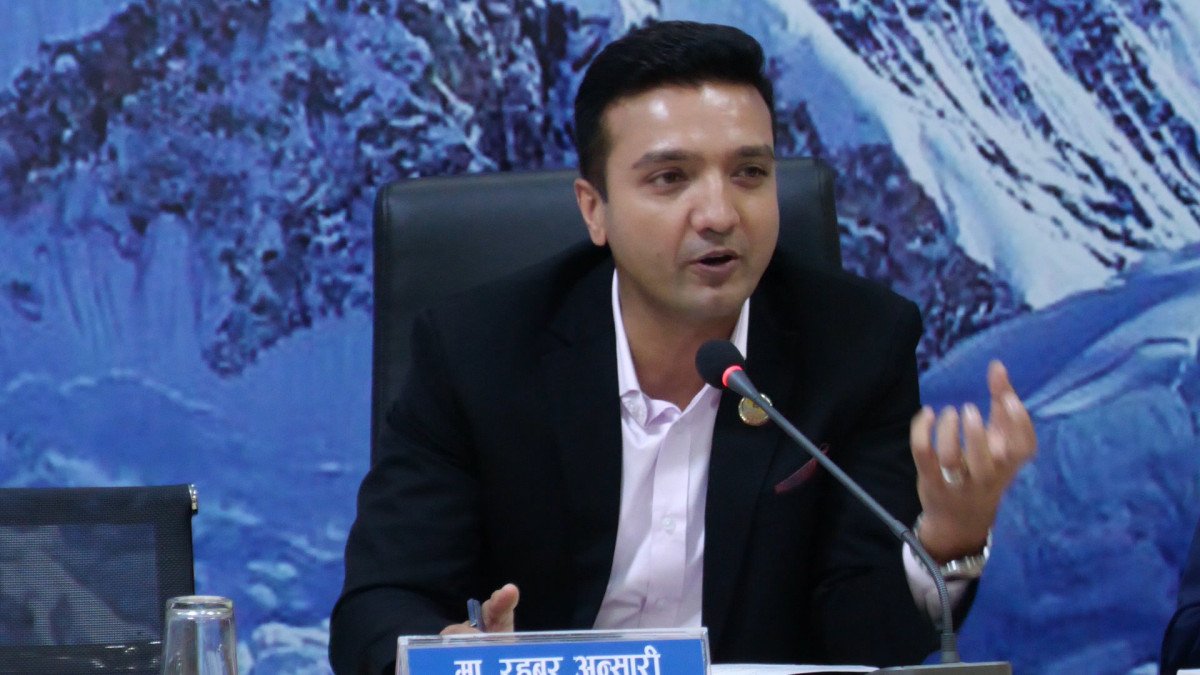
Kathmandu. Chairman of the Industry, Commerce and Labour and Consumer Interest Committee of the Federal Parliament, Rahbar Ansari, has strongly objected to the working style of the Industrial Area Management Limited. Speaking at the committee meeting on Thursday, Chairman Ansari commented that the Limited, which is a government body, appears to be more focused on the role of a real estate agent than on industrial development. Informing that he had visited and observed various industrial areas, Chairman Ansari stated that the Limited had only shown a limited number of successful industries. According to him, although the committee visited established industries like Coca-Cola, Goldstar, and Nabisco, the overall condition of the industrial areas was found to be unsatisfactory. The committee has expressed serious concern over showrooms and workshops operating within industrial areas instead of industries. The committee has determined that it is wrong for non-industrial activities to take place in areas designated for industrial purposes and to give such businesses as long as five years to remove them. Chairman Ansari emphasized the need for immediate policy intervention in such areas to create an industrial environment. 'Looking at it so far, their role feels more like land management or real estate agents rather than industrial development,' he said, criticizing the Limited, 'When I inquired with various industrialists, I heard complaints that the process of distributing land on lease within industrial areas is largely being conducted in the style of commercial brokers.' He stated that attention needs to be paid to what kind of industries should be established in the industrial areas, how to utilize the available infrastructure, and what the clear criteria should be. 'When I asked about a building being constructed in an industrial area, everyone said an industry was opening, but I already knew that a showroom was about to open there,' he added, 'We have given showrooms and workshops a period of five years, after which they will have to leave, was the answer; in my opinion, industrial areas are for operating industries, not for other commercial purposes.' He said that activities that do not align with the objectives of industries should not be allowed to continue for five years and that clear policy intervention is necessary. Chairman Ansari informed that during the observation, industrialists faced cumbersome bureaucratic hurdles in obtaining land leases, and they were not fully satisfied with the management. The committee has planned to move forward with concrete solutions rather than just discussions to resolve the problems of industrial areas. For this, a powerful subcommittee will be formed soon, and that subcommittee will submit a report for the management and policy reform of industrial areas within the stipulated time. Similarly, suggestions were also made at the meeting that industries that do not cause pollution and the information technology (IT) sector should be prioritized in the industrial areas within Kathmandu. The committee has started discussions on the possibility of working on the concept of an IT park, as skilled manpower is readily available in Kathmandu. The committee has stated that the inspections to be conducted in the coming days will be made more systematic and effective. Chairman Ansari informed that future inspections will not only be announced but will also be conducted as surprise checks, and for this, small teams will be formed and deployed to the work areas. A visit to the Patan Industrial Area has been scheduled for next week.
This specific news has been automatically translated by AI. As a result, there may be some inaccuracies or language errors.