Nepal and India Agree to Increase Electricity Import-Export Capacity

Kathmandu. An agreement has been reached between Nepal and India to increase the electricity import capacity to 1,530 megawatts and export capacity to 1,850 megawatts through cross-border transmission lines.
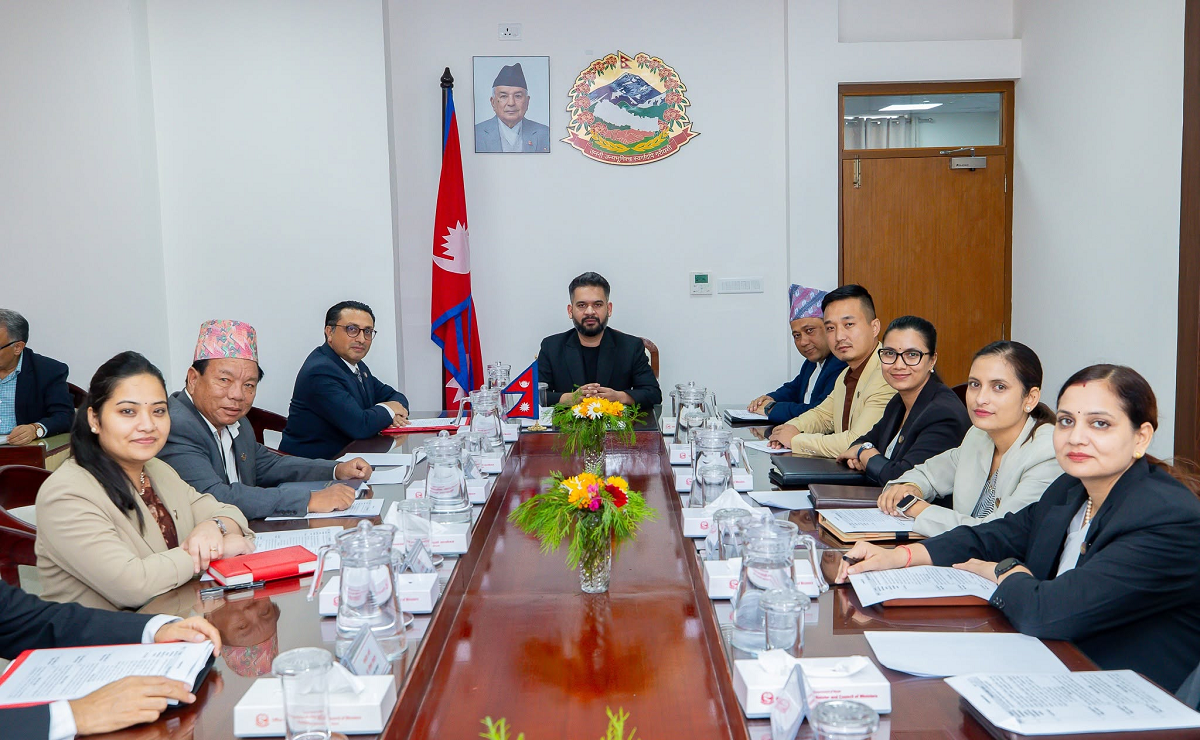
Such an agreement was reached at the 13th meeting of the Nepal-India Joint Steering Committee (JSC) at the Secretary level on energy, co-chaired by Sarita Dwadi, Secretary of the Ministry of Energy, Water Resources and Irrigation of the Government of Nepal, and Pankaj Agarwal, Secretary of the Ministry of Power of the Government of India, held in Pokhara on Wednesday.
According to the Ministry of Energy, Nepal and India have agreed to expand cross-border transmission lines and increase electricity import-export capacity. The meeting also decided to increase the joint electricity flow capacity through the Dhalkebar-Muzaffarpur transmission line and to approve the detailed project reports (DPRs) of cross-border transmission lines and move forward with their construction process.
The DPR for the 220 KV double circuit cross-border transmission line from Chameliya (Nepal) to Jouljibi (India) has been approved, with the project targeted for completion by December 2028.
Nepal and India have also agreed to increase the electricity import capacity to 1,400 megawatts and export capacity to 1,650 megawatts through the Dhalkebar-Muzaffarpur and the under-construction Dhalkebar-Sitamarhi 400 KV transmission lines.
_pu1Rij0eIj.jpg)
_eBmN5n4PW0.jpg)
Through the under-construction new Butwal-Gorakhpur cross-border transmission line, it has been agreed to import up to 130 megawatts and export up to 200 megawatts of electricity in the initial phase.
The meeting has achieved significant technical and strategic agreements to increase the electricity import capacity to 1,530 megawatts and export capacity to 1,850 megawatts.
The Dhalkebar-Muzaffarpur 400 KV transmission line, considered the main backbone of electricity trade between Nepal and India, is the lifeline of current energy trade. The meeting has made a historic decision to increase the electricity import capacity to 1,400 megawatts and export capacity to 1,650 megawatts through this transmission line and the under-construction Dhalkebar-Sitamarhi 400 KV transmission line.
Previously, only about 1,000 megawatts were traded through this transmission line, but now its capacity will be expanded (re-conductoring) using high-capacity HTLS conductors.
This creates a technical basis for transmitting more electricity through existing infrastructure. On the other hand, the meeting has also made an important interim arrangement regarding the under-construction new Butwal-Gorakhpur 400 KV cross-border transmission line.
Since the 400 KV substation on the Nepal side will only be ready by December 2027, it has been agreed to operate the line at 220 KV until then, allowing for immediate import of 130 megawatts and export of 200 megawatts. The Nepal side transmission line is targeted for completion by August 2026.
- Game Changer in Electricity Export
Minister for Energy, Water Resources and Irrigation, Biraj Bhakta Shrestha, stated that it is a significant achievement for Nepal's electricity market expansion and exports. He mentioned that another important step has been taken towards achieving the long-term goal of exporting 10,000 megawatts of electricity to India.
He said, 'It will further strengthen energy cooperation between the two countries. The meeting will accelerate the increase in electricity export capacity from Nepal to India, the construction of new cross-border transmission lines, and the development of necessary infrastructure for long-term electricity trade.'
Energy Minister Shrestha stated that an environment has been created to further expand Nepal's clean energy into the Indian market. He expressed confidence that this will significantly contribute to reducing the trade deficit, earning foreign exchange, and strengthening the national economy.
In a meeting with Minister Shrestha before the JSC meeting, Pankaj Agarwal, Secretary of the Ministry of Power of the Government of India, and Additional Foreign Secretary Munu Mahawar stated that energy cooperation between Nepal and India would be made more results-oriented.
Energy Minister Shrestha called this meeting a game-changer agreement for Nepal's energy sector. Minister Shrestha said, 'An environment has been created to further expand Nepal's clean energy into the Indian market. This will significantly contribute to reducing the trade deficit, earning foreign exchange, and strengthening the national economy. Our water resources are not just energy but are linked to human civilization and sustainable development.'
He emphasized the need for both countries to cooperate in expanding Indian investment in Nepal's hydropower sector and market expansion.
However, a former executive director of the authority stated that while the expansion of transmission line capacity is positive, the issue of approving plants for further electricity exports remains.
He said that the energy secretary-level meeting held in Pokhara between Nepal and India has made an important decision to increase the capacity of transmission lines for cross-border electricity trade. He said, 'This has further widened the door for electricity exports in the coming days. Primarily, the agreement has been reached to increase the amount of electricity that can be imported and exported through the Dhalkebar-Muzaffarpur 400 KV transmission line from 1,100 megawatts to 1,400 megawatts.'
According to him, although technically this line has the potential to transmit up to 2,000 megawatts, the limit of 1,400 megawatts has been set for now, considering system stability.
He stated that increasing the capacity of the transmission line does not automatically increase exports, and further processes are pending. 'Increasing the capacity of the line is like widening the road, but how much electricity is sent through that road depends on the separate approval of each power plant according to India's cross-border trading guidelines,' he said.
Currently, Nepal has received permission to export about 1,200 megawatts of electricity. Nepal has sought permission from India to export an additional 800 to 900 megawatts of electricity, which includes large projects like the 456 MW Upper Tamakoshi, but India has not yet given its approval.
He argues that the expanded transmission line capacity will be fully utilized only if India grants export permission for these additional projects.
The meeting also decided to move forward with more than half a dozen new transmission projects to support the long-term goal of exporting 10,000 megawatts of electricity.
- Chameliya-Jouljibi 220 KV
The detailed project report (DPR) for this double circuit transmission line, connecting the Far-Western region with Uttarakhand, India, has been approved. The project is targeted for completion by December 2028, which will facilitate the transmission of electricity from projects in the Far-West to India.
- Motihari-Nijgadh 400 KV
The DPR for the Motihari-Nijgadh 400 KV transmission line has also been approved. This will further strengthen the connection between central Nepal and the Indian grid.
- Inaruwa-New Purnia and Dododhara-Bareilly 400 KV
Shareholder agreements have already been signed between the Nepal Electricity Authority and India's Power Grid Corporation for the construction of two important projects, Inaruwa-New Purnia and Dododhara-Bareilly 400 KV. It has now been agreed to expedite the construction work by establishing a joint venture company.
- Lucknow-Kohalpur/Lamhi 400 KV
Regarding the Lucknow-Kohalpur/Lamhi 400 KV project, it has been agreed to conduct further technical studies and reach a conclusion soon.
- Bangladesh Denies Permission for Additional 20 MW Export
During the two-day meeting in Pokhara, the issue of India granting approval for the export of an additional 20 megawatts of electricity from Nepal to Bangladesh was discussed.
According to an official present at the meeting, Nepal had requested India to arrange for the export of an additional 20 megawatts of electricity through the Berhampore-Bheramara 400 KV transmission line between India and Bangladesh, or other transmission lines connected to Bangladesh.
However, he stated that India informed that due to the limited capacity of the Berhampore-Bheramara transmission line, the immediate flow of an additional 20 megawatts of electricity is not possible. He said, 'The issue of exporting an additional 20 megawatts of electricity through the Berhampore-Bheramara 400 KV transmission line between India and Bangladesh or other transmission lines connected to Bangladesh was raised. However, due to India's lack of willingness, no decision or agreement was reached.'
Currently, 40 megawatts of electricity are being exported to Bangladesh. Although there is an agreement to export up to 60 megawatts of electricity, an additional 20 megawatts cannot be exported due to India not approving the transmission line.
Although the Nepal Electricity Authority sent a formal request to NTPC Vidyut Vyapar Nigam Limited (NVVN) for the export of an additional 20 megawatts of electricity, it was stated that there is a lack of transmission line capacity.
The Indian side has stated that the capacity of the Berhampore-Bheramara line is currently limited and has assured to study the possibility of exporting through other transmission lines. This indicates that Nepal will have to wait longer for market expansion towards Bangladesh and technical bottlenecks need to be resolved.
It has also been agreed at the meeting to expedite the construction process by establishing a joint venture company, as shareholder agreements (SHA) and joint venture (JV) agreements have already been signed between the Nepal Electricity Authority and Power Grid Corporation of India for the construction of the Inaruwa-New Purnia and Dododhara (New Lamki) 400 KV cross-border transmission lines.
The meeting of this secretary-level Joint Steering Committee, formed according to the electricity trade agreement between Nepal and India in 2014, is supposed to be held every six months. The previous meeting was held in New Delhi on January 23 and February 12, 2081 (Bikram Sambat).
The meeting has also outlined the framework for new transmission infrastructure required for large-scale electricity exports from Nepal by 2034-35. This attempts to balance the increase in Nepal's electricity production with market security.
- Private Sector's View
The private sector has stated that the 13th energy secretary-level meeting held in Pokhara has technically strengthened Nepal-India energy cooperation. Ganesh Karki, former chairman of the Independent Power Producers' Association of Nepal (IPPAN), said that increasing the transmission line capacity to 1,850 megawatts and ensuring the construction of new large projects has opened doors of economic opportunities for Nepal.
He expressed hope that the energy-related decisions made with India are in the interest of Nepal's hydropower sector and that the electricity infrastructure will become stronger. He said, 'There were problems in electricity import and export due to limited cross-border transmission lines. Now that the transmission line capacity has increased, the problem of electricity produced by the private sector not being purchased will be resolved.'
He said that the agreement with India has boosted energy producers. He said, 'Energy producers are excited. Such agreements ensure the long-term development of the energy sector, transmission line expansion, and market security.'
According to him, the agreement reached in the meeting, with Nepal increasing production and receiving project approvals from India, is certain to bring about a transformation in Nepal's economy.
This specific news has been automatically translated by AI. As a result, there may be some inaccuracies or language errors.