Rastriya Swatantra Party MPs Emphasize Industrial Sector Improvement

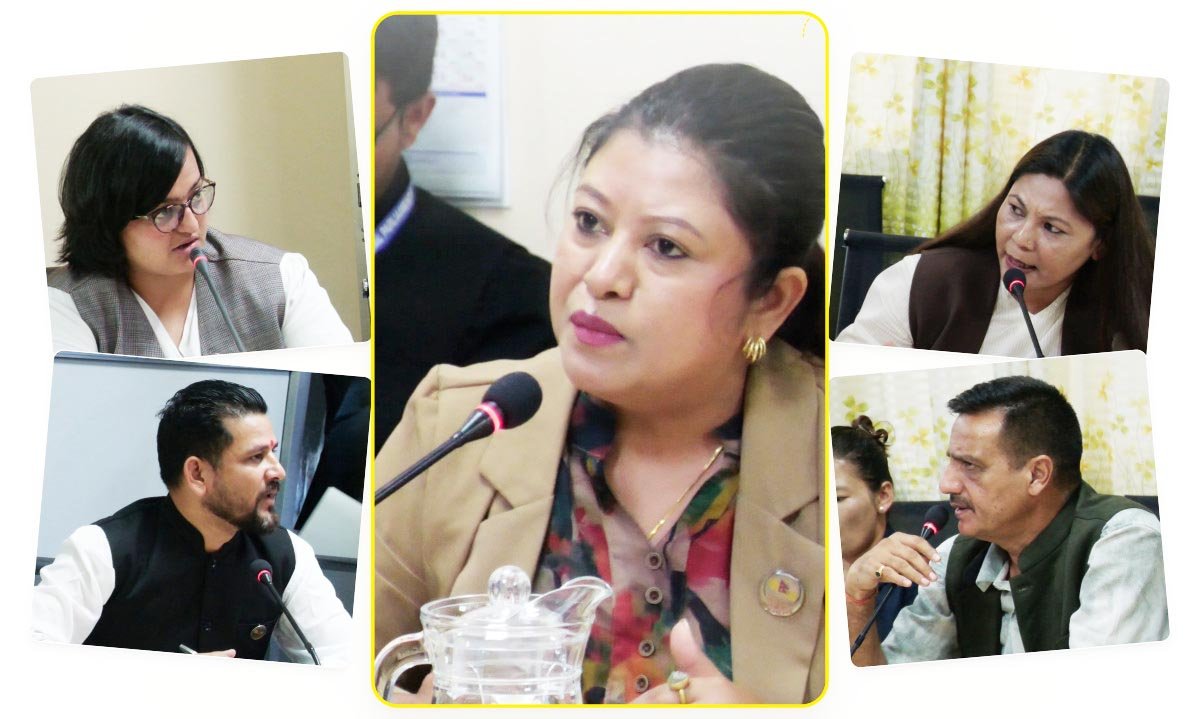
Kathmandu. Ruling party Rastriya Swatantra Party (RSP) MPs have emphasized the need for effective monitoring, policy clarity, and ensuring workers' rights for the improvement of the country's industrial sector.
MPs expressed this view while speaking at a meeting of the Industry, Commerce, and Labor and Consumer Interest Committee under the House of Representatives held at Singhdarbar on Thursday. They drew attention to the government regarding the resolution of problems faced by industrialists and workers, pointing out structural and managerial weaknesses seen in places like the Balaju Industrial Area during the committee's monitoring. MPs highlighted the need to address the shortage of technical manpower in large food industries, the revival of closed industries, and the control of irregularities within industrial areas.
They suggested moving forward with a clear action plan to end the administrative hassle faced by industrialists and create a safe working environment. MPs demanded that monitoring be made result-oriented, not just formal, and that separate dialogues be held with all stakeholders.
Speaking at the meeting, RSP MP Runju Neupane indicated some structural problems in the Balaju Industrial Area, stating that it has not achieved expected progress even after such a long time. "It is necessary to hold separate discussions with the management and industrialists," she said, adding, "If we can communicate separately with various groups, the real problems and suggestions will come out more clearly."
Citing the Nebiko Biscuit Industry as an example during the monitoring, she emphasized the need to make it mandatory to have food technologists and food microbiologists in large food industries, as a shortage was found. MP Neupane proposed calling experienced senior industrialists and new generation (Gen-Z) industrialists to the committee to hear their experiences and problems.
She welcomed the study being conducted by the Nepali Army regarding the revival of the Hetauda Garment Industry, which has been closed for a long time, and demanded that previous reports also be studied, as producing only for the army's needs would not fulfill the goal of job creation.
Similarly, MP Sirjana Shrestha stated that effective monitoring and classification of industries are necessary to understand the actual condition of the industrial sector and solve existing problems. She expressed the opinion that monitoring should be conducted without prior notice to bring out the real picture, rather than limiting it to formality.
"Our objective is not to find fault with industries, industrialists, or workers and trouble them," she clarified. "Our objective is to identify problems, find solutions, and help in improvement." Suspecting irregularities in the renewal process within the industrial area, she objected to the operation of vehicle showrooms and service centers in areas designated for industrial purposes.
MP Prabha Karki emphasized that both industrialists and workers in the country should have equal rights and fair treatment. She stated that as the parliamentary committee is in the initial phase of its term, it should proceed with monitoring and improvement work calmly rather than rushing to seek results.
"A person operating a multinational company is also a Nepali citizen, and a worker is also a Nepali citizen," she said. "Therefore, both should receive equal rights and respect." She mentioned that industry operators should respect workers not just as laborers but as partners, and the government should have a system to properly honor and encourage excellent industries or individuals.
MPs Harimohan Bhandari and Arvind Shah said that the government should make special efforts to identify and restart industries that are closed or partially operational due to the country's current economic slowdown. They suggested arranging to observe industries in groups during future monitoring and then gathering all industrialists in one place for discussion.
MP Shah accused the management of the industrial area of mismanagement, demanding strict monitoring of the managing body as even basic tasks like electricity bill collection and sanitation are not effective. He proposed prioritizing information technology (IT) industries over pollution-generating industries in industrial areas near residential areas.
MP Prakash Pathak emphasized the need to make the monitoring and inspection of industrial areas more effective and result-oriented. Mentioning that the problems of businessmen, managers, workers, and affected local residents within the industrial area are different, he suggested moving forward with discussions that encompass all stakeholders. "If we only discuss with businessmen, only their side of the problems will come out," he said. "If we can conduct discussions and monitoring by bringing all parties together, it will be easier to identify the overall problems."
Regarding the postponement of the House of Representatives meeting until the 14th, he stated that the committee's internal work and monitoring can be effectively carried forward within that period.
This specific news has been automatically translated by AI. As a result, there may be some inaccuracies or language errors.

-purbadhar-bikas_KNeZmLCOTc.jpg)