Karnali Province Government Faces Uncertainty After Congress Ministers Resign

Surkhet. The future of the provincial government has been questioned after 4 ministers from the Nepali Congress resigned from the Karnali Province government led by the UML on Wednesday. Although the Congress ministers have resigned, the Congress has not yet withdrawn its support to the government.
The Congress is showing signs of forming a coalition with the Nepali Communist Party (NCP), which is in opposition. According to the agreement between the UML and Congress at the center at that time, the UML led the government in Karnali, and the Congress has been playing a role as a partner in power.
The government was supposed to be led by Congress in the month of Chaitra as per the agreement to lead the government in turns for 2-2 years, but that did not happen. Congress has stated that the UML's behavior is not right.
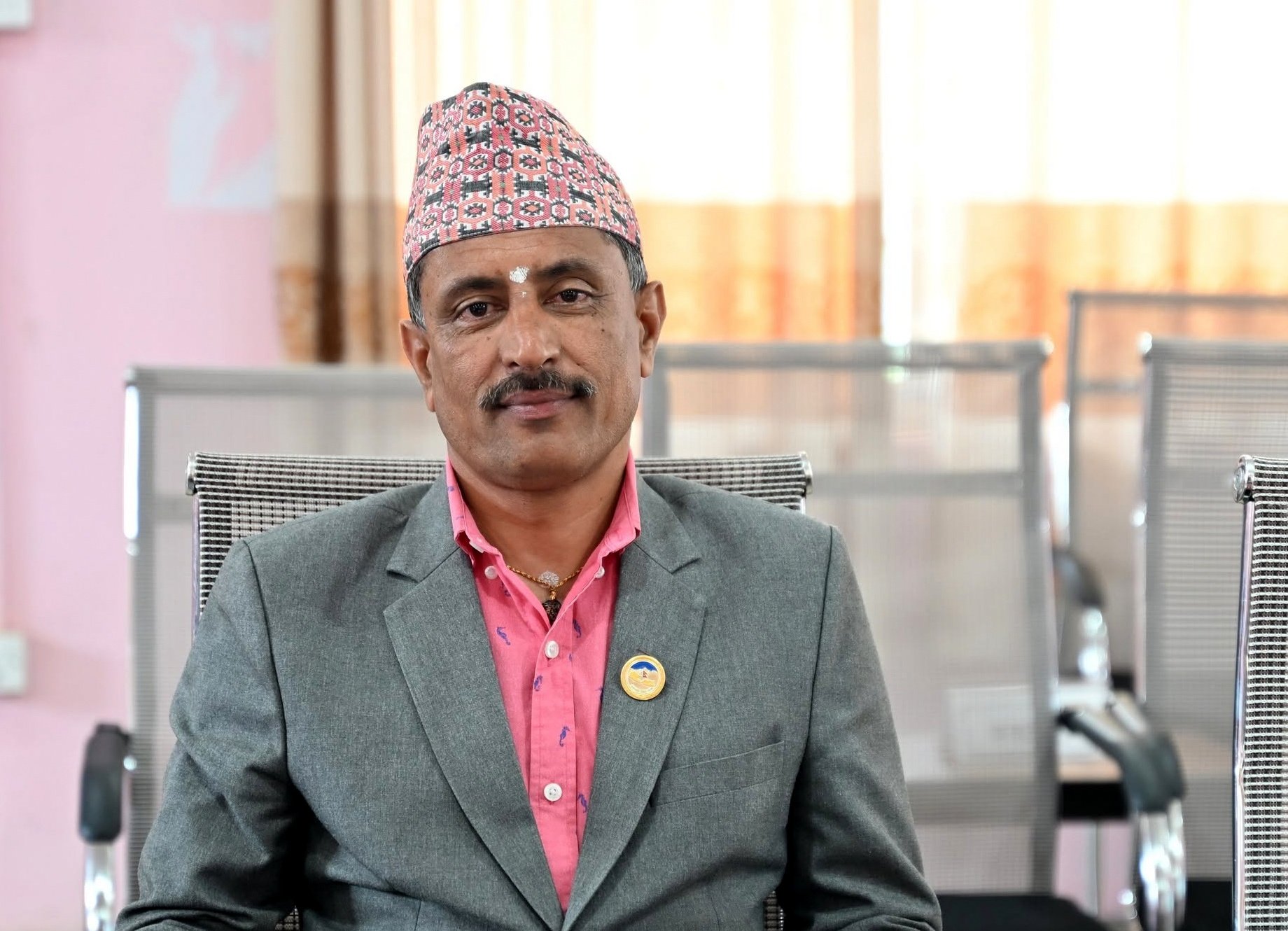
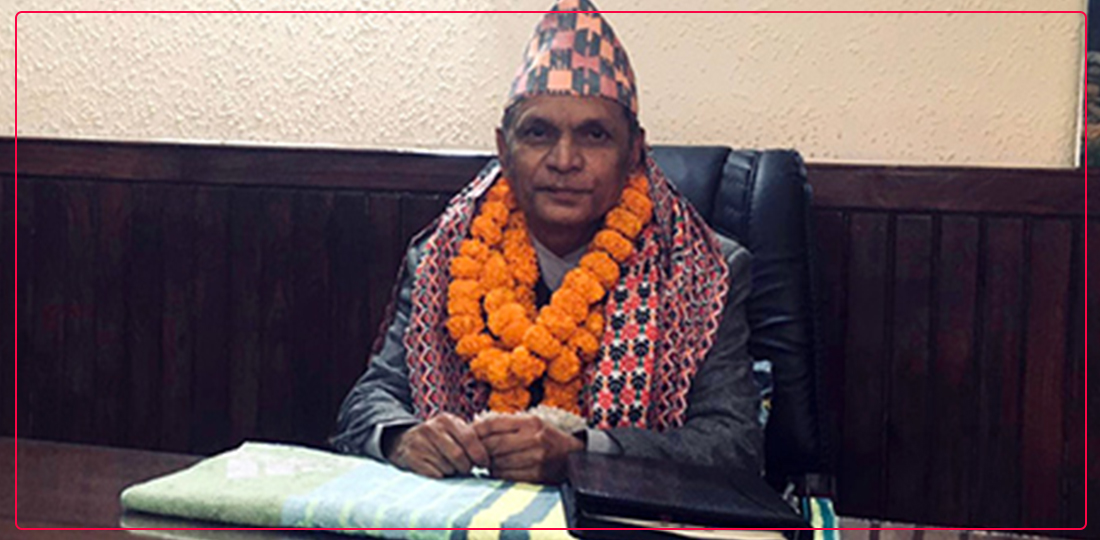
What is the UML thinking in this situation? What is the UML's bottom line? In this context, Ratopati has interviewed Minister of Land Management, Agriculture and Cooperatives, Binod Kumar Shah, who is also the spokesperson of the government. Here is an excerpt from the conversation with Minister Shah:
How did the current power crisis arise in Karnali after Congress left the government?
The power crisis did not arise solely from Karnali. Various issues were raised at the central level, such as the issue of Koshi, and then these issues were also being discussed in Sudurpaschim, and here too, ministers from the ruling coalition parties resigned. In terms of power rotation, this cannot be considered unusual. It would have been much better if we had discussed and resolved it without resigning. That did not happen, and we are saddened by that.
Various discussions are underway on how to form the government. While the constitutional right to form a government rests entirely with the province during a very good political situation, no province has spontaneously formed a government yet in terms of implementing the constitution. There has been a practice of looking to the center, expecting directives from the center, and acting according to those directives, which the constitution does not permit.
There is no clear outline yet of how the discussions are proceeding at the center. It may be necessary to proceed according to what comes from the center after discussions.
In the context of Karnali, there are three parties: Nepali Congress, Nepali Communist Party, and UML. A government can be formed if two of these parties unite. All options are currently open. Even if the current ruling coalition partner, Congress, leaves the government, the alliance is not broken, and relations remain. Support has not been withdrawn. It would be best if these two parties unite to form a government. We are working hard for this.
Secondly, there is talk of a coalition between the NCP and Congress. A government can be formed if these parties unite. There is also a possibility of UML and NCP uniting. Therefore, all three options are open. One of these is likely to happen. This depends on what comes from the center.
Does the Chief Minister have any role in the current situation? For example, Congress alleges that he did not show much interest in implementing the agreement reached at the center regarding power rotation?
In terms of power rotation, we were supposed to hand over power in the month of Chaitra, and Congress was supposed to lead the government. I do not want to deny this. However, Congress has internal problems within its own party. Discussions were ongoing between the parties at the center, and a decision had not been reached, which caused the delay.
In the meantime, the budget preparation work was done. It was felt that it would not be good to change the government during the budget preparation. The leader of the Congress parliamentary party also agreed that the budget should be prepared now and should not be obstructed, so the budget was prepared and passed. Therefore, it is not that we were indifferent. Due to the country's situation and the internal problems of the party, no one came forward aggressively.

The best and most visible thing is that the ruling power saying 'You come, be ready, I will easily pave the way' is very pleasant and cultured in politics, but there were and are obstacles from the center to do these things. That is why this has not been implemented.
You say this, but Jeevan Bahadur Shahi said that when he proposed to proceed according to the previous agreement, Chief Minister Yam Lal Kandel argued, 'You talk to the center,' and this is why Congress became upset?
This is not the case. Just as governments have been formed in every province according to the understanding between the parties at the center, Congress should also accept that central understanding and directives are necessary. It would be even better to proceed with that understanding, the government would be more stable, and there would be no problems in the coalition, so the Chief Minister's words should not be taken otherwise.
For a moment, let's say we have fulfilled the power rotation in Karnali Province by two parties uniting, we have stepped down, and a government led by Congress has been formed, and if the political situation changes tomorrow, we will not be able to sustain it. At that time, it will have to be dissolved again. Therefore, it is not wrong for the Chief Minister to say that it would be better to resolve these issues. It is not a problem for the leaders here to talk to their party leaders. If they had said, 'We are planning to do this here, what do you say, we are going to proceed like this,' the step we took would have been stronger. Therefore, I think that matter should not be misunderstood in that way.
Regarding resignation or transfer of power, it is good for both (leaders of two parties) to sit together, discuss with their respective parties, get approval from the center, and say, 'We are going to proceed in this manner,' and to get the line from the center. The Chief Minister only said that, not that he would not step down.
The Congress has already decided to break the alliance with the UML at the center. Although the ministers in Karnali have resigned, their support remains. Will the UML try to preserve this and move forward, or what will it do? What will be the UML's bottom line?
The Congress has not yet made a decision at the center. It is a matter that has been raised generally. It is said that this problem arose because the UML did not pay much attention, and then the Koshi Province and Sudurpaschim governments did not receive proper support. I heard Congress leaders themselves say that the issue is about how to resolve this problem, not a decision.
As for how to proceed here, Congress has not withdrawn its support yet. I consider that their greatness. They could have withdrawn their support if they wanted to separate. Perhaps they still want to keep this coalition alive. Considering the current political situation and the balance of power, it is necessary for understanding and coordination between the old parties that have invested their entire lives in the establishment of democracy. I believe that Congress has thought responsibly.
After the Congress ministers resigned, has the Chief Minister or the UML held any discussions with Congress or the NCP?
I heard that the Chief Minister and the leader of the Congress parliamentary party spoke after yesterday's incident. It has not led to a definitive conclusion. What I say is that the biggest obstacle is that the province does not have the ability to use and implement its own system as per the Provincial Assembly, as per the Constitution of Nepal. These problems have arisen because the political parties have not given the 'leverage' for us to unite and move forward in our work areas.
They are also in contact with the center, and we are also in contact with the center. The best thing is for Congress and UML, political parties that fought for democracy, to unite and move forward; this is the first option. The second option, if that cannot happen, is for the NCP and UML to unite, which is a good thing. There have been general discussions with them too. There is no situation where a conclusion has been reached and it is certain what will happen.
There is also talk of holding elections in May. With only about 9 months left, in your opinion, what achievements can the new government bring for the people of Karnali that the current government could not?
This is a very good, relevant, and important question. The public does not like the fact that the province has not been able to provide a stable government and is always scrambling for power. Therefore, alienation towards the provincial structure has arisen. Keeping this in mind, there is a need to move forward by setting aside personal interests, which is not happening.
Elections will be held in 8-9 months, and after the new representatives come, a government will be formed according to the convenience of the time. The public has not felt that what was done for them during the four years of government operation was right. Therefore, it is not acceptable to the public to rush to change the government with only a few months left.
It would have been good and acceptable to all if the leadership was changed or not, and if it continued naturally. Since that has not happened, questions arise and are directed at political parties, which further creates alienation. The main thing is that it would be best for Congress and UML to unite and address the problems of the people.
You are also the spokesperson of the government. With the central ruling party RSP putting forward the agenda of abolishing the provincial assembly, will it send a good message if the old parties continue to portray the provincial assembly as a place for forming and dissolving governments?
It will not send a good message. The results of past events are evident, and we must learn from them. The current situation of major political parties like UML and Congress has come to this point; what is the point of blaming others? We are in power, and there is no question of abusing others. These activities have led to unimaginable changes in politics today; this is the result of our own behavior. We must move forward keeping this in mind. We need to move forward with a big heart, forgetting our self-interest, to reduce the disgust towards the province.
This specific news has been automatically translated by AI. As a result, there may be some inaccuracies or language errors.