Government Imposes 3% Health Equity Fee on Private Healthcare Services, Raising Treatment Costs

Kathmandu. The government's decision to impose a 3% 'health equity fee' through the Economic Bill 2083 will make treatment services in private health institutions more expensive from July 1. The implementation of the 3% health equity fee will further increase the cost of services in private hospitals, labs, nursing homes, polyclinics, and private medical colleges. This will directly impact patients.
Clause 17 of the bill enacted to implement the proposals of the Government of Nepal concerning finance states, 'The health equity fee shall be levied and collected by private health service providers from patients on all types of service charges as per Schedule-8. Such fees will be spent on access to quality health services and the construction of health-related infrastructure.'
Finance Minister Swarnim Wagle had announced the collection of a 3% tax from patients undergoing treatment in private hospitals through the Economic Bill. With this, private health institutions will collect the health equity fee from service recipients starting tomorrow (Friday).
According to this, from July, private health institutions will have to pay a 3% fee on all charges collected from patients. These institutions include private hospitals, labs, nursing homes, polyclinics, and other private health providers. For example, if a patient's treatment costs ten thousand rupees, they will now have to pay an additional three hundred rupees.
As per Schedule-8 related to Section 17 of the Economic Act, private institutions, bodies, or individuals providing health services must issue a bill and collect this fee. The collected amount and its detailed description must be submitted to the concerned Inland Revenue Office within 25 days of the end of each four-month period.
If anyone is found to have evaded this fee, the tax officer can determine the necessary fee, for which the concerned party will be given 15 days to submit a clarification. If the fee is not deposited within the stipulated period, an annual interest of 15% will be charged, and a fee of one thousand rupees per report will be levied for delayed submission of the details. If evasion of the fee is confirmed, an additional 25% penalty on the determined amount will also be collected by the tax officer.
The government has clarified the legal process for administrative review and appeal for individuals or institutions dissatisfied with the Health Equity Fee Determination Order. Under the new system, dissatisfied individuals can submit an application to the Director General of the Inland Revenue Department within 30 days of receiving the notice. If the deadline is missed, the Director General may grant an additional 30-day extension if an application is submitted with a valid reason within 7 days.
The Director General must make a decision within 60 days of receiving the application. If the claim is found to be appropriate during the investigation, the Director General may issue an order to re-determine the fee with clear reasons. When submitting an application, it is mandatory to deposit the undisputed fee and penalty, along with cash collateral equivalent to 25% of the disputed amount. If the Director General does not make a decision within the stipulated period or if the individual is dissatisfied with the decision made, they can appeal to the Revenue Tribunal within 35 days of receiving the decision notice. A copy of this must be registered with the Inland Revenue Office within 15 days, according to legal provisions.
While the Constitution of Nepal also states that basic health is free, stakeholders have objected to the government introducing a policy that makes essential free healthcare more expensive. Article 35 of the Constitution of Nepal regarding the right to health states, 'Every citizen shall have the right to receive basic health services free of charge from the state, and no one shall be deprived of emergency health services. Every person shall have the right to information regarding their health treatment. Every citizen shall have the right to equal access to health services. Every citizen shall have the right to access clean drinking water and sanitation.'
Consumer rights activist Madhav Timilsina stated that imposing a tax on patients in private health institutions is impractical when government hospitals are unable to provide quality health services. He said, 'What the government should do is that the condition of receiving health services as desired by citizens in government hospitals is not currently met, and the state does not have such immediate capacity. In such a situation, withdrawing the tax imposed on health services provided by the private sector is the best option at present.'
Timilsina stated that it is not logical for the government to impose taxes on matters as sensitive as health, which are linked to citizens' rights guaranteed by the constitution. He said, 'Especially when talking about health, the system of regulation, monitoring, and management in our country is weak. In such a situation, imposing taxes on electricity, education, and health will directly affect people's lives and create problems. Health and education are already very expensive in Nepal. We do not have proper regulation and monitoring of how the taxes we pay are being billed and under which headings they are being used. How fair is it to impose a tax on health in such a situation?'
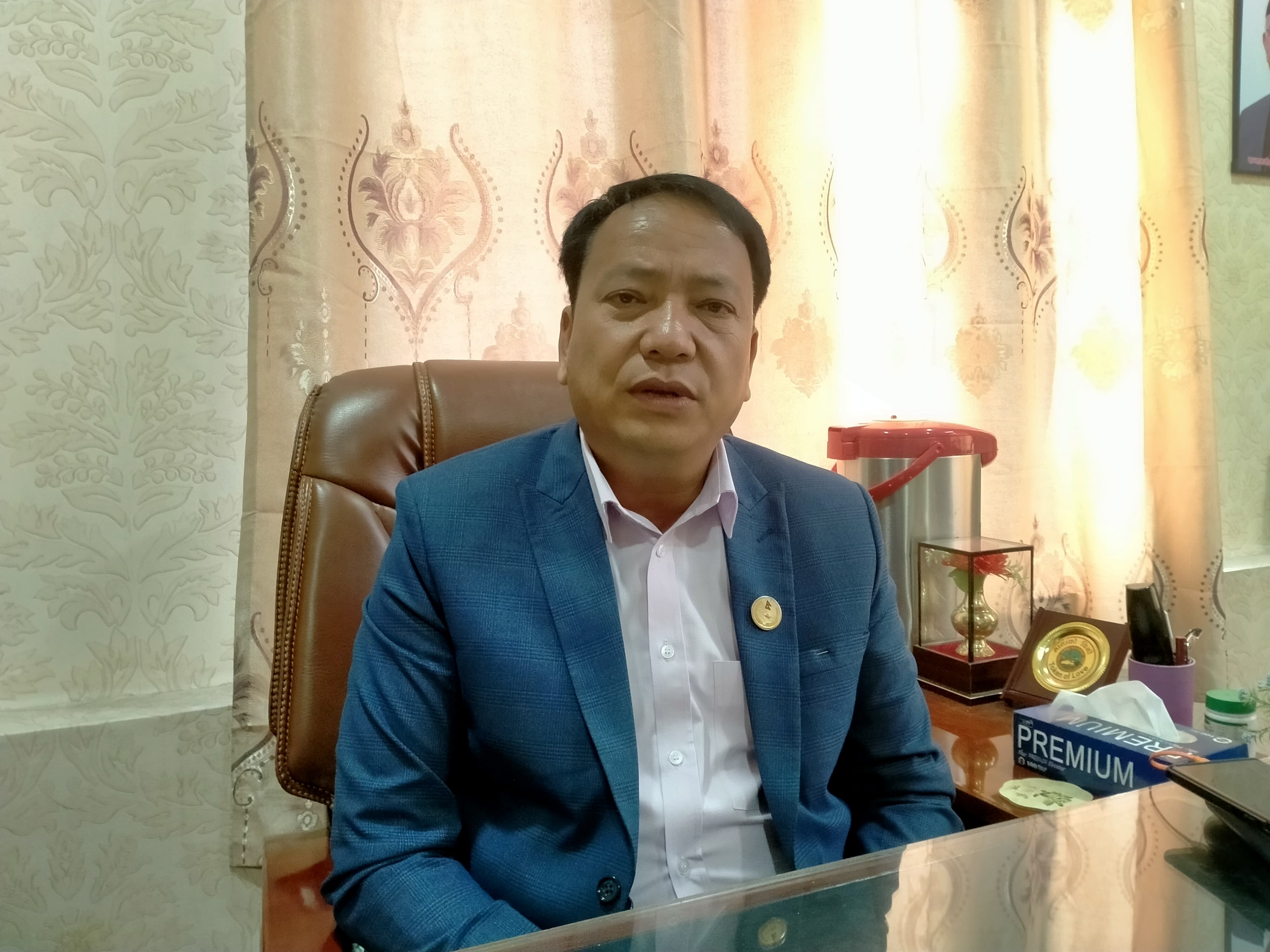
Dr. Padam Khadka, President of the Association of Private Health Institutions of Nepal (AFIN), the umbrella organization of private hospitals, stated that the health equity fee will be collected from patients starting July 1. He said, 'Patients come, and they will pay the tax. We will only collect the fee from the patients. The patients will be the ones directly affected. The problem will only be for the patients. We will put it into the system. We will charge 3 rupees for 100 rupees, i.e., 3 percent, and collect that money and submit it to the government. We have become like an agent of the government.'
Dr. Khadka stated that they are compelled to collect taxes from patients. He said, 'If the government asks tomorrow where that tax has been deposited, we will have to pay it from our own pockets. So what to do? Patients will be affected, but when the state's policy is like that, we can't do anything. The state has only made us tax collection agents.'
Dr. Khadka stated that the government's new system aims to discourage service recipients from going to private hospitals by adding an extra tax burden and to strengthen government health institutions, attracting the general public towards them.
This specific news has been automatically translated by AI. As a result, there may be some inaccuracies or language errors.